
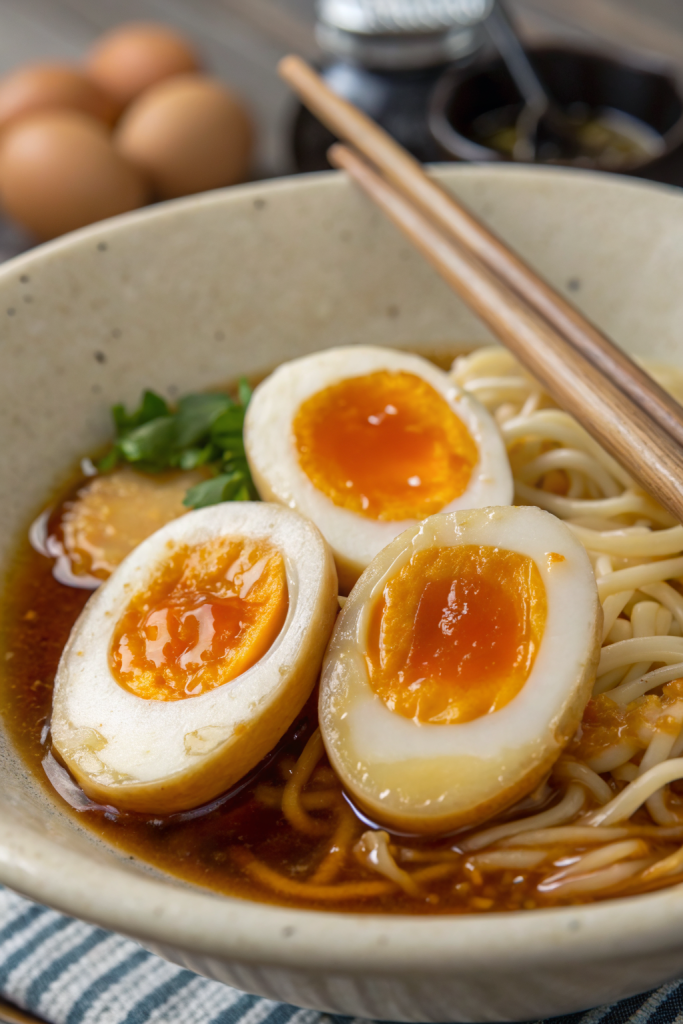
Ajitama Japanese Ramen Egg Recipe tastes rich, savory, and just a little sweet, with jammy yolks that feel like ramen-shop magic at home. It works perfectly for busy home cooks who want restaurant-style ramen toppings in about 30 minutes of active time plus a short marinade. I still remember the first time I nailed that custardy center and did a tiny victory dance in my kitchen.
Why Ajitama Japanese Ramen Egg Recipe Is Worth It
This Ajitama Japanese Ramen Egg Recipe turns a simple egg into a flavor bomb that upgrades any bowl of noodles, rice, or salad. The soy-based marinade infuses umami, a touch of sweetness, and gentle aromatics that make every bite feel special.
You also prep it ahead, so future-you gets to enjoy perfect ramen eggs with zero effort on busy nights. Once you learn the timing and peeling tricks, you hit that jammy yolk every single time.
“These Ajitama Japanese ramen eggs taste like they came from a Tokyo ramen bar, but my tiny apartment kitchen did all the work. ★★★★★”
Ingredients You Need
Eggs
- 6 large eggs, fridge-cold
- Cold eggs crack less in boiling water and peel easier.
- Use large eggs so the timing stays consistent.
Marinade
- 1 cup soy sauce
- Use regular Japanese-style soy sauce (like Kikkoman or Yamasa).
- Use low-sodium soy if you prefer a milder salt level.
- 1 cup water
- This dilutes the soy so the eggs do not turn too salty.
- 1/2 cup mirin
- Mirin adds sweetness and depth; use hon-mirin if you find it.
- Substitute: 1/2 cup sake + 2–3 teaspoons sugar, or 1/2 cup water + 1 tablespoon sugar if you avoid alcohol.
- 2 tablespoons sugar
- Adjust to taste if you like sweeter or more savory eggs.
- 2 tablespoons rice vinegar
- This adds brightness and balances the salty-sweet flavor.
- 2 cloves garlic, lightly crushed
- 1 small piece ginger (about 1-inch), sliced
- 1 green onion, cut into 2–3 pieces
- Optional flavor boosters:
- 1 small piece kombu (dried kelp)
- 1 tablespoon sake (skip if you avoid alcohol)
- A small pinch chili flakes for a gentle kick
Water & Ice for Boiling
- Enough water to cover eggs by 1–2 inches in a medium pot
- 2 cups ice + cold water for an ice bath
Equipment
- Medium pot
- Slotted spoon
- Medium bowl for ice bath
- Small saucepan for marinade
- Measuring cups and spoons
- Zip-top bag or small container (tall and narrow works best)
- Timer (phone timer works great)
Quick Tips & substitutions
- Use fridge-cold eggs so the shells crack less and peel cleaner.
- Poke a tiny hole in the wide end of each egg with a thumbtack to reduce cracking and help peeling.
- Stir the water gently in one direction when you add the eggs so they sit in the center and cook evenly.
- Aim for 6.5–7 minutes for jammy yolks; go 8 minutes if you like a firmer center.
- Shock eggs in an ice bath right away so they stop cooking and keep that custardy texture.
- Peel under running water to help the shell slide off in big pieces.
- Use low-sodium soy sauce if you want a less salty Ajitama Japanese Ramen Egg Recipe.
- Swap mirin with a mix of water and sugar if you avoid alcohol.
- Add a small piece of kombu or a few dried shiitakes to the marinade for extra umami.
- Marinate 4–12 hours for mild flavor, 12–24 hours for stronger flavor and deeper color.
- Keep the eggs fully submerged by using a small bowl or paper towel pressed on top.
- Reuse the marinade once more within 2–3 days for another batch of eggs; boil it first, then cool.
How to Make Ajitama Japanese Ramen Egg Recipe
Step 1: Mix the Marinade
Add soy sauce, water, mirin, sugar, and rice vinegar to a small saucepan. Toss in the garlic, ginger, green onion, and any optional kombu or chili flakes. Heat over medium until the sugar dissolves and the mixture steams, then turn off the heat.
Let the marinade cool to room temperature so it does not overcook the eggs later. You can speed this up by pouring it into a heat-safe bowl and setting that bowl over an ice bath.
Step 2: Boil the Eggs
Fill a medium pot with enough water to cover the eggs by about 1–2 inches. Bring the water to a strong simmer, not a wild rolling boil. Lower the heat slightly so the water bubbles gently.
Use a slotted spoon to lower the cold eggs into the water. Start your timer right away. Stir the water in one direction for the first 30 seconds so the yolks settle in the center.
Step 3: Time the Yolks
Use these timings as a guide for large eggs:
- 6 minutes: very soft, runny center (great on rice, a bit messy in ramen)
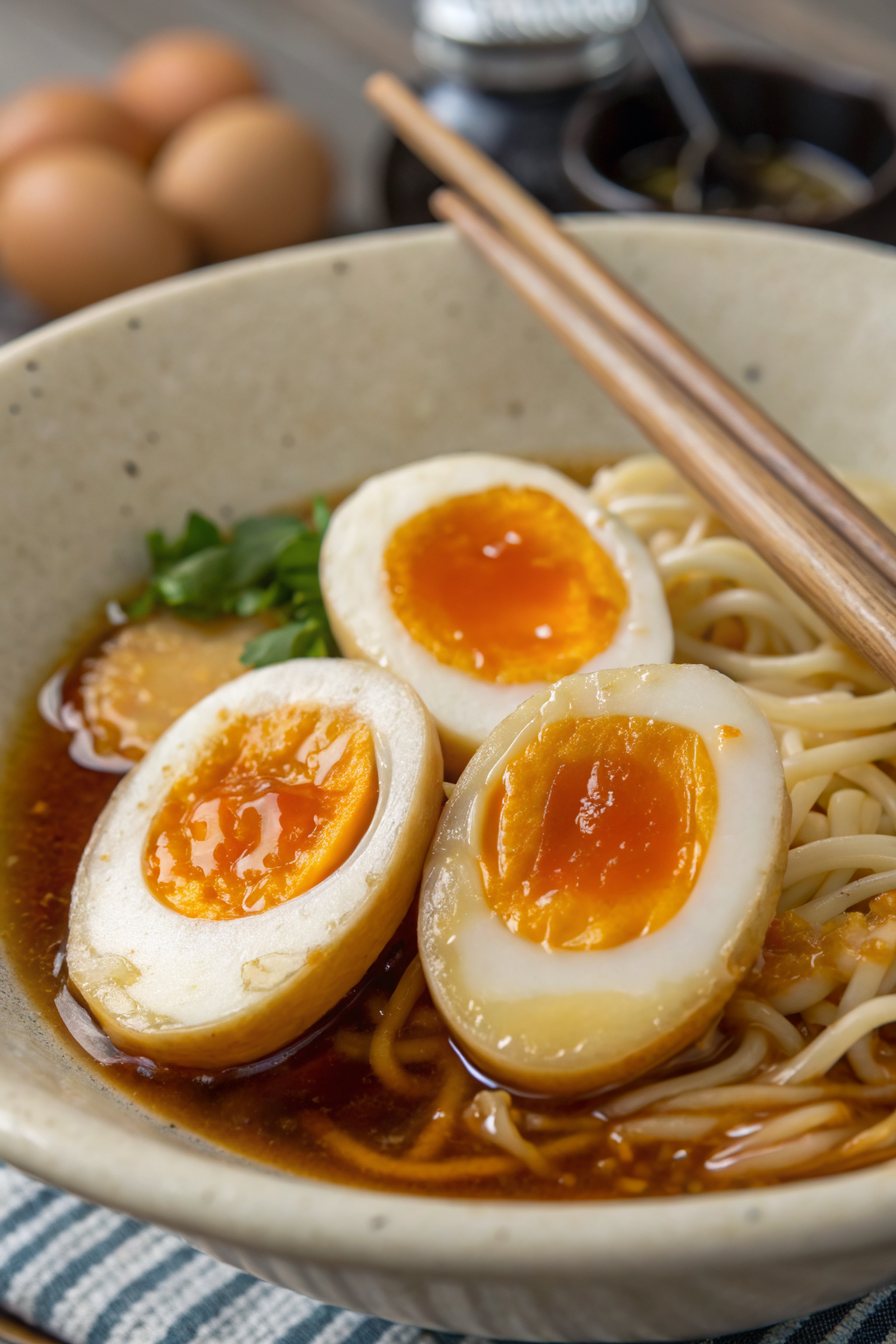
- 6.5–7 minutes: jammy yolk with a soft center (classic Ajitama style)
- 8 minutes: mostly set yolk with a tiny creamy center
I usually set my timer for 6 minutes 45 seconds for that perfect ramen egg texture. Adjust by 15–30 seconds next time if you want softer or firmer yolks.
Step 4: Chill in an Ice Bath
While the eggs cook, fill a medium bowl with ice and cold water. When the timer goes off, move the eggs straight into the ice bath with the slotted spoon.
Let the eggs chill at least 10–15 minutes so the shells release and the centers stay jammy. You can leave them in the cold water longer if you get distracted; they stay fine.
Step 5: Peel Without Tears
Gently tap each egg on the counter to crack the shell all around. Peel from the wider end, where the air pocket sits, and slide your thumb under the membrane.
Peel under a thin stream of running water to help the shell slip off in big pieces. If a bit of white tears, do not panic; the marinade still tastes amazing and hides small scars.
Step 6: Marinate the Eggs
Place the peeled eggs in a zip-top bag or a narrow container. Pour the cooled marinade over the eggs so they sit fully covered.
If the eggs float, press a folded paper towel on top to keep them submerged, or set a small saucer over them. Seal the bag or cover the container.
Step 7: Chill and Flavor
Move the eggs to the fridge and chill at least 4 hours. This gives a light flavor and pale color.
For classic Ajitama Japanese Ramen Egg Recipe style, chill 12–24 hours so the whites turn a deep caramel color and the flavor reaches the yolk. Taste one at 12 hours and decide if you want more time.
Step 8: Slice and Serve
When you feel hungry, take out as many eggs as you need. Pat them dry gently with a paper towel.
Use a very sharp knife and wipe the blade between cuts for clean halves. Slice lengthwise and nestle them on top of ramen, rice bowls, or salads.
Recipe Variations
-
Gluten-free
- Use gluten-free tamari instead of soy sauce.
- Double-check mirin and vinegar labels to confirm gluten-free status.
-
Vegan-style “Ajitama” idea
- Marinate firm tofu slices or halved soft tofu in the same marinade.
- Use a shorter marinating time for soft tofu so it does not break.
-
Low-carb / keto-friendly
- Replace sugar with your favorite granular zero-calorie sweetener.
- Reduce mirin and increase water and soy sauce to cut carbs.
-
Spicy version
- Add chili oil, chili flakes, or a sliced fresh chili to the marinade.
- Sprinkle shichimi togarashi on the eggs right before serving.
-
Extra smoky flavor
- Add a splash of smoked soy sauce or a pinch of smoked salt to the marinade.
-
Garlic-forward
- Double the garlic cloves and slice them thin for stronger garlic flavor.
Ways to Serve Ajitama Japanese Ramen Egg Recipe
- Nestle halves on top of a steaming bowl of tonkotsu, shoyu, or miso ramen.
- Add to instant ramen to make it feel like a restaurant bowl.
- Slice over rice bowls with grilled chicken, pork, or tofu.
- Serve on avocado toast with a drizzle of chili crisp.
- Add to cold soba or udon salads for extra protein.
- Pack in bento boxes with rice, pickles, and veggies.
- Serve as a snack with cucumber sticks and cherry tomatoes.
Storage Success
Store Ajitama Japanese ramen eggs in an airtight container in the fridge. Keep them either in the marinade or out of it, depending on how strong you want the flavor. If they already taste strong enough, move them to a clean container without marinade and eat them within 3–4 days. If they still sit in the marinade, aim to enjoy them within 2–3 days so the flavor does not turn too salty.
Ajitama Japanese Ramen Egg Recipe
Ingredients
Instructions
- In a small saucepan, combine soy sauce, mirin, water, and sugar. Add garlic and ginger if using. Bring just to a simmer, stir to dissolve sugar, then remove from heat and let cool to room temperature.
- Bring a pot of water to a gentle boil. Carefully lower the eggs into the water using a spoon.
- Cook the eggs for 6–7 minutes for a jammy yolk, or up to 8 minutes if you prefer slightly firmer yolks.
- Immediately transfer the eggs to a bowl of ice water and let cool completely, about 10–15 minutes.
- Gently peel the cooled eggs, taking care not to tear the whites.
- Place the peeled eggs in a resealable bag or container and pour the cooled marinade over them, making sure the eggs are fully submerged.
- Marinate in the refrigerator for at least 4 hours, preferably overnight, turning occasionally for even coloring.
- To serve, slice the eggs in half and place on top of hot ramen or serve as a side appetizer. Store leftover eggs in the marinade in the refrigerator and consume within 3 days.
Notes
Approximate per 1 egg: 90–100 calories; fat 6 g; saturated fat 2 g; carbohydrates 3 g; fiber 0 g; sugars 2 g; protein 7 g; sodium 520 mg. Values will vary based on exact cooking time, soy sauce brand, and portion of marinade absorbed.
Leave a Reply