
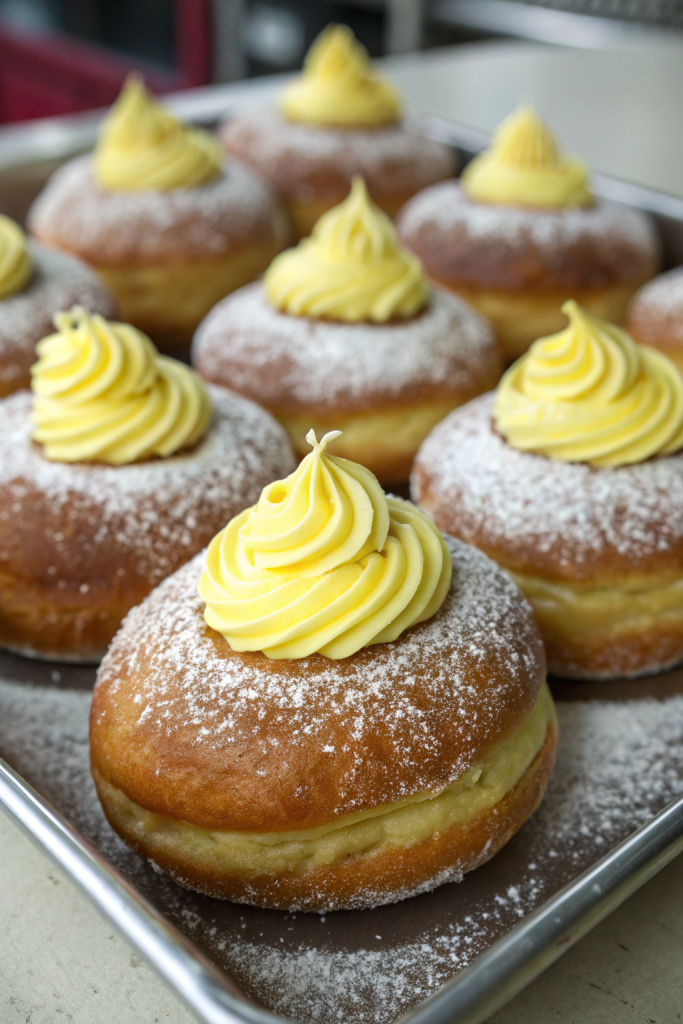
Vanilla Cream-Filled Doughnuts Recipe tastes like a bakery treat with a soft, fluffy interior, golden exterior, and cool, silky vanilla filling that hits all the nostalgic notes. It suits weekend bakers who want a special brunch project, and it takes about 3 hours total including rising time. I still remember burning my first batch 10+ years ago, so you can learn from my mistakes and skip the smoky kitchen phase.
Why Make This Vanilla Cream-Filled Doughnuts Recipe at Home
Homemade vanilla cream-filled doughnuts taste fresher, lighter, and more fragrant than anything in a box. You control the ingredients, adjust the sweetness, and load in as much vanilla cream as your heart can handle.
You also get that cozy, bakery-style smell drifting through your kitchen, which feels like a small life upgrade. Kids, partners, roommates, and neighbors usually appear out of nowhere when they catch that scent.
"These vanilla cream-filled doughnuts taste like a fancy bakery treat but feel like a cozy weekend project at home." ★★★★★
Ingredients You Need
You can make this Vanilla Cream-Filled Doughnuts Recipe in two main parts: the dough and the vanilla cream filling, plus a simple sugar coating.
For the doughnuts
- 3 ¼ cups (390 g) all-purpose flour
- Use a standard unbleached all-purpose flour like King Arthur or Gold Medal.
- ¼ cup (50 g) granulated sugar
- 2 ¼ teaspoons (1 packet, 7 g) instant yeast
- Instant yeast mixes straight into the flour. If you only have active dry yeast, dissolve it in the warm milk with a pinch of sugar first.
- ½ teaspoon fine sea salt
- ¾ cup (180 ml) whole milk, warm (about 105–110°F)
- Whole milk gives richer doughnuts, but 2% works in a pinch.
- 2 large eggs, room temperature
- ¼ cup (60 g) unsalted butter, very soft
- Use real butter, not margarine, for best flavor.
For frying
- Neutral oil with high smoke point, enough to fill a heavy pot 2 to 3 inches deep
- Good options: canola, peanut, or vegetable oil. Avoid olive oil because it tastes too strong here.
For the vanilla cream filling
- 1 ½ cups (360 ml) whole milk
- 4 large egg yolks
- ½ cup (100 g) granulated sugar
- 3 tablespoons cornstarch
- ¼ teaspoon fine sea salt
- 2 tablespoons unsalted butter
- 2 to 3 teaspoons pure vanilla extract
- Use real vanilla extract or vanilla bean paste. I like a mix of 1 teaspoon paste and 1 teaspoon extract for strong flavor.
For coating
- ½ to ¾ cup granulated sugar
- Optional: ½ teaspoon ground cinnamon mixed into the sugar for a subtle twist
Equipment list
- Stand mixer with dough hook (you can mix by hand, but the mixer saves your arms)
- Large mixing bowl
- Medium saucepan
- Whisk
- Rubber spatula
- Heavy-bottomed pot or Dutch oven for frying
- Deep-fry thermometer or instant-read thermometer
- Slotted spoon or spider skimmer
- Piping bag with small round tip (or zip-top bag with a small corner snipped off)
- Cooling rack set over a sheet pan
- Small sharp knife or wooden skewer for poking filling holes
Tips & Mistakes
- Use warm, not hot, milk so the yeast stays active and does not die.
- Measure flour by weight when possible, or spoon it into the cup and level it, so the dough stays soft instead of dense.
- Knead until the dough feels smooth and elastic; under-kneaded doughnuts turn out heavy.
- Let the dough rise in a warm, draft-free spot; cold kitchens slow the rise and mess with timing.
- Chill the vanilla cream before filling so it thickens and does not run out of the doughnuts.
- Keep the oil at 350°F; hotter oil burns the outside while the inside stays raw, cooler oil makes greasy doughnuts.
- Fry only a few doughnuts at a time so the oil temperature stays stable.
- Drain doughnuts on a rack, not paper towels, to keep the bottoms from steaming and turning soggy.
- Roll doughnuts in sugar while still warm so the sugar sticks well.
- Fill gently and slowly; if you squeeze too hard, the doughnut can split or the cream can burst out the side.
How to Make Vanilla Cream-Filled Doughnuts Recipe
Make the vanilla cream filling
-
Heat the milk
- Add the milk to a medium saucepan.
- Warm it over medium heat until it steams and small bubbles form around the edges.
- Turn off the heat and set it aside.
-
Whisk the yolks, sugar, and cornstarch
- In a medium bowl, whisk the egg yolks, sugar, cornstarch, and salt until the mixture looks thick and pale.
- Whisk until no cornstarch lumps remain.
- This step helps the cream stay smooth later.
-
Temper the eggs
- Slowly pour about half of the warm milk into the yolk mixture while you whisk constantly.
- Whisk until the mixture looks smooth and combined.
- Pour this mixture back into the saucepan with the rest of the milk.
-
Cook the pastry cream
- Place the saucepan over medium heat and whisk constantly.
- The mixture will look thin at first, then it will thicken and start to bubble.
- Keep whisking for about 1 minute after it thickens so the cornstarch cooks fully.
-
Finish with butter and vanilla
- Remove the pan from the heat.
- Whisk in the butter and vanilla until the cream looks glossy and smooth.
- Taste and add a little more vanilla if you want stronger flavor.
-
Chill the filling
- Transfer the cream to a shallow bowl.
- Press plastic wrap directly on the surface so no skin forms.
- Chill in the fridge for at least 2 hours, or until completely cold and thick.
Make the dough
-
Mix the dry ingredients
- In the bowl of a stand mixer, combine flour, sugar, instant yeast, and salt.
- Stir briefly to distribute the yeast and salt evenly.
-
Add wet ingredients
- Add the warm milk, eggs, and soft butter to the bowl.
- Attach the dough hook and mix on low speed until the dough comes together.
- Scrape down the sides if dry flour clings to the bowl.
-
Knead the dough
- Increase to medium speed and knead for 6 to 8 minutes.
- The dough should feel soft, slightly tacky, and stretchy but not sticky.
- If it feels very sticky, add 1 tablespoon of flour at a time, but keep it on the softer side.
-
First rise
- Shape the dough into a ball and place it in a lightly oiled bowl.
- Turn the dough once so it coats lightly in oil.
- Cover the bowl with plastic wrap or a clean towel and let it rise in a warm spot until doubled, about 1 to 1 ½ hours.
Shape the doughnuts
-
Roll out the dough
- Gently punch down the risen dough to release excess gas.
- Turn it out onto a lightly floured surface.
- Roll it to about ½ inch thickness.
-
Cut the doughnuts
- Use a round cutter about 3 inches wide to cut circles.
- Gather scraps, gently press them together, and reroll once if needed.
- Place the rounds on parchment-lined baking sheets, leaving space between each one.
-
Second rise
- Cover the dough rounds loosely with lightly greased plastic wrap or a clean towel.
- Let them rise until puffy and slightly jiggly, about 45 to 60 minutes.
- They should look airy but still hold their shape.
Fry the doughnuts
-
Heat the oil
- Pour oil into a heavy pot so it reaches 2 to 3 inches deep.
- Heat over medium heat until the oil reaches 350°F.
- Adjust the heat as needed to keep the temperature steady.
-
Fry in batches
- Gently lift a few dough rounds and slide them into the hot oil.
- Fry about 1 ½ to 2 minutes per side until deep golden brown.
- Use a slotted spoon to flip them once during frying.
-
Drain and coat in sugar
- Transfer fried doughnuts to a cooling rack set over a sheet pan.
- Let them drain for about 1 minute, then roll them in granulated sugar while still warm.
- Set them back on the rack to cool completely before filling.
Fill the doughnuts
-
Prep the cream and bag
- Stir the chilled vanilla cream to loosen it slightly.
- Spoon it into a piping bag fitted with a small round tip.
- If you use a zip-top bag, snip a small opening in one corner.
-
Make a filling hole
- Use a small sharp knife or wooden skewer to poke a hole in the side of each doughnut.
- Wiggle gently to create a small pocket inside without tearing the doughnut.
-
Fill with vanilla cream
- Insert the piping tip into the hole and squeeze gently.
- Fill until you feel the doughnut swell slightly and a tiny bit of cream tries to peek out.
- Wipe any excess from the outside and repeat with the rest.
Variations I've Tried
I sometimes add 1 tablespoon of instant espresso powder to the pastry cream for a coffee-vanilla version that tastes like a fancy café treat. A little lemon zest in the dough and a touch of lemon extract in the cream gives a bright, citrusy twist. You can also dip the tops in a simple chocolate glaze and keep the vanilla cream inside for a classic chocolate-and-vanilla combo.
How to Serve Vanilla Cream-Filled Doughnuts Recipe
Serve these vanilla cream-filled doughnuts slightly warm or at room temperature so the cream feels cool and the dough tastes soft and fluffy. Pair them with hot coffee, tea, hot chocolate, or a tall glass of cold milk. They fit perfectly on a brunch spread with fruit, scrambled eggs, and maybe some crispy bacon on the side. I also like to cut a few in half on a platter so everyone can see the creamy vanilla center and choose their favorite piece.
How to store
- Store leftover doughnuts in an airtight container in the fridge for up to 2 days, since the vanilla cream contains dairy and eggs.
- Enjoy them the same day for best texture, since fried dough starts to firm up after chilling.
- Reheat gently in a 300°F oven for 5 to 7 minutes until just warm; avoid microwaving too long so the cream does not turn runny or too hot.
- Freeze unfilled doughnuts after frying and cooling, up to 2 months, then thaw at room temperature and fill with fresh vanilla cream on the day you serve them.
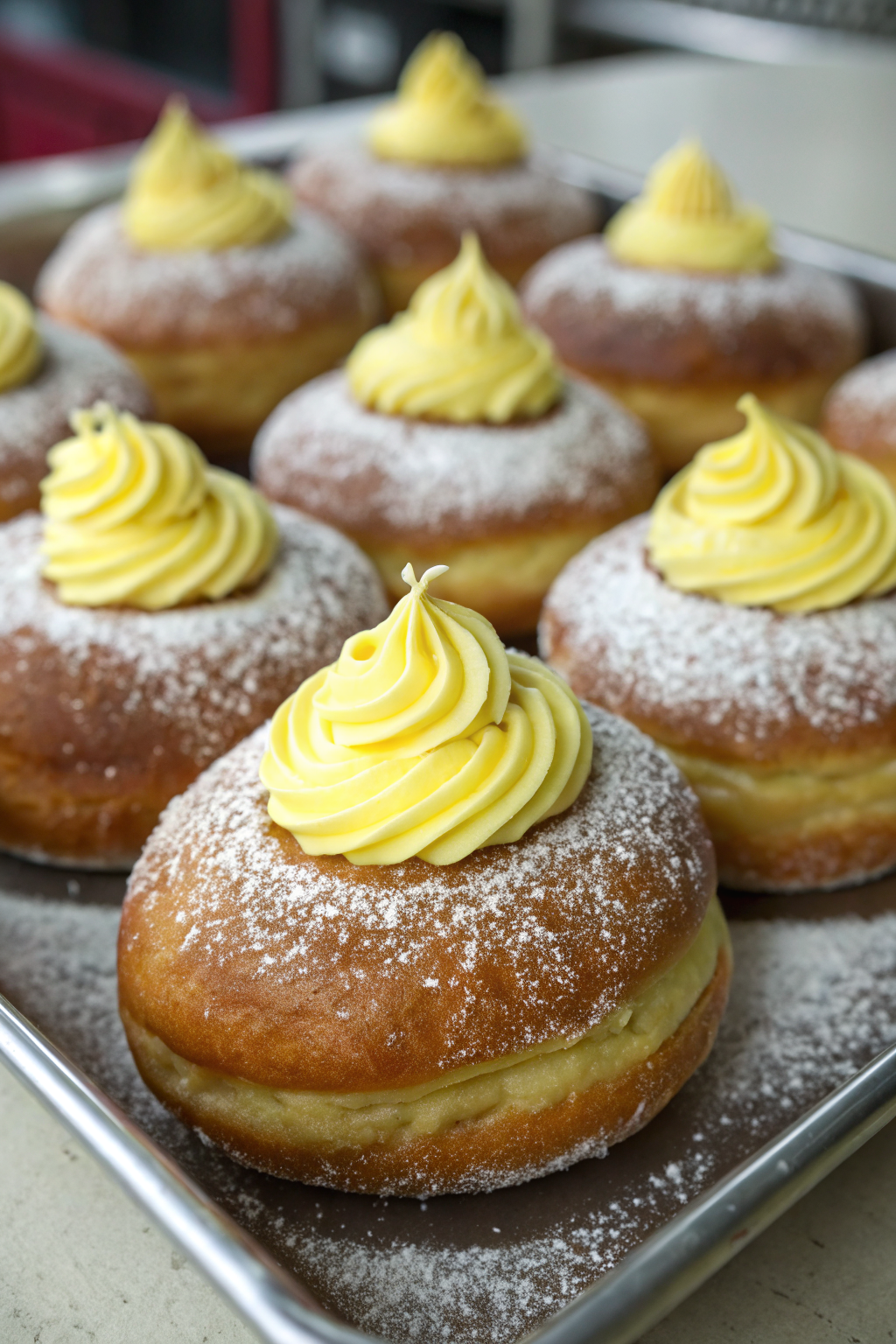
Vanilla Cream-Filled Doughnuts Recipe
Ingredients
Instructions
- Add the milk to a medium saucepan and warm over medium heat until it steams and small bubbles form around the edges. Turn off the heat and set aside.
- In a medium bowl, whisk the egg yolks, sugar, cornstarch, and salt until thick, pale, and smooth with no cornstarch lumps.
- Slowly pour about half of the warm milk into the yolk mixture while whisking constantly, then pour this mixture back into the saucepan with the remaining milk.
- Place the saucepan over medium heat and whisk constantly until the mixture thickens and starts to bubble. Continue whisking for about 1 minute to fully cook the cornstarch.
- Remove from the heat and whisk in the butter and vanilla until the cream is glossy and smooth. Taste and adjust vanilla if desired.
- Transfer the cream to a shallow bowl, press plastic wrap directly onto the surface, and chill in the refrigerator for at least 2 hours until completely cold and thick.
- In the bowl of a stand mixer, combine the flour, sugar, instant yeast, and salt, and stir briefly to distribute evenly.
- Add the warm milk, eggs, and very soft butter to the bowl. Attach the dough hook and mix on low speed until the dough comes together, scraping the bowl if needed.
- Increase to medium speed and knead for 6 to 8 minutes, until the dough is soft, slightly tacky, and stretchy but not sticky. If very sticky, add flour 1 tablespoon at a time, keeping the dough on the softer side.
- Shape the dough into a ball and place in a lightly oiled bowl, turning once to coat. Cover and let rise in a warm, draft-free spot until doubled in size, about 1 to 1 1/2 hours.
- Gently punch down the risen dough to release excess gas, then turn it out onto a lightly floured surface.
- Roll the dough to about 1/2-inch thickness and use a 3-inch round cutter to cut circles, gathering and rerolling scraps once if needed.
- Place the dough rounds on parchment-lined baking sheets with space between them, cover loosely, and let rise until puffy and slightly jiggly, about 45 to 60 minutes.
- Pour neutral oil into a heavy pot or Dutch oven to a depth of 2 to 3 inches and heat over medium heat to 350°F, adjusting the heat to maintain temperature.
- Gently slide a few risen dough rounds into the hot oil and fry for about 1 1/2 to 2 minutes per side, until deep golden brown, turning once with a slotted spoon.
- Transfer fried doughnuts to a cooling rack set over a sheet pan and drain for about 1 minute, then roll in granulated sugar (with cinnamon if using) while still warm. Let cool completely before filling.
- Stir the chilled vanilla cream to loosen slightly, then spoon it into a piping bag fitted with a small round tip or a zip-top bag with a small corner snipped off.
- Use a small sharp knife or wooden skewer to poke a hole in the side of each doughnut and gently wiggle to create a small pocket inside.
- Insert the piping tip into each hole and squeeze gently, filling until the doughnut swells slightly and a bit of cream just peeks out. Wipe any excess from the outside and repeat with remaining doughnuts.
Notes
Approximate per doughnut (1 of 12): 310 calories; fat 17 g; saturated fat 6 g; carbohydrates 34 g; fiber 1 g; sugars 11 g; protein 6 g; sodium 160 mg. Values will vary based on exact frying oil absorption, brands used, and portion size.
Leave a Reply