
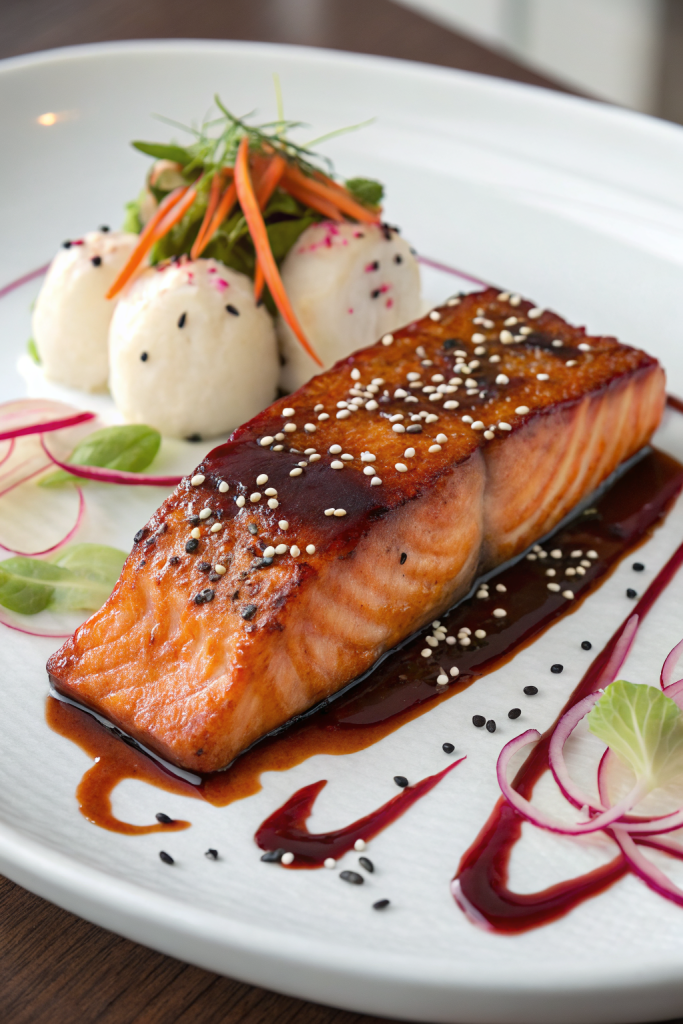
Sake-Glazed Salmon with Sesame Seeds tastes sweet, savory, and a little nutty, with caramelized edges and juicy, tender centers. It suits busy weeknights and at-home date nights, since you can cook it in about 25 minutes start to finish. I first made this on a Tuesday when my fridge looked sad, and it still felt like a restaurant meal.
Why Make This Sake-Glazed Salmon with Sesame Seeds at Home
You control the quality of the salmon, the sweetness of the glaze, and the amount of sesame seeds, so the flavor fits exactly what you like. The glaze uses simple pantry ingredients, and the whole recipe cooks in less time than it takes to order takeout.
Restaurant versions often taste too salty or too sweet, and they usually cost a lot more. At home you get crisp edges, glossy glaze, and perfectly flaky salmon without mystery ingredients.
“This Sake-Glazed Salmon with Sesame Seeds tastes like a fancy restaurant special but cooks in under 30 minutes at home, which feels like a magic trick. ★★★★★”
Ingredients You Need
Salmon
- 4 salmon fillets, 5 to 6 ounces each, skin on
- Choose center-cut fillets for even thickness.
- Wild salmon tastes richer and firmer, while farmed salmon tastes milder and fattier.
- Pat the fillets dry so the glaze clings and the surface browns nicely.
Sake glaze
-
1/3 cup sake
- Any basic drinking sake works fine; you do not need a fancy bottle.
- Avoid sweet dessert-style sake, since the glaze already includes sugar.
-
3 tablespoons low-sodium soy sauce
- Low-sodium soy sauce gives you better control over salt.
- Use tamari for a gluten-free option.
-
2 tablespoons mirin
- Mirin adds gentle sweetness and shine.
- If you do not have mirin, use 1 tablespoon rice vinegar plus 1 tablespoon extra sugar.
-
1 tablespoon rice vinegar
- This brightens the glaze and balances the sweetness.
-
1 tablespoon brown sugar, packed
- Brown sugar adds a hint of molasses flavor and helps the glaze caramelize.
- Use honey or maple syrup if you prefer natural sweeteners.
-
1 teaspoon toasted sesame oil
- A little goes a long way and adds deep nutty flavor.
- Do not cook the sesame oil at high heat by itself; keep it in the glaze.
-
1 teaspoon grated fresh ginger
- Fresh ginger keeps the glaze lively and aromatic.
- Use 1/4 teaspoon ground ginger if you need a shortcut, but fresh tastes brighter.
-
1 small garlic clove, minced or grated
- Garlic rounds out the savory flavor and balances the sweetness.
Sesame topping & garnish
-
1 to 1 1/2 tablespoons toasted sesame seeds
- Use a mix of white and black sesame seeds for contrast if you have both.
- Toast raw seeds in a dry skillet over medium heat for 2 to 3 minutes until fragrant.
-
2 green onions, thinly sliced
- Sprinkle over the salmon after cooking for freshness and color.
-
Optional: 1/4 teaspoon red pepper flakes or a drizzle of chili crisp
- Adds gentle heat if you like a little kick.
Pantry shortcuts
- Use bottled minced garlic and ginger if you need speed; the flavor still tastes great in this bold glaze.
- Use pre-toasted sesame seeds to skip a step.
- Use frozen salmon fillets; just thaw them in the fridge overnight and pat dry very well.
Equipment list
- Small saucepan for the glaze
- Whisk or small spoon
- Baking sheet or oven-safe skillet
- Parchment paper or lightly oiled foil for easy cleanup
- Instant-read thermometer (helpful for perfect doneness)
- Small bowl and brush or spoon for basting
Tips & Mistakes
- Pat the salmon very dry so the glaze sticks and the surface browns instead of steaming.
- Bring salmon close to room temperature for 15 minutes before cooking so it cooks evenly.
- Line the pan with parchment or lightly oiled foil to prevent sticking and make cleanup easy.
- Reduce the glaze until it looks syrupy and coats the back of a spoon; thin glaze will slide off the salmon.
- Keep the heat moderate so the sugar in the glaze caramelizes instead of burning.
- Do not overcook; pull the salmon at 125 to 130°F in the thickest part for moist, flaky texture.
- Add sesame seeds near the end or right after cooking so they stay toasty and do not burn.
- Taste the glaze before brushing; adjust with a splash of vinegar for brightness or a pinch of sugar for sweetness.
- Avoid crowding the pan; give each fillet space so the edges crisp and the glaze reduces nicely.
- Spoon extra glaze over the salmon right after it comes out of the oven so it soaks in while the fish rests.
How to Make Sake-Glazed Salmon with Sesame Seeds
Step 1: Mix the sake glaze
Add sake, soy sauce, mirin, rice vinegar, brown sugar, sesame oil, ginger, and garlic to a small saucepan. Whisk everything together and set the pan over medium heat. Bring the mixture to a gentle simmer and stir often.
Let the glaze bubble for 4 to 6 minutes until it thickens slightly and looks glossy. When it coats the back of a spoon and leaves a trail when you run your finger through it, take it off the heat. Set aside a few tablespoons in a small bowl for serving so that portion stays clean.
Step 2: Prep the salmon
Heat the oven to 400°F and line a baking sheet with parchment or lightly oiled foil. Pat the salmon fillets very dry with paper towels and place them skin side down on the prepared pan. Sprinkle a small pinch of salt on each fillet, since the soy sauce already adds saltiness.
Brush or spoon a generous layer of the warm sake glaze over the top and sides of each fillet. Keep some glaze in the saucepan for basting during cooking. Let the salmon sit for 5 to 10 minutes while the oven finishes heating so the glaze clings.
Step 3: Roast and baste
Place the salmon in the hot oven. Roast for 6 minutes, then pull the pan out and brush more glaze over the fillets. Return the pan to the oven and cook 4 to 6 more minutes, depending on thickness.
Check the internal temperature with an instant-read thermometer; aim for 125 to 130°F in the thickest part. The salmon should look opaque on the outside and slightly translucent in the center. If you like a deeper caramelized top, switch the oven to broil for 1 to 2 minutes, but watch closely so the glaze does not scorch.
Step 4: Add sesame seeds and rest
Right after you pull the salmon from the oven, sprinkle the tops with toasted sesame seeds. Spoon any remaining glaze from the pan over the fillets. Let the salmon rest for 3 to 5 minutes so the juices settle.
Scatter sliced green onions over the top. Add red pepper flakes or a little chili crisp if you want heat. Take a second to admire the glossy glaze, then head straight to the table.
Variations I've Tried
I swap half the soy sauce for miso paste and whisk it into the glaze for a deeper, slightly funky flavor that tastes amazing with sesame seeds. I add a teaspoon of orange zest and a splash of orange juice to the glaze when I want a citrusy version that tastes bright and fresh. I sometimes coat the salmon with a thin layer of mayonnaise before brushing on the glaze, which keeps the fish extra moist and helps the top brown beautifully.
I also cook the salmon in a skillet on the stovetop when I do not want to turn on the oven; I sear skin side down, flip briefly, then lower the heat and spoon the glaze over until it thickens. I swap salmon for thick cod or sablefish fillets and keep the same glaze and sesame topping, which works great if someone at the table does not love salmon. I sprinkle crushed nori or furikake over the sesame seeds for extra umami and crunch.
How to Serve Sake-Glazed Salmon with Sesame Seeds
Serve Sake-Glazed Salmon with Sesame Seeds over steamed jasmine rice, brown rice, or fluffy quinoa so the grains soak up the extra glaze. Add a simple side like roasted broccoli, stir-fried snap peas, or a crisp cucumber salad to keep the plate fresh and colorful. A bowl of miso-style soup or a light vegetable broth on the side turns it into a cozy, complete meal.
You can also flake leftover salmon over a rice bowl with sliced avocado, shredded carrots, and extra sesame seeds for a quick lunch. If you pack it for a work lunch, keep the glaze in a small container and drizzle it on right before you eat.
How to store
- Fridge: Cool the salmon to room temperature, then store in an airtight container for up to 3 days.
- Freezer: Wrap each cooled fillet tightly in plastic or foil, place in a freezer bag, and freeze for up to 2 months.
- Reheating (oven): Reheat in a 275°F oven, covered loosely with foil, for 10 to 15 minutes until just warmed through; brush with a little extra glaze or a drizzle of soy sauce to refresh the flavor.
- Reheating (stovetop): Warm gently in a covered skillet over low heat with a splash of water until heated through.
- Cold serving: Use chilled leftover salmon flaked over salads or rice bowls when you want an easy, no-reheat meal.

Sake-Glazed Salmon with Sesame Seeds
Ingredients
Instructions
- In a small bowl, whisk together sake, soy sauce, mirin, brown sugar, ginger, garlic (if using), and toasted sesame oil until the sugar dissolves.
- Pat the salmon fillets dry with paper towels and season lightly with salt if desired.
- Heat the neutral cooking oil in a large nonstick skillet over medium-high heat.
- Place the salmon fillets skin-side down in the hot skillet and cook for 3–4 minutes, until the skin is crisp and the salmon is mostly opaque.
- Flip the salmon, reduce heat to medium, and pour the sake mixture into the pan. Let it bubble and reduce, spooning the glaze over the salmon, for 3–4 minutes or until the salmon is just cooked through and the sauce is glossy and slightly thickened.
- Sprinkle the salmon with toasted sesame seeds and cook 30 seconds more, basting with the glaze.
- Transfer salmon to plates, spoon remaining glaze over the top, and garnish with sliced green onions if desired. Serve immediately.
Notes
Approximate per serving (1 salmon fillet with glaze): 360 calories; fat 22 g; saturated fat 4 g; carbohydrates 7 g; fiber 0 g; sugars 5 g; protein 32 g; sodium 620 mg. Values will vary based on exact salmon size, brands of sauces, and portion size.
Leave a Reply