
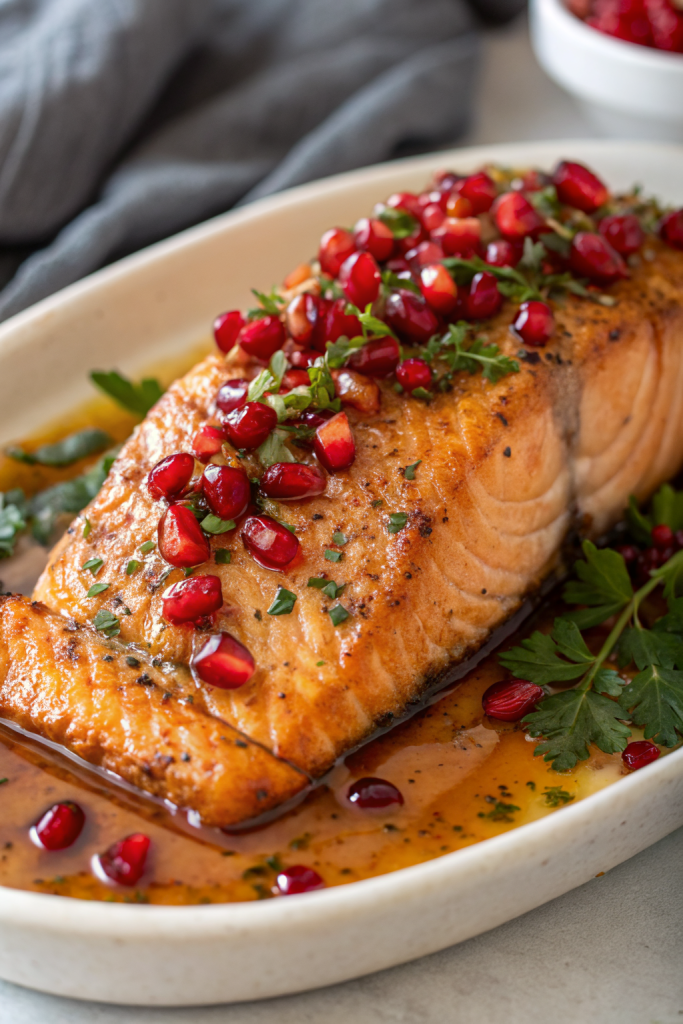
Pomegranate and Orange Glazed Salmon Recipe hits that perfect sweet-tangy-savory balance, with juicy salmon, sticky citrus glaze, and little pops of pomegranate on top. It works well for busy weeknights or at-home date nights, and you can get it on the table in about 30 minutes. I first tested this on a Tuesday when I felt tired and grumpy, and it still turned out restaurant-level good, so you know it’s weeknight-proof.
Why Pomegranate and Orange Glazed Salmon Recipe Is Worth It
This salmon tastes bright, slightly sweet, and a little tart, with caramelized edges and a tender, flaky center. The pomegranate and orange glaze adds a glossy finish that looks fancy enough for guests but stays easy enough for a regular weeknight.
You whisk the glaze in one bowl, brush it on, and let the oven or skillet do the heavy lifting. The recipe uses simple ingredients, but it feels special and seasonal, especially in fall and winter when citrus and pomegranates shine.
“This Pomegranate and Orange Glazed Salmon Recipe tasted like something from a nice restaurant, but I pulled it off on a Tuesday night in under 30 minutes. ★★★★★”
Ingredients You Need
Salmon
- 4 salmon fillets (about 5–6 ounces each), skin-on or skinless
- Wild salmon gives a slightly leaner, more robust flavor.
- Farmed salmon tastes richer and stays a bit more forgiving if you tend to overcook fish.
Pomegranate and orange glaze
- 1/2 cup pomegranate juice
- 100% juice, not a blend; brands like POM work well.
- 1/3 cup orange juice
- Fresh-squeezed tastes brightest, but a good not-from-concentrate carton works in a pinch.
- 2 tablespoons pure maple syrup or honey
- Maple syrup gives a deeper flavor; honey tastes a bit more floral.
- 1 tablespoon soy sauce or tamari
- Use tamari or coconut aminos for gluten-free.
- 1 tablespoon olive oil
- 1 tablespoon fresh lemon juice
- 2 teaspoons Dijon mustard
- 1–2 cloves garlic, minced
- 1 teaspoon fresh ginger, grated (or 1/4 teaspoon ground ginger)
- 1/4 teaspoon red pepper flakes (optional, for a little heat)
- 1/2 teaspoon kosher salt, plus more to season salmon
- 1/4 teaspoon black pepper, plus more to season salmon
Toppings and garnish
- 1/3–1/2 cup pomegranate arils (seeds)
- You can buy a cup of arils in the produce section to skip seeding a whole fruit.
- 1–2 tablespoons fresh parsley or cilantro, chopped
- Orange zest from 1 orange (optional but highly recommended)
Pantry shortcuts and substitutions
- Use bottled pomegranate juice and carton orange juice to save time.
- Swap maple syrup with brown sugar if needed; whisk until it dissolves.
- Replace fresh garlic and ginger with 1/2 teaspoon each of garlic powder and ground ginger when you feel rushed.
- Use frozen salmon fillets; thaw them overnight in the fridge or under cold water in sealed bags.
Equipment list
- Rimmed baking sheet or oven-safe skillet (cast iron works great)
- Parchment paper or foil for easy cleanup
- Small saucepan for the glaze
- Whisk and small bowl (if you prefer to mix before heating)
- Measuring cups and spoons
- Basting brush or spoon for glazing
- Instant-read thermometer (helps avoid overcooking)
Quick Tips & substitutions
- Pat salmon dry and season it with salt and pepper so the glaze sticks and the fish browns nicely.
- Reduce the glaze until it coats the back of a spoon and looks syrupy; thin glaze slides off the salmon.
- Keep a close eye on the glaze in the pan, since it contains sugar and can scorch if you crank the heat too high.
- Use tamari or coconut aminos instead of soy sauce to keep the recipe gluten-free.
- Swap maple syrup with honey or light brown sugar if that’s what you have.
- Use chicken thighs instead of salmon if someone in the house avoids fish; just cook them longer and glaze toward the end.
- Roast salmon at high heat (400–425°F) so it cooks quickly and stays juicy.
- Pull salmon when it reaches 125–130°F in the thickest part for moist, medium doneness.
- Add extra red pepper flakes or a pinch of cayenne if you like a spicy-sweet glaze.
- Use frozen pomegranate arils to avoid the mess of seeding a whole fruit; thaw them and pat dry.
How to Make Pomegranate and Orange Glazed Salmon Recipe
Step 1: Prep the salmon and oven
Preheat the oven to 400°F (200°C). Line a rimmed baking sheet with parchment or foil and lightly oil it. Pat the salmon fillets dry with paper towels, then place them skin-side down on the sheet.
Sprinkle the salmon with salt and pepper on top and sides. Let the fillets sit at room temperature while you mix and reduce the glaze so they cook more evenly.
Step 2: Mix the pomegranate and orange glaze
In a small saucepan, add pomegranate juice, orange juice, maple syrup (or honey), soy sauce or tamari, olive oil, lemon juice, Dijon mustard, garlic, ginger, red pepper flakes (if using), salt, and pepper. Whisk everything until it looks smooth and combined.
Set the pan over medium heat and bring the mixture to a gentle simmer. Stir occasionally so the sweeteners dissolve and the flavors blend.
Step 3: Reduce the glaze
Keep the glaze at a gentle simmer, not a hard boil. Stir every minute or so while it cooks.
Reduce the glaze for about 8–12 minutes, until it thickens and looks glossy. Dip a spoon in; if the glaze coats the back of the spoon and slowly drips off, you hit the right consistency.
If it thickens too much, add a teaspoon or two of water or orange juice and whisk until it loosens slightly. Turn off the heat and let it cool for 2–3 minutes so it thickens just a bit more.
Step 4: Glaze the salmon before baking
Spoon or brush a generous layer of the pomegranate and orange glaze over each salmon fillet. Coat the tops and sides, but keep a little glaze in the saucepan for basting later.
Slide the baking sheet into the hot oven. Bake the salmon for about 8 minutes.
Step 5: Baste and finish cooking
After 8 minutes, pull the sheet out and brush more glaze over the salmon. This second layer builds flavor and gives the fillets that sticky, shiny finish.
Return the salmon to the oven and bake another 3–6 minutes, depending on thickness. Check the internal temperature; aim for 125–130°F in the thickest part, or cook to your preferred doneness.
If you want a deeper caramelized top, switch the oven to broil for the last 1–2 minutes. Watch closely so the glaze does not burn.
Step 6: Rest and garnish
Remove the salmon from the oven and let it rest on the pan for 3–5 minutes. This short rest helps the juices settle so the fillets stay moist when you serve them.
Sprinkle pomegranate arils over the top, then add chopped parsley or cilantro. Finish with a little orange zest over each fillet for a bright citrus aroma.
Plate the salmon and spoon any extra glaze from the pan over the top. Serve right away while the glaze still feels warm and glossy.
Recipe Variations
- Gluten-free: Use tamari or coconut aminos instead of soy sauce and double-check your Dijon label.
- Dairy-free: The base recipe already avoids dairy, so you can serve it as-is with dairy-free sides.
- Low carb: Swap maple syrup with a sugar-free maple-style syrup or a granular sweetener that dissolves well; reduce the orange juice slightly and add a bit more pomegranate juice.
- No pomegranate juice: Use cranberry juice and still top with pomegranate arils for texture and color.
- No fresh ginger: Use 1/4–1/2 teaspoon ground ginger and whisk it in with the other ingredients.
- Extra citrusy: Add more orange zest to the glaze and finish with a squeeze of fresh orange juice right before serving.
- Spicy version: Add extra red pepper flakes or a pinch of cayenne to the glaze.
- Sheet pan meal: Add green beans, asparagus, or thin carrot sticks around the salmon, toss them with olive oil, salt, and pepper, and roast everything together.
Ways to Serve Pomegranate and Orange Glazed Salmon Recipe
- Over fluffy jasmine rice or brown rice with extra glaze spooned on top.
- With quinoa or couscous and a simple green salad on the side.
- Alongside roasted vegetables like Brussels sprouts, carrots, or broccoli.
- With mashed sweet potatoes or roasted sweet potato wedges to match the sweet-tart glaze.
- On top of mixed greens with cucumber, avocado, and pomegranate arils for a hearty salad.
- In a grain bowl with farro, shredded cabbage, and a drizzle of leftover glaze as dressing.
- With steamed green beans or asparagus and lemon wedges on the side.
Storage Success
Let leftover Pomegranate and Orange Glazed Salmon cool to room temperature, then store it in an airtight container in the fridge for up to 3 days. Keep the salmon and any extra glaze in separate containers if you can, so the fish does not sit in too much liquid. Reheat gently in a low oven (around 275°F) or in a covered skillet over low heat until warm, and spoon extra glaze on after reheating. Enjoy leftovers flaked over salads, tucked into rice bowls, or stuffed into lettuce wraps for an easy next-day meal.

Pomegranate and Orange Glazed Salmon
Ingredients
Instructions
- In a small saucepan, combine pomegranate juice, orange juice, orange zest, honey, soy sauce, minced garlic, and Dijon mustard.
- Bring to a gentle boil over medium heat, then reduce to a simmer and cook for 6 to 8 minutes, stirring occasionally, until reduced by about half.
- If you prefer a thicker glaze, whisk cornstarch with water in a small bowl, then stir the slurry into the simmering sauce and cook 1 to 2 minutes more until glossy and slightly thickened. Remove from heat and set aside.
- Pat the salmon fillets dry with paper towels. Rub with olive oil and season both sides with salt and black pepper.
- Heat a large nonstick or cast-iron skillet over medium-high heat. When hot, place the salmon fillets in the pan, skin-side down if using skin-on.
- Cook for 4 to 5 minutes without moving, until the salmon is mostly opaque and the skin is crisp.
- Flip the fillets and cook another 2 to 4 minutes, depending on thickness, until the salmon is just cooked through and flakes easily with a fork.
- Reduce the heat to low. Spoon or brush the warm pomegranate orange glaze generously over the tops of the salmon fillets, letting it bubble briefly in the pan to coat.
- Transfer salmon to serving plates, spooning any remaining glaze from the pan over the fillets.
- Garnish with pomegranate arils and chopped parsley or dill, if desired, and serve immediately.
Notes
Approximate per serving (1 of 4): 360 calories; fat 18 g; saturated fat 3 g; carbohydrates 19 g; fiber 0 g; sugars 17 g; protein 30 g; sodium 340 mg. Values are estimates and will vary based on specific ingredients, brands, and portion sizes.
Leave a Reply