
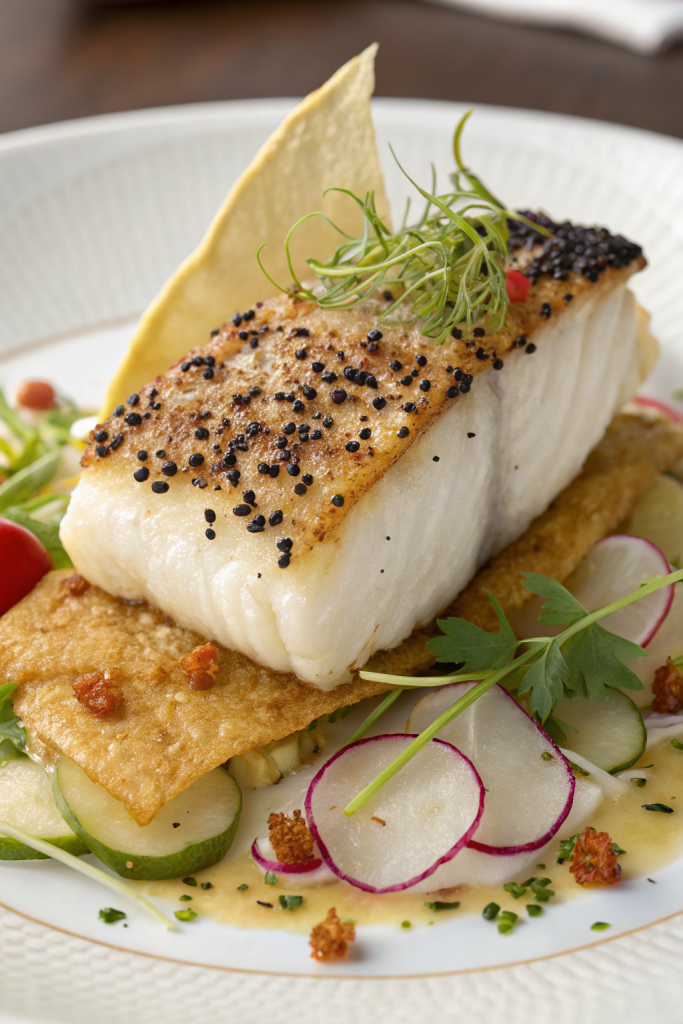
Parmesan-Crusted Sea Bass Recipe tastes buttery, crisp, and a little nutty, with a golden cheese crust that shatters when you bite into it. It works perfectly for busy weeknights or at-home date nights, since you can finish the whole recipe in about 25 minutes. I first made this on a Tuesday when I felt fancy but still wore sweatpants, and it fit the vibe perfectly.
Why Parmesan-Crusted Sea Bass Recipe Is Worth It
This Parmesan-Crusted Sea Bass Recipe gives you restaurant-level flavor with very little effort. The sea bass stays juicy and tender, while the Parmesan crust turns crisp and savory with hints of garlic and lemon.
You only need one pan, a small bowl, and a few pantry staples. Cleanup stays easy, and the fish cooks quickly, so you can plate a gorgeous dinner before anyone starts rummaging for snacks.
Crisp, buttery, and cheesy with zero fuss, this Parmesan-Crusted Sea Bass Recipe tastes like a fancy seafood dinner without the fancy effort. ★★★★★
Ingredients You Need
Sea bass
- 4 sea bass fillets (about 5–6 ounces each, skin on or off, patted very dry)
- 1 tablespoon olive oil (plus a drizzle for the pan)
- 1 teaspoon kosher salt
- ½ teaspoon freshly ground black pepper
- ½ teaspoon smoked paprika or sweet paprika
Parmesan crust
- ½ cup finely grated Parmesan cheese
- Use a microplane or the fine side of a box grater so the cheese melts quickly.
- Use real Parmigiano Reggiano if possible; pre-grated shelf-stable cheese works in a pinch but browns faster.
- ⅓ cup panko breadcrumbs
- Use gluten-free panko if you avoid gluten.
- 1 tablespoon all-purpose flour
- Swap with almond flour for low carb or gluten-free flour for gluten-free.
- 2 tablespoons unsalted butter, melted
- 1 tablespoon olive oil
- 2 cloves garlic, very finely minced or grated
- Zest of 1 lemon (about 1 teaspoon)
- 1 tablespoon fresh parsley, finely chopped
- ½ teaspoon dried Italian seasoning or dried oregano
- ¼ teaspoon crushed red pepper flakes (optional, for a little heat)
Finishing
- Lemon wedges, for serving
- Extra chopped parsley or chives, for garnish
Pantry shortcuts and notes
- Use garlic powder (½ teaspoon) if you do not want to mince fresh garlic.
- Use bottled lemon juice in the crust if you do not have fresh lemons, but still try to use fresh lemon wedges at the table.
- Use frozen sea bass fillets; just thaw them overnight in the fridge and pat them very dry before cooking.
Equipment
- Large oven-safe skillet (cast iron or stainless steel works best)
- Small mixing bowl
- Microplane or fine grater for Parmesan and lemon zest
- Fish spatula or thin metal spatula
- Instant-read thermometer (helpful but optional)
Quick Tips & substitutions
- Pat the sea bass very dry so the crust sticks and the fish browns nicely.
- Bring the fish close to room temperature for 15–20 minutes before cooking so it cooks evenly.
- Use cod, halibut, or haddock if you cannot find sea bass; keep fillets about 1-inch thick.
- Swap panko with crushed pork rinds for low carb, or gluten-free panko for gluten-free.
- Use mayonnaise instead of melted butter for the crust if you want extra moisture and a thicker coating.
- Line the pan with lightly oiled parchment if your fish tends to stick.
- Keep an eye on the crust under the broiler; it can brown quickly in 1–2 minutes.
- Pull the fish off the heat when it reaches 130–135°F in the thickest part; it will finish cooking as it rests.
How to Make Parmesan-Crusted Sea Bass Recipe
Step 1: Preheat and prep the pan
Preheat your oven to 400°F (200°C). Place your oven-safe skillet on the stove and drizzle in a thin layer of olive oil. Heat the skillet over medium heat while you prep the crust so the pan gets hot but not smoking.
Step 2: Season the sea bass
Pat each sea bass fillet very dry with paper towels. Season both sides with kosher salt, black pepper, and smoked paprika. Set the fillets aside on a plate while you mix the crust.
Step 3: Mix the Parmesan crust
In a small bowl, add the finely grated Parmesan, panko, flour, melted butter, olive oil, garlic, lemon zest, parsley, Italian seasoning, and crushed red pepper flakes if you use them. Stir everything until the mixture looks like damp, clumpy sand. Taste a tiny pinch and adjust with a little more salt or lemon zest if needed.
Step 4: Sear the sea bass
Check that your skillet feels hot but not smoking. Place the sea bass fillets in the pan, presentation side down (the nicer side that you want facing up on the plate). Sear the fish for 2–3 minutes until the bottom turns lightly golden and releases easily from the pan.
Step 5: Flip and add the crust
Flip each fillet gently with a fish spatula. Turn off the burner while you work so the crust does not burn. Spoon the Parmesan mixture on top of each fillet and press it down firmly with the back of the spoon or your fingers to form an even layer.
Step 6: Bake until almost done
Transfer the skillet to the hot oven. Bake the Parmesan-crusted sea bass for 6–9 minutes, depending on thickness, until the fish flakes easily and the internal temperature reaches about 130–135°F. The crust should look golden and crisp around the edges.
Step 7: Broil for extra crunch (optional)
Switch the oven to broil on high. Broil the fish for 1–2 minutes to deepen the color of the Parmesan crust. Watch closely and pull the pan out as soon as the top turns deep golden and crisp.
Step 8: Rest and garnish
Let the sea bass rest in the pan for 3–4 minutes. Squeeze a little fresh lemon juice over the top and sprinkle with extra parsley or chives. Serve the Parmesan-Crusted Sea Bass Recipe hot with lemon wedges on the side.
Recipe Variations
- Gluten-free: Use gluten-free panko and gluten-free flour or almond flour in the crust.
- Low carb: Skip flour and panko and use only Parmesan and crushed pork rinds or finely ground almonds.
- Dairy-free: Use dairy-free Parmesan-style shreds and olive oil or vegan butter instead of regular butter.
- Herb-forward: Add fresh basil, dill, or tarragon to the crust for a brighter herbal flavor.
- Spicy version: Increase crushed red pepper flakes and add a pinch of cayenne to the crust.
- Lemon-pepper style: Add extra lemon zest and a teaspoon of lemon pepper seasoning to the crust.
Ways to Serve Parmesan-Crusted Sea Bass Recipe
- Over a bed of garlicky mashed potatoes or mashed cauliflower.
- With roasted asparagus, green beans, or broccoli on the side.
- On top of a simple arugula salad with cherry tomatoes and cucumber.
- With buttered rice, quinoa, or couscous and a squeeze of lemon.
- In soft tortillas with shredded cabbage and a light yogurt or avocado sauce for fish tacos.
Storage Success
Let leftover Parmesan-crusted sea bass cool to room temperature, then store it in an airtight container in the fridge for up to 2 days. Reheat it in a 350°F oven or toaster oven for 8–10 minutes so the crust turns crisp again. Skip the microwave if possible, since it softens the crust and can overcook the fish. Enjoy leftovers over salad, in tacos, or flaked into a quick pasta.

Parmesan-Crusted Sea Bass Recipe
Ingredients
Instructions
- Preheat the oven to 400°F (200°C). Line a baking sheet with parchment paper or lightly grease it with 1 tablespoon of olive oil.
- Pat the sea bass fillets dry with paper towels and set them on the prepared baking sheet.
- In a shallow bowl, combine the grated Parmesan, panko breadcrumbs, garlic powder, Italian seasoning, salt, and black pepper.
- In a small bowl, whisk together the remaining 2 tablespoons olive oil, Dijon mustard, lemon juice, and lemon zest (if using).
- Brush the top of each sea bass fillet with the Dijon-lemon mixture to lightly coat.
- Press the Parmesan breadcrumb mixture evenly over the tops of the fillets, gently pressing so it adheres well.
- Bake for 12 to 15 minutes, or until the fish flakes easily with a fork and the topping is golden and crisp. Thicker fillets may need an extra minute or two.
- Remove from the oven and let rest for 2 minutes. Sprinkle with chopped parsley if desired and serve with lemon wedges.
Notes
Approximate per serving (1 fillet): 360 calories; fat 20 g; saturated fat 5 g; carbohydrates 8 g; fiber 1 g; sugars 1 g; protein 36 g; sodium 430 mg. Values will vary based on exact fillet size, brands used, and any substitutions or add-ins.
Leave a Reply