
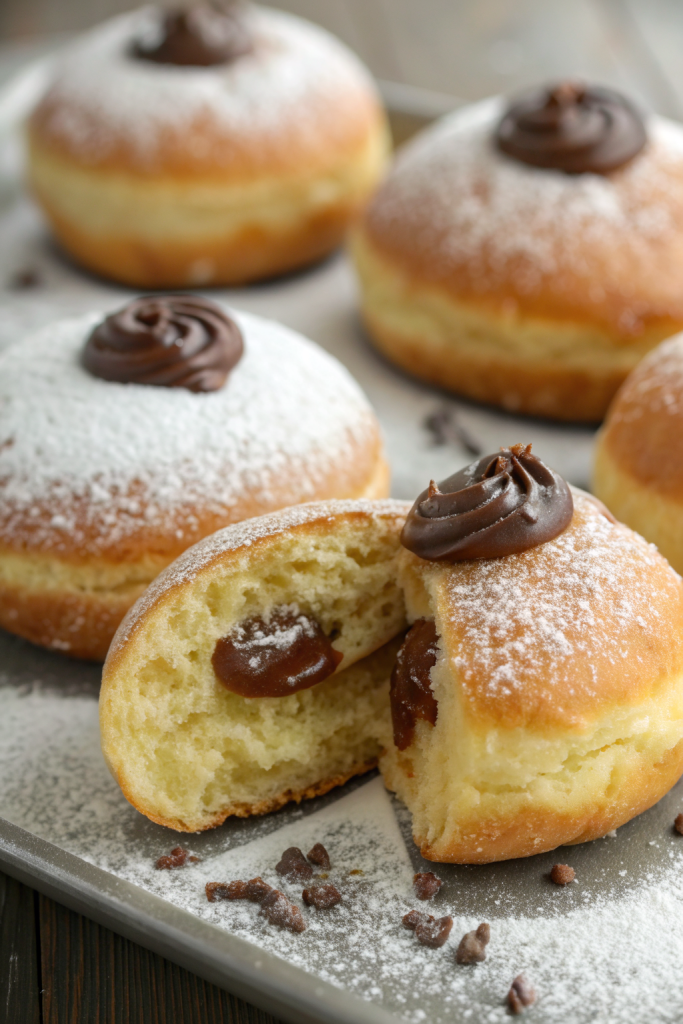
Hazelnut Cream Beignets Recipe tastes like a mash-up of a New Orleans café and a jar of chocolate-hazelnut spread, with crisp edges and a soft, pillowy center. It suits weekend brunch fans, holiday bakers, and anyone who wants a bakery-level treat in about 2 hours total (including rising time). I tested this on a random Tuesday night in sweatpants, so you know it works in real life, not just in food-magazine fantasy.
Why Hazelnut Cream Beignets Recipe Is Worth It
You get golden, airy beignets that puff up dramatically and hide a rich, nutty hazelnut cream inside. The contrast between the hot dough and cool filling hits that perfect “one more bite” zone.
This recipe uses simple pantry ingredients and one special star: hazelnut spread. You mix the dough by hand or in a stand mixer, so it works in a tiny apartment kitchen or a full-blown home bakery setup.
These Hazelnut Cream Beignets taste like a fancy café dessert that snuck into my kitchen and never left ★★★★★
Ingredients You Need
Dough
- 3/4 cup warm whole milk (about 105–110°F; warm to the touch, not hot)
- 2 1/4 teaspoons active dry yeast (one standard packet)
- 3 tablespoons granulated sugar
- 2 large eggs, room temperature
- 3 tablespoons unsalted butter, melted and slightly cooled
- 1 teaspoon vanilla extract
- 2 3/4 to 3 cups all-purpose flour (start with 2 3/4 cups, add more only if dough feels sticky)
- 1/2 teaspoon fine sea salt
I like King Arthur or Gold Medal flour because they give consistent results. Use any brand of active dry yeast, but check the expiration date so the dough rises well.
Hazelnut Cream Filling
- 1/2 cup chocolate-hazelnut spread (Nutella or a similar brand)
- 4 ounces cream cheese, softened
- 1/4 cup powdered sugar, sifted
- 1/4 teaspoon fine sea salt
- 1 teaspoon vanilla extract
- 2–3 tablespoons heavy cream or whole milk, as needed to thin
Use full-fat cream cheese so the filling stays thick and pipeable. If you want a stronger nut flavor, stir in 1–2 tablespoons of finely ground toasted hazelnuts.
For Frying & Finishing
- Neutral oil for frying (canola, peanut, or vegetable oil) – enough for 2–3 inches in a heavy pot
- 1 cup powdered sugar, for dusting
- Optional: 1/4 cup finely chopped toasted hazelnuts, for sprinkling on top
Use a heavy-bottomed pot or Dutch oven for even heat. A clip-on thermometer helps you keep the oil at the right temperature.
Equipment List
- Large mixing bowl (or stand mixer with dough hook)
- Medium bowl for filling
- Whisk and rubber spatula
- Rolling pin
- Bench scraper or sharp knife
- Heavy pot or Dutch oven
- Deep-fry thermometer (strongly recommended)
- Slotted spoon or spider skimmer
- Wire rack set over a sheet pan or paper towels
- Piping bag with a small round tip (or zip-top bag with a snipped corner)
- Small paring knife or skewer to poke holes for filling
Quick Tips & substitutions
- Use instant yeast instead of active dry yeast and skip the blooming step; mix it right into the flour.
- Swap whole milk with 2% milk if needed; avoid non-dairy milk in the dough if you want maximum fluffiness.
- Chill the hazelnut cream filling so it thickens and pipes cleanly without oozing everywhere.
- Keep the oil at 350–365°F; adjust the heat often so the beignets cook through without burning.
- Dust with powdered sugar right after frying so it sticks well.
- Use a pizza cutter to slice the dough into neat squares without stretching it too much.
- Fill only cooled beignets; hot ones melt the filling and make a mess.
- Use a store-bought hazelnut spread straight from the jar; no need to mix your own unless you want to.
How to Make Hazelnut Cream Beignets Recipe
Step 1: Mix and Activate the Yeast
- Pour the warm milk into a large mixing bowl.
- Whisk in the sugar and yeast until the mixture looks foamy on top, about 5–10 minutes.
- If the mixture stays flat and lifeless, toss it and start again with fresh yeast.
Step 2: Build the Dough
- Whisk the eggs, melted butter, and vanilla into the foamy yeast mixture.
- Add 2 3/4 cups of flour and the salt, then stir with a wooden spoon or use a stand mixer on low speed.
- Mix until the dough comes together and pulls away from the sides of the bowl; add extra flour 1 tablespoon at a time only if it sticks heavily to your hands.
Step 3: Knead Until Smooth
- Turn the dough out onto a lightly floured surface.
- Knead by hand for 6–8 minutes, or use a stand mixer on medium-low for about 5 minutes, until the dough feels smooth, soft, and slightly tacky.
- Shape it into a ball and give it a gentle poke; if the dent springs back slowly, the gluten developed nicely.
Step 4: First Rise
- Lightly oil a clean bowl and place the dough ball inside, turning it once to coat the surface with a thin layer of oil.
- Cover the bowl with plastic wrap or a clean kitchen towel.
- Set it in a warm, draft-free spot and let the dough rise until it doubles in size, about 60–90 minutes, depending on your kitchen temperature.
Step 5: Make the Hazelnut Cream Filling
- While the dough rises, beat the softened cream cheese in a medium bowl until smooth.
- Add the hazelnut spread, powdered sugar, salt, and vanilla, then mix until the filling looks creamy and uniform.
- Add heavy cream or milk 1 tablespoon at a time until the mixture reaches a thick, pipeable consistency.
- Spoon the filling into a piping bag fitted with a small round tip, then chill it in the fridge so it firms up slightly.
Step 6: Roll Out the Dough
- Punch down the risen dough gently to release extra gas.
- Turn it out onto a lightly floured surface and roll it into a rectangle about 1/4 inch thick.
- Trim the edges if you want clean squares, then cut the dough into 2 to 2 1/2 inch squares or rectangles with a knife or pizza cutter.
Step 7: Second Rise
- Arrange the cut pieces on a parchment-lined baking sheet, leaving a little space between each one.
- Cover them loosely with a kitchen towel.
- Let them rise again until puffy and slightly lighter, about 30–40 minutes.
Step 8: Heat the Oil
- Pour 2–3 inches of oil into a heavy pot or Dutch oven.
- Clip on a thermometer and heat the oil over medium heat until it reaches 350–365°F.
- Adjust the heat as needed and keep an eye on the temperature while you fry.
Step 9: Fry the Beignets
- Fry a test piece first so you can check the timing and color.
- Gently lower 3–4 dough squares into the hot oil, taking care not to crowd the pot.
- Fry each side for about 1–2 minutes, until the beignets puff and turn deep golden brown.
- Lift them out with a slotted spoon and place them on a wire rack or paper towels to drain.
- Repeat with the remaining dough, letting the oil return to temperature between batches.
Step 10: Dust with Sugar
- While the beignets still feel warm, sift powdered sugar generously over the tops.
- Flip and dust the other side if you want full coverage.
- Let them cool to just warm or room temperature before you fill them.
Step 11: Fill with Hazelnut Cream
- Use a small paring knife or skewer to poke a hole in the side or bottom of each beignet.
- Insert the piping tip into the hole and gently squeeze in the hazelnut cream until you feel the beignet plump up.
- Wipe any excess filling, then sprinkle with extra powdered sugar or chopped hazelnuts if you like.
- Serve soon after filling so the dough stays light and the center stays creamy.
Recipe Variations
- Gluten-free version: Use a 1:1 gluten-free all-purpose flour blend that includes xanthan gum; handle the dough gently and expect a slightly denser texture.
- Vegan version: Use plant-based milk, vegan butter, and a vegan hazelnut spread; swap eggs with 1/4 cup unsweetened applesauce or a commercial egg replacer.
- Low sugar tweak: Cut the sugar in the dough to 2 tablespoons and reduce the powdered sugar in the filling; dust lightly on top instead of heavily.
- Extra nutty: Stir 2–3 tablespoons of finely chopped toasted hazelnuts into the filling and sprinkle more on top.
- Chocolate overload: Drizzle melted dark chocolate over the finished beignets and keep the hazelnut cream slightly thicker.
- Citrus twist: Add 1 teaspoon orange zest to the dough and 1/2 teaspoon to the filling for a bright flavor.
Ways to Serve Hazelnut Cream Beignets Recipe
- Serve warm with a big mug of coffee, hot chocolate, or chai.
- Plate them on a platter with extra powdered sugar and chopped hazelnuts for a brunch centerpiece.
- Add fresh berries on the side to cut through the richness.
- Pack a few in a lunchbox and keep the filling slightly thicker so it stays put.
- Offer a small bowl of extra hazelnut spread for dipping the corners.
Storage Success
Store leftover hazelnut cream beignets in an airtight container at room temperature for up to 1 day if they do not contain filling yet. Keep filled beignets in the fridge for up to 2 days so the cream stays safe and thick. Reheat unfilled beignets in a 300°F oven for 5–7 minutes, then dust again with powdered sugar. Enjoy filled ones chilled or let them sit at room temperature for 15–20 minutes so the dough softens and the filling turns silky.
Hazelnut Cream Beignets Recipe
Ingredients
Instructions
- Pour the warm milk into a large mixing bowl and whisk in the sugar and yeast.
- Let stand until the mixture looks foamy on top, about 5–10 minutes. If it does not foam, discard and start again with fresh yeast.
- Whisk the eggs, melted butter, and vanilla into the foamy yeast mixture.
- Add 2 3/4 cups of flour and the salt, then stir with a wooden spoon or mix on low speed in a stand mixer until the dough comes together and pulls away from the sides of the bowl. Add more flour 1 tablespoon at a time only if the dough is very sticky.
- Turn the dough onto a lightly floured surface and knead by hand for 6–8 minutes, or mix on medium-low speed for about 5 minutes, until smooth, soft, and slightly tacky.
- Shape into a ball, place in a lightly oiled bowl, turn once to coat, cover, and let rise in a warm, draft-free spot until doubled in size, about 60–90 minutes.
- While the dough rises, beat the softened cream cheese in a medium bowl until smooth.
- Add the chocolate-hazelnut spread, powdered sugar, salt, and vanilla, and mix until creamy and uniform.
- Add heavy cream or milk 1 tablespoon at a time until the mixture is thick but pipeable. Transfer to a piping bag fitted with a small round tip and chill to firm slightly.
- Punch down the risen dough, then roll it out on a lightly floured surface into a rectangle about 1/4 inch thick.
- Cut into 2 to 2 1/2 inch squares or rectangles and arrange on a parchment-lined baking sheet.
- Cover loosely with a kitchen towel and let rise until puffy and slightly lighter, about 30–40 minutes.
- Heat 2–3 inches of neutral oil in a heavy pot or Dutch oven to 350–365°F, monitoring with a thermometer.
- Fry a test piece, then fry 3–4 dough squares at a time, 1–2 minutes per side, until puffed and deep golden brown.
- Remove with a slotted spoon and drain on a wire rack or paper towels, letting the oil return to temperature between batches.
- While still warm, generously dust the beignets with powdered sugar on both sides. Let cool to warm or room temperature before filling.
- Use a small paring knife or skewer to poke a hole in the side or bottom of each beignet. Insert the piping tip and gently squeeze in hazelnut cream until the beignet feels plump.
- Wipe away any excess filling, dust again with powdered sugar, and sprinkle with chopped toasted hazelnuts if desired. Serve soon after filling.
Notes
Approximate per 1 beignet (about 1/20 of recipe): 210 calories; fat 13 g; saturated fat 4 g; carbohydrates 20 g; fiber 1 g; sugars 7 g; protein 4 g; sodium 110 mg. Values will vary based on brands, exact oil absorption, and portion size.