
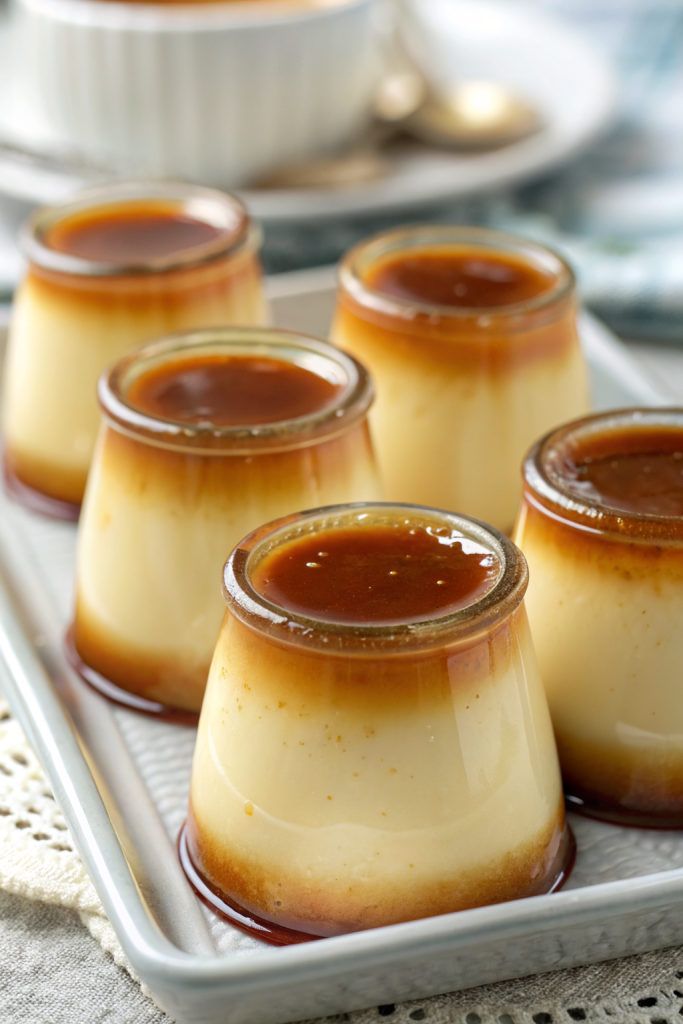
Japanese Silky Custard Purin Recipe tastes like a cross between crème caramel and flan, but lighter, smoother, and with that gentle Japanese-style sweetness that never feels heavy. It suits anyone who loves custard desserts and wants a café-level treat in about 1 hour total, plus chill time. I ate my first purin in a tiny Tokyo coffee shop, and I still chase that same silky spoonful every time I make this recipe at home.
Why Make This Japanese Silky Custard Purin Recipe at Home
Homemade Japanese Silky Custard Purin tastes creamier and fresher than anything in a plastic cup from the store. You control the sweetness, the texture, and even how dark you like the caramel.
You also avoid weird additives and keep the ingredient list short and simple. Once you try this method, you might start making purin on autopilot every weekend.
“This Japanese Silky Custard Purin Recipe tastes smoother than any store-bought pudding and feels like a café dessert in my own kitchen. ★★★★★”
Ingredients You Need
For the caramel layer
- 4 tablespoons granulated sugar
- 2 tablespoons water
- 1 tablespoon hot water (to loosen the caramel at the end)
Notes:
- Use regular white sugar here. Brown sugar changes the flavor and color and tastes more like butterscotch.
- A light-colored saucepan helps you see the color change so you avoid burning.
For the custard
- 2 large eggs (room temperature)
- 2 large egg yolks (room temperature)
- 2 cups whole milk
- 1/3 cup granulated sugar
- 1 teaspoon vanilla extract (or 1/2 teaspoon vanilla paste)
- Small pinch of fine sea salt
Ingredient tips and swaps:
- Whole milk gives the best silky texture. You can use 1 cup whole milk + 1 cup half-and-half for a richer version.
- Avoid skim milk. It turns the purin watery and less smooth.
- Use vanilla paste if you want those pretty specks in the custard.
- You can use caster sugar instead of regular sugar for easier dissolving.
Equipment
- 4 to 6 small heatproof ramekins or pudding cups (about 4 to 6 ounces each)
- Small saucepan for caramel
- Medium saucepan for custard
- Fine mesh strainer
- Large baking dish or deep roasting pan (for the water bath)
- Kettle or pot to heat water for the water bath
- Plastic wrap or lids for chilling
- Small offset spatula or thin knife for unmolding
Tips & Mistakes
- Heat the caramel on medium and watch closely so it turns deep amber, not black.
- Swirl the pan gently instead of stirring with a spoon so the sugar melts evenly and does not crystallize.
- Pour the caramel into ramekins right away because it firms up fast.
- Warm the milk until it feels hot but not boiling so you avoid scrambling the eggs.
- Whisk the eggs gently and avoid whipping in lots of bubbles, which cause holes in the custard.
- Strain the custard mixture through a fine mesh sieve for the smoothest texture.
- Skim off foam on top of the custard before baking so the surface stays glossy and even.
- Use a water bath with hot water that reaches about halfway up the ramekins so the custard cooks gently.
- Cover the ramekins loosely with foil to prevent a skin from forming and to avoid rubbery tops.
- Bake at low heat and check early so the purin stays jiggly in the center and does not overcook.
- Cool the custard completely before chilling so condensation does not drip onto the surface.
- Chill at least 4 hours, but overnight gives the best flavor and texture.
- Run a thin knife around the edge before unmolding so the custard releases cleanly.
- If the caramel sticks, dip the bottom of the ramekin in warm water for a few seconds to loosen it.
How to Make Japanese Silky Custard Purin Recipe
Step 1: Prepare the ramekins and oven
Preheat your oven to 300°F (150°C).
Place the ramekins in a deep baking dish or roasting pan.
Keep a kettle or pot of water heating on the stove so you have hot water ready for the water bath.
Step 2: Make the caramel
Add 4 tablespoons sugar and 2 tablespoons water to a small saucepan.
Set the pan over medium heat and swirl gently as the sugar dissolves and starts to bubble.
Watch the color closely and cook until it turns a deep amber shade that smells toasty but not burnt.
Turn off the heat and add 1 tablespoon hot water carefully, since it can splatter.
Swirl until the caramel loosens slightly.
Immediately pour the caramel into the bottom of each ramekin, tilting each one so the caramel coats the base evenly.
Step 3: Heat the milk
In a medium saucepan, add the milk, sugar, and pinch of salt.
Heat over medium-low heat and stir until the sugar dissolves and the milk feels hot to the touch, with small steam wisps but no simmer.
Turn off the heat and let it sit for 2 to 3 minutes so it cools slightly.
Step 4: Mix the eggs
In a mixing bowl, whisk together the eggs and egg yolks until they blend smoothly.
Whisk gently so you do not create lots of foam.
Add the vanilla extract or paste and whisk again until combined.
Step 5: Temper the eggs
Slowly pour a small amount of the warm milk mixture into the eggs while you whisk constantly.
Keep adding the milk in a thin stream and whisk until all the milk blends with the eggs.
This step warms the eggs gradually and keeps them from curdling.
Step 6: Strain and remove bubbles
Pour the custard mixture through a fine mesh strainer into a clean bowl or large measuring cup.
Use a spoon to skim off any foam or bubbles on the surface.
Smooth custard and minimal bubbles give that signature silky Japanese purin texture.
Step 7: Fill the ramekins
Pour the strained custard gently over the set caramel in each ramekin.
Leave a little space at the top of each cup so the custard does not spill in the water bath.
Cover each ramekin loosely with foil to protect the surface.
Step 8: Set up the water bath
Place the baking dish with the filled ramekins on the oven rack.
Carefully pour hot water into the baking dish until it reaches about halfway up the sides of the ramekins.
Slide the rack into the oven gently so the water does not splash into the custard.
Step 9: Bake the purin
Bake at 300°F (150°C) for about 30 to 40 minutes.
Check by gently jiggling one ramekin; the edges should look set while the center still wobbles like soft jelly.
If the center looks very liquid, bake for another 5 minutes and check again.
Step 10: Cool and chill
Remove the baking dish from the oven and lift the ramekins out of the water bath.
Set them on a wire rack and let them cool to room temperature.
Cover and chill in the fridge for at least 4 hours, or overnight for the best Japanese Silky Custard Purin texture.
Step 11: Unmold and serve
To unmold, run a thin knife or small offset spatula around the inside edge of each ramekin.
Place a small plate on top, flip the whole thing, and give a gentle shake until the purin slides out.
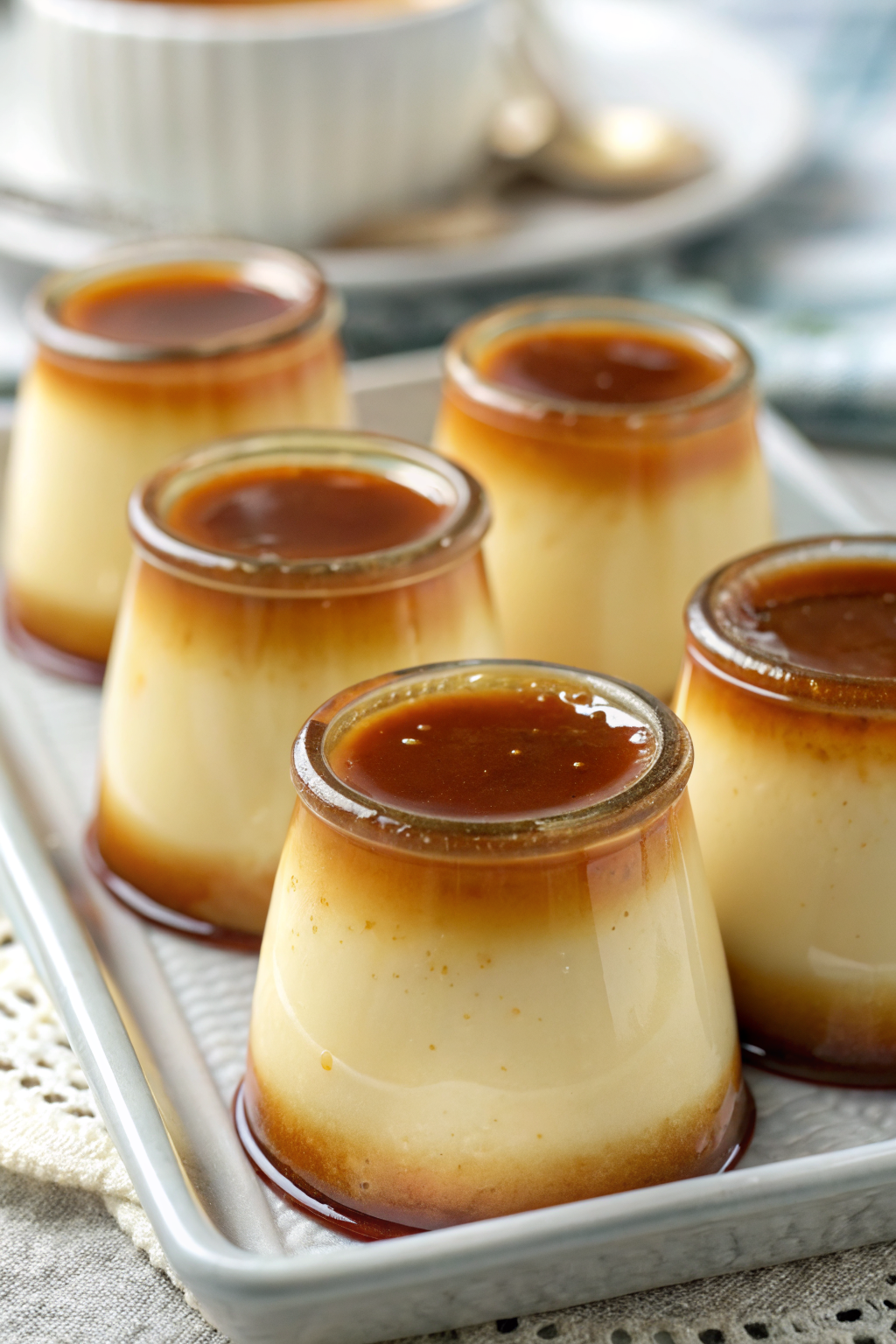
The caramel will flow over the custard and pool around it.
Variations I've Tried
- Matcha purin: Whisk 1 to 2 teaspoons matcha powder into the warm milk and sugar mixture and strain very well. This version tastes slightly earthy and pairs nicely with whipped cream.
- Coffee purin: Stir in 1 tablespoon instant espresso powder or strong instant coffee into the hot milk. This one tastes like a coffee shop dessert and works great as an afternoon treat.
- Milk tea purin: Steep 2 black tea bags in the hot milk for 5 to 7 minutes, then remove them and proceed with the recipe. The custard tastes like sweet milk tea in pudding form.
- Extra rich purin: Swap 1/2 cup of the milk with heavy cream. The texture becomes thicker and more custardy, almost like a cross between purin and crème brûlée.
How to Serve Japanese Silky Custard Purin Recipe
Serve Japanese Silky Custard Purin cold, straight from the fridge, with the caramel sauce dripping down the sides. Add a small dollop of lightly sweetened whipped cream and maybe a few fresh berries if you feel fancy. Kids love it plain, while adults often enjoy it with a hot cup of green tea or coffee. I like to plate each purin on a small saucer so the caramel pools nicely and looks café-style.
How to store
- Fridge: Cover each purin tightly with plastic wrap or lids and store in the fridge for up to 3 days.
- Freezer: Avoid freezing, since freezing changes the silky custard texture and makes it grainy.
- Reheating: Serve purin cold; do not reheat, since heat can cause the custard to separate and lose its smoothness.
Japanese Silky Custard Purin
Ingredients
Instructions
- Preheat the oven to 300°F (150°C). Place 4 heatproof ramekins in a shallow baking dish.
- In a small saucepan, add sugar and water for the caramel. Heat over medium heat without stirring until the mixture turns a deep amber color.
- Remove from heat and, if using, carefully add hot water to loosen the caramel, swirling the pan gently.
- Immediately divide the hot caramel among the ramekins, tilting each to coat the bottoms evenly. Set aside to cool and harden.
- Warm the milk in a saucepan over low heat until just steaming, then remove from heat. Do not let it boil.
- In a bowl, whisk eggs and sugar together gently until the sugar is dissolved, trying not to create too many bubbles.
- Slowly pour the warm milk into the egg mixture while whisking gently, then stir in the vanilla extract.
- Strain the custard through a fine-mesh sieve into a measuring jug or bowl to remove any lumps and air bubbles.
- Pour the strained custard gently into the caramel-lined ramekins.
- Fill the baking dish with hot water until it reaches about halfway up the sides of the ramekins, creating a water bath.
- Bake for 30 to 40 minutes, or until the custard is set around the edges but still slightly jiggly in the center.
- Remove the ramekins from the water bath and let them cool to room temperature, then cover and refrigerate for at least 4 hours or until fully chilled.
- To serve, run a thin knife around the edge of each custard, invert onto a plate, and gently lift off the ramekin so the caramel sauce coats the top.
Notes
Approximate per serving: 210 calories; fat 9 g; saturated fat 4 g; carbohydrates 25 g; fiber 0 g; sugars 24 g; protein 8 g; sodium 80 mg. Values will vary based on brands, add-ins, and portion size.
Leave a Reply