
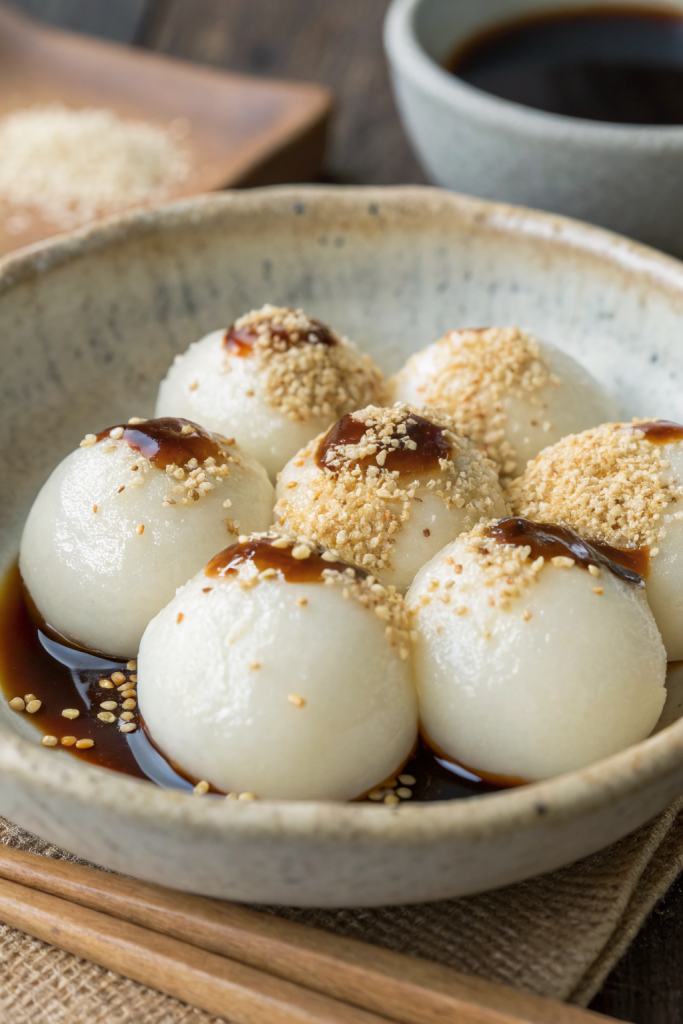
Shiratama Dango Japanese Dessert Recipe tastes chewy, bouncy, and lightly sweet, like the mochi cousin that always shows up dressed perfectly. It works well for anyone who wants a simple Japanese dessert that looks fancy but takes about 25–30 minutes from start to finish. I still remember burning my fingers on my first batch years ago, so you can skip my mistakes and just enjoy the good part.
Why Shiratama Dango Japanese Dessert Recipe Is Worth It
Shiratama dango uses only a few ingredients, yet it delivers that classic chewy mochi texture you get at good Japanese dessert shops. You mix, roll, boil, and chill, and suddenly you have a dessert that fits with fruit, ice cream, sweet red bean paste, or matcha syrup.
The recipe works well for beginners because the dough tells you when you get it right: it feels like a soft earlobe when you knead it. You also control sweetness with the toppings, so the base stays simple and light.
Soft, chewy, and endlessly customizable, this Shiratama Dango Japanese Dessert Recipe tastes like something from a Tokyo café but comes together in under half an hour at home. ★★★★★
Ingredients You Need
Core ingredients
- Shiratamako (glutinous rice flour) – 100 g
- Use shiratamako, not regular rice flour.
- I like brands such as Shirakiku or Mochiko labeled specifically as glutinous rice flour for dango or mochi.
- Water – about 90–110 ml, room temperature
- Add gradually until the dough feels like a soft earlobe.
- Sugar – 1–2 tablespoons (optional in the dough)
- I usually keep the dough unsweetened and add sweetness with toppings.
Classic toppings (mix and match)
- Kinako sugar topping
- 2 tablespoons kinako (roasted soybean flour)
- 1–1½ tablespoons sugar
- Small pinch of salt
- Kuromitsu-style syrup (brown sugar syrup)
- 3 tablespoons dark brown sugar or Japanese kuromitsu sugar
- 2 tablespoons water
- Anko (sweet red bean paste) – ½ cup
- Use smooth (koshian) or chunky (tsubuan) based on your texture preference.
- Canned or pouch anko from Japanese or Asian markets works great on busy nights.
- Fresh fruit – sliced strawberries, kiwi, mango, or canned mandarin oranges
- Matcha drizzle (optional)
- 1 teaspoon matcha powder
- 2–3 teaspoons hot water
- 1–2 teaspoons sugar or honey
Pantry shortcuts and substitutions
- Swap shiratamako with mochiko if needed, but add water slowly since mochiko absorbs differently.
- Use light brown sugar if you cannot find dark brown sugar; the flavor stays mild but still tasty.
- Use maple syrup or honey instead of brown sugar syrup when you want a faster topping.
- If you avoid soy, skip kinako and dust the dango with a little powdered sugar or cornstarch instead.
Equipment list
- Medium mixing bowl
- Kitchen scale or measuring cups/spoons
- Chopsticks or spoon for mixing
- Small saucepan (for boiling dango)
- Slotted spoon
- Bowl with ice water
- Small pan for syrup (if making brown sugar syrup)
- Small bowls for serving
Quick Tips & substitutions
- Add water to the shiratamako little by little until the dough feels like a soft earlobe; this texture gives the best chew.
- If the dough cracks when you roll it, add 1 teaspoon of water at a time and knead again.
- If the dough sticks to your hands, dust your palms with a tiny bit of shiratamako.
- Roll the balls slightly smaller than a ping pong ball so they cook evenly and stay cute in dessert bowls.
- When the dango float, keep boiling for another 1–2 minutes so the centers cook through.
- Always shock the cooked dango in ice water to lock in that bouncy texture.
- Stir kinako with a pinch of salt; that little bit of salt makes the nutty flavor pop.
- Use canned anko, bottled kuromitsu, or store-bought matcha syrup when you want a low-effort dessert night.
- For dairy-free serving, pair the dango with coconut milk pudding, soy milk pudding, or fruit jelly instead of ice cream.
- If you plan to chill them, undercook by about 30 seconds; they firm up slightly in the fridge.
How to Make Shiratama Dango Japanese Dessert Recipe
Mix the dough
- Add 100 g shiratamako to a mixing bowl.
- Add water gradually, starting with about 80–90 ml, and mix with chopsticks or a spoon.
- When the mixture starts to clump, switch to your hands and knead.
- Add more water a teaspoon at a time until the dough feels smooth and soft, like an earlobe, and no dry bits remain.
Shape the dango
- Divide the dough into equal pieces, about 12–16 portions.
- Roll each piece between your palms into a smooth ball with no cracks.
- Press a tiny dent in the center of each ball with your thumb; this helps them cook evenly and look traditional.
- Place the shaped dango on a plate or tray while you heat the water.
Boil the dango
- Bring a pot of water to a gentle boil over medium heat.
- Add the dango, stirring right away so they do not stick to the bottom.
- The dango will sink first, then rise to the surface as they cook.
- Once they float, cook for 1–2 more minutes so the centers turn fully chewy, not doughy.
Chill and set the texture
- While the dango boil, prepare a large bowl of ice water.
- Use a slotted spoon to transfer the cooked dango directly into the ice water.
- Let them sit for about 5 minutes so they cool and firm up slightly.
- Drain well before serving so extra water does not dilute your toppings.
Make quick kinako sugar topping
- In a small bowl, mix 2 tablespoons kinako, 1–1½ tablespoons sugar, and a small pinch of salt.
- Toss the drained dango in the kinako mixture until coated.
- Shake off extra powder and serve in small bowls.
Make quick brown sugar syrup
- Add 3 tablespoons dark brown sugar and 2 tablespoons water to a small pan.
- Heat over low to medium heat and stir until the sugar dissolves and the syrup thickens slightly.
- Cool for a few minutes, then drizzle over the dango right before serving.
Simple matcha drizzle
- Whisk 1 teaspoon matcha with 2–3 teaspoons hot water until smooth.
- Sweeten with 1–2 teaspoons sugar or honey to taste.
- Drizzle over dango with or without anko and fruit.
Recipe Variations
-
Gluten-free
- Shiratamako and mochiko both come from glutinous rice, which does not contain gluten, so the base already fits gluten-free eating.
- Double-check labels on toppings like anko and matcha powder for any added wheat-based thickeners.
-
Vegan
- Use sugar instead of honey in the matcha drizzle.
- Pair the dango with fruit, anko, and plant-based ice cream or soy milk pudding.
-
Low sugar / lower carb feel
- Skip sugar in the dough and use unsweetened matcha or lightly sweetened fruit.
- Use a small amount of brown sugar syrup and focus on fresh berries or citrus segments.
-
Flavor add-ins to the dough
- Add matcha powder (½–1 teaspoon) to the flour before adding water for green tea dango.
- Mix in black sesame powder or ground black sesame seeds for a nutty, gray-speckled version.
- Add a tiny drop of food coloring to match holidays or party themes.
-
Stuffed dango
- Wrap small bits of anko inside each dough ball before boiling.
- Seal well so the filling stays inside during cooking.
Ways to Serve Shiratama Dango Japanese Dessert Recipe
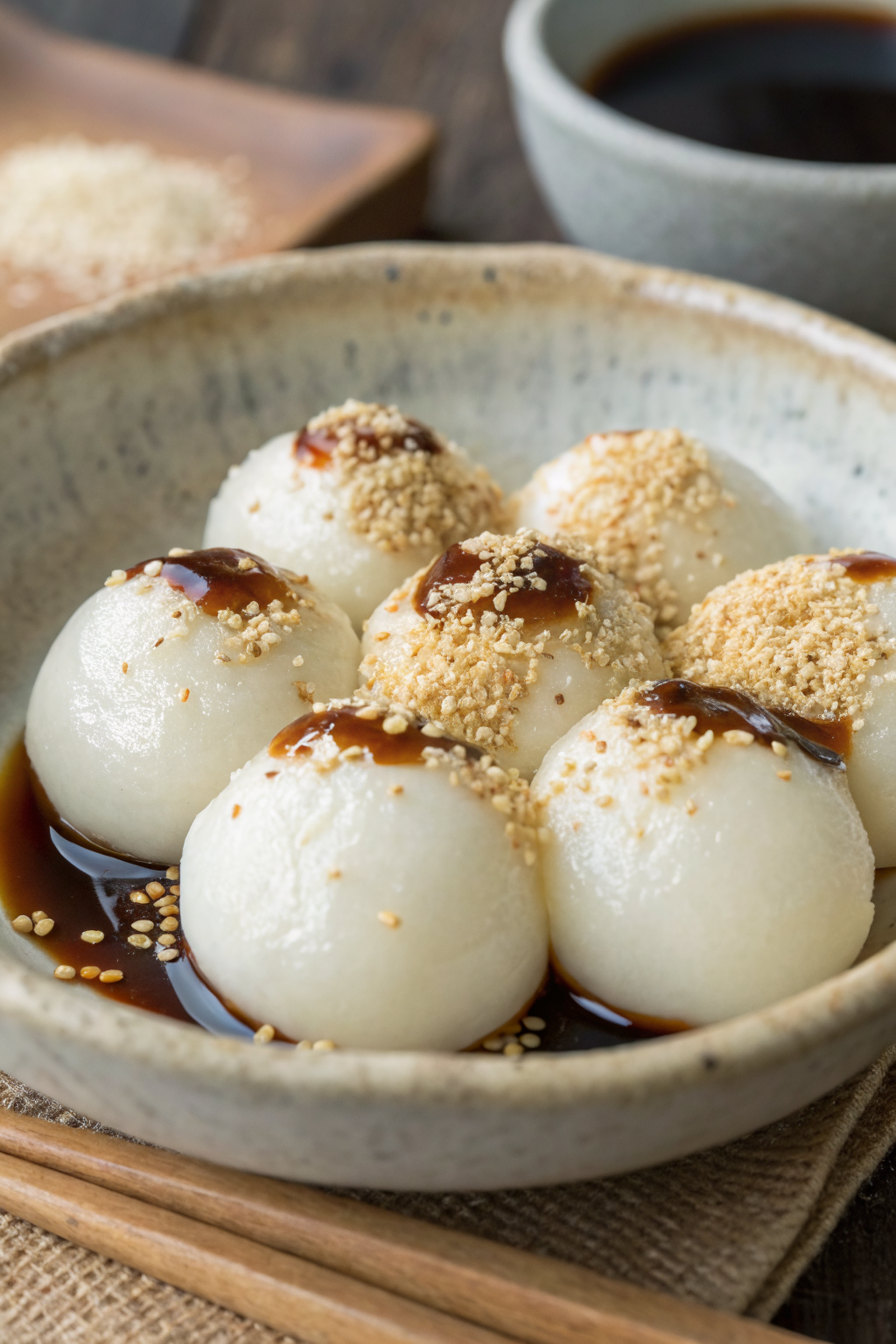
- With kinako sugar and a drizzle of brown sugar syrup.
- With a scoop of vanilla or matcha ice cream, anko, and sliced strawberries for a parfait-style dessert.
- Over shaved ice with fruit syrup and condensed milk for a Japanese-style summer treat.
- In a bowl with sweetened soy milk or coconut milk, fruit, and anko for a soft dessert soup.
- With fresh seasonal fruit like peaches, mango, or grapes and a light drizzle of honey or maple syrup.
- On skewers, brushed with a bit of brown sugar syrup, for a fun snack-style dessert plate.
Storage Success
Shiratama dango taste best on the same day because they firm up as they sit, but you still have options. If you need to store them, keep the cooked and cooled dango in an airtight container, covered with cold water, in the fridge for up to 1 day. Drain and briefly dip them in hot water right before serving to bring back some chew. Avoid freezing the cooked dango since the texture turns tough and loses that bouncy bite.
Shiratama Dango Japanese Dessert
Ingredients
Instructions
- In a medium bowl, add the shiratamako. Gradually add water while mixing with your fingers or a spoon until the dough comes together into a soft, smooth ball. It should feel like an earlobe—pliable and not sticky. Adjust with a little more water or flour if needed.
- Divide the dough into 18–20 equal pieces and roll each into a smooth ball between your palms.
- Bring a pot of water to a gentle boil. Add the dumplings, stirring once to prevent sticking. Cook until the dango float to the surface, then continue to cook for about 1–2 minutes.
- Using a slotted spoon, transfer the cooked dango to a bowl of ice water to stop the cooking and firm the texture. Let sit for a few minutes, then drain well.
- In a small saucepan, combine brown sugar and water. Bring to a simmer over low heat, stirring until the sugar dissolves.
- Simmer gently for 3–5 minutes until slightly thickened, then remove from heat and let cool. The syrup will thicken more as it cools.
- If using kinako, mix it with sugar in a small bowl to taste.
- Arrange the drained shiratama dango in serving bowls. Top with anko, sprinkle with sweetened kinako, and drizzle with kuromitsu if desired.
- Serve immediately for the best soft and chewy texture.
Notes
Approximate per serving (about 1/4 of recipe, without optional toppings): 140 calories; fat 0 g; saturated fat 0 g; carbohydrates 32 g; fiber 0 g; sugars 1 g; protein 2 g; sodium 2 mg.
With 2 tbsp anko, 1 tbsp kinako mixture, and 1 tbsp kuromitsu per serving: about 230 calories; fat 2 g; saturated fat 0 g; carbohydrates 49 g; fiber 2 g; sugars 20 g; protein 5 g; sodium 10 mg. Values are estimates and will vary based on brands, exact quantities, and portion size.
Leave a Reply