

Tasty Korean Winter Soup Recipe tastes rich, savory, a little spicy, and deeply comforting, like a hug in a bowl on a freezing weeknight. It works perfectly for busy home cooks who want a cozy one-pot meal in about 40 minutes from chopping board to table. I grew up in the Midwest and still crave this kind of warming Korean soup every time the temperature drops below “why do I live here.”
Why You Should Try This Tasty Korean Winter Soup Recipe
This Tasty Korean Winter Soup Recipe brings together soft tofu, tender vegetables, and thin slices of beef in a gochujang and garlic broth that warms you from the inside out. The flavor hits that perfect balance of spicy, savory, and slightly sweet, with plenty of umami from soy sauce and sesame oil.
You can customize the heat level so kids and spice-sensitive friends still enjoy it. The recipe uses simple supermarket ingredients, so you skip specialty-store stress and still get real Korean comfort food flavor.
“This Tasty Korean Winter Soup Recipe tasted like something from a cozy Seoul backstreet restaurant, but it came from my tiny kitchen ★★★★★”
Ingredients You’ll Need
I base this Tasty Korean Winter Soup Recipe loosely on Korean-style spicy tofu and beef soups, while keeping everything easy to find in a regular grocery store.
Broth & Seasoning
- 4 cups low-sodium beef broth
- Use chicken or vegetable broth if you prefer.
- I like Better Than Bouillon beef base for deeper flavor.
- 1 cup water
- 2 tablespoons gochujang (Korean red chili paste)
- Look for brands like Chung Jung One or CJ Haechandle.
- Use 1 tablespoon for mild heat, 3 tablespoons if you enjoy a stronger kick.
- 1 tablespoon gochugaru (Korean red chili flakes)
- Swap with 1 teaspoon regular red pepper flakes if needed, but flavor tastes slightly different.
- 3 tablespoons low-sodium soy sauce
- 1 tablespoon fish sauce
- Optional but adds a big umami boost.
- 1 tablespoon toasted sesame oil
- 1 teaspoon sugar or honey
- 4 cloves garlic, minced
- 1-inch piece fresh ginger, minced or grated
- Salt and black pepper to taste
Protein & Veggies
- 8 ounces thinly sliced beef (ribeye, sirloin, or hot pot style)
- Ask the butcher to slice it thin, or partially freeze a steak and slice it yourself.
- 1 package soft or silken tofu (14 to 16 ounces), cut into cubes
- Firm tofu works if you prefer more bite.
- 1 small onion, thinly sliced
- 1 medium carrot, sliced into thin half-moons
- 1 small zucchini, sliced into half-moons
- 1 cup napa cabbage, chopped
- Green cabbage works in a pinch, just slice it thin.
- 4 green onions, sliced (white and green parts separated)
- 1 cup mushrooms, sliced
- Shiitake tastes best, but cremini or button mushrooms also work.
Optional Add-ins
- 1 cup cooked rice or cooked Korean rice cakes (tteok)
- 1 small potato, peeled and diced
- 2 eggs
- Crack directly into the hot soup at the end for a silky finish.
- Extra gochugaru or chili oil for topping
Pantry Shortcuts
- Use pre-minced garlic and ginger from a jar if you feel tired or short on time.
- Use bagged shredded cabbage or coleslaw mix instead of chopping napa cabbage.
- Use frozen sliced mushrooms or veggie mix if your fridge looks empty.
Equipment
- Medium to large heavy pot or Dutch oven
- Cutting board and sharp knife
- Wooden spoon or heat-safe spatula
- Ladle
- Small bowl and whisk or fork for mixing the seasoning paste
Tips & Tricks
- Slice the beef very thin so it cooks quickly and stays tender.
- Partially freeze the beef for 20 minutes to make thin slicing easier.
- Mix the gochujang, gochugaru, soy sauce, fish sauce, sugar, garlic, and ginger in a small bowl before you add it to the pot so it blends smoothly into the broth.
- Start with less gochugaru and taste as you go, then add more if you want extra heat.
- Use low-sodium broth so you control the salt level with soy sauce and fish sauce.
- Add softer veggies like zucchini and napa cabbage later so they stay bright and not mushy.
- Stir gently after adding tofu so it stays in nice cubes and does not break apart.
- Crack eggs into the soup at the very end, then cover the pot and let them poach off the heat for a jammy yolk.
- Chill leftovers in shallow containers so they cool faster and keep better.
- Reheat on the stove over medium heat and add a splash of water or broth if the soup thickens.
How to Make Tasty Korean Winter Soup Recipe
Step 1: Prep the Ingredients
Slice the beef thin and set it aside. Cut the tofu into bite-size cubes and place it on a small plate so it waits safely away from your knife. Slice the onion, carrot, zucchini, cabbage, mushrooms, and green onions.
Keep the white parts of the green onions separate from the green tops. Mince the garlic and ginger if you use fresh. Lay everything out near the stove so the cooking flows smoothly.
Step 2: Mix the Seasoning Paste
In a small bowl, add gochujang, gochugaru, soy sauce, fish sauce, sugar or honey, minced garlic, and minced ginger. Whisk or stir with a fork until it forms a thick, smooth paste. This paste carries most of the flavor for the Tasty Korean Winter Soup Recipe.
Taste a tiny bit and adjust the heat with more or less gochugaru. If it tastes too strong, do not panic, the broth will mellow it out. Set the bowl near the stove.
Step 3: Build the Flavor Base
Place your pot over medium heat and drizzle in a teaspoon of sesame oil. Add the white parts of the green onions and the sliced onion. Stir and cook for 2 to 3 minutes until the onions soften and smell fragrant.
Add the sliced beef to the pot. Stir and cook until the beef loses its raw color on the outside. It does not need to cook fully yet, because it will finish in the broth.
Step 4: Toast the Seasoning Paste
Push the beef and onions to one side of the pot. Spoon the seasoning paste into the empty side. Stir the paste in that spot for 30 seconds to 1 minute so it toasts slightly and releases its aroma.
Mix the paste into the beef and onions so everything coats evenly. This step gives the Tasty Korean Winter Soup Recipe a deeper, richer flavor. Keep the heat at medium so the paste does not burn.
Step 5: Add Broth and Simmer
Pour in the beef broth and water while you stir. Scrape the bottom of the pot with your spoon to lift any browned bits into the liquid. Those bits add extra flavor.
Bring the soup to a gentle boil, then lower the heat to a steady simmer. Add the carrot slices and mushrooms. Let everything simmer for about 10 minutes so the flavors blend and the carrots start to soften.
Step 6: Add Veggies and Tofu
Add the zucchini, napa cabbage, and the tofu cubes to the pot. Stir gently so you do not crush the tofu. Add the green parts of the green onions, saving a little for garnish.
Taste the broth and adjust with salt, soy sauce, or a pinch of sugar if needed. If you want more heat, sprinkle in a bit more gochugaru. Let the soup simmer for another 5 to 7 minutes until the veggies turn tender but not mushy.
Step 7: Optional Eggs and Final Touches
If you want eggs in your Tasty Korean Winter Soup Recipe, crack them one at a time into a small bowl, then slide them gently into the simmering soup. Space them out so they do not stick together. Cover the pot and turn off the heat.
Let the eggs sit in the hot soup for 5 minutes for soft yolks or a bit longer for firmer yolks. Drizzle in the remaining sesame oil and give the pot a gentle stir around the edges. Ladle the soup into bowls and top with extra green onions and chili flakes if you like.
What to Serve with Tasty Korean Winter Soup Recipe
Serve this Tasty Korean Winter Soup Recipe with hot steamed white rice or brown rice so you soak up all that spicy broth. Kimchi makes a perfect crunchy, tangy side that cuts through the richness of the soup. You can also add simple banchan like seasoned spinach, cucumber salad, or roasted seaweed snacks.
If you cook for kids or spice-shy friends, set out extra rice, sliced cucumbers, and plain scrambled eggs on the side. A warm mug of barley tea or green tea pairs nicely and keeps the cozy vibe going.
Storage Options
- Store leftover Tasty Korean Winter Soup Recipe in airtight containers in the fridge for up to 3 to 4 days.
- Chill the soup completely before you cover it, and keep rice in a separate container so it does not soak up all the broth.
- Freeze the soup without tofu for up to 2 months, then add fresh tofu when you reheat for the best texture.
- Reheat on the stove over medium heat until it steams, and add a splash of broth or water if it thickens in the fridge.
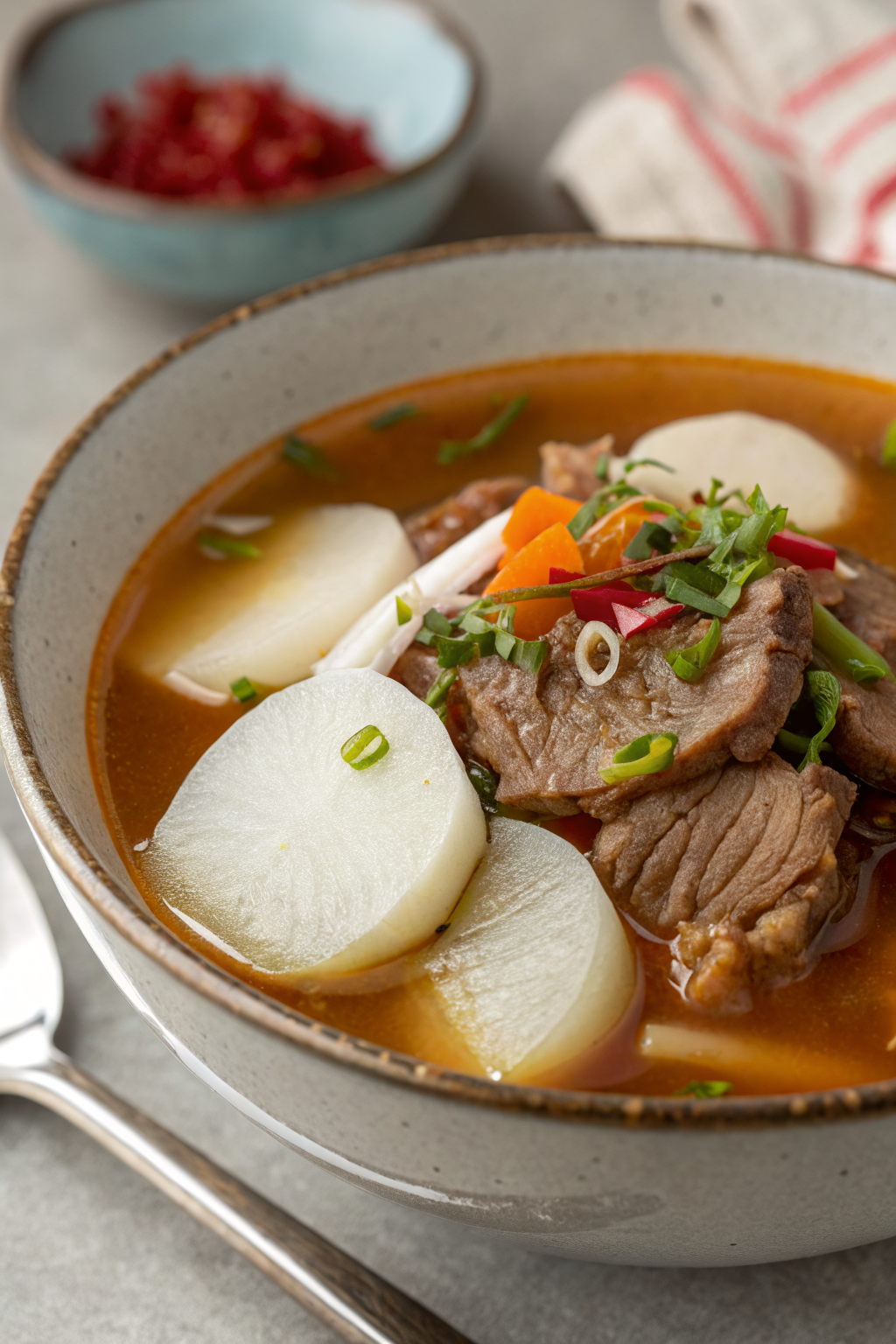
Tasty Korean Winter Soup Recipe
Ingredients
Instructions
- In a large pot, heat the sesame oil over medium heat. Add the sliced onion and cook for 3–4 minutes until softened.
- Add the minced garlic and grated ginger, stirring for 1 minute until fragrant.
- Add the sliced beef and cook, stirring, until the meat is no longer pink on the outside.
- Pour in the beef broth and bring to a gentle boil. Skim off any foam that rises to the top.
- Stir in the soy sauce, gochugaru if using, daikon radish, carrot, mushrooms, and napa cabbage.
- Reduce heat to a simmer, cover, and cook for 20–25 minutes until the vegetables are tender and flavors have melded.
- Gently add the diced tofu and simmer for another 5–7 minutes to warm through.
- Season with salt and black pepper to taste. Adjust soy sauce or gochugaru if desired.
- Ladle the soup into bowls and garnish with sliced green onions. Serve hot.
Notes
Approximate per serving (1 of 4): 260 calories; fat 13 g; saturated fat 3 g; carbohydrates 15 g; fiber 3 g; sugars 6 g; protein 20 g; sodium 980 mg. Values are estimates and will vary based on specific ingredients, brands, and portion sizes.
Leave a Reply