
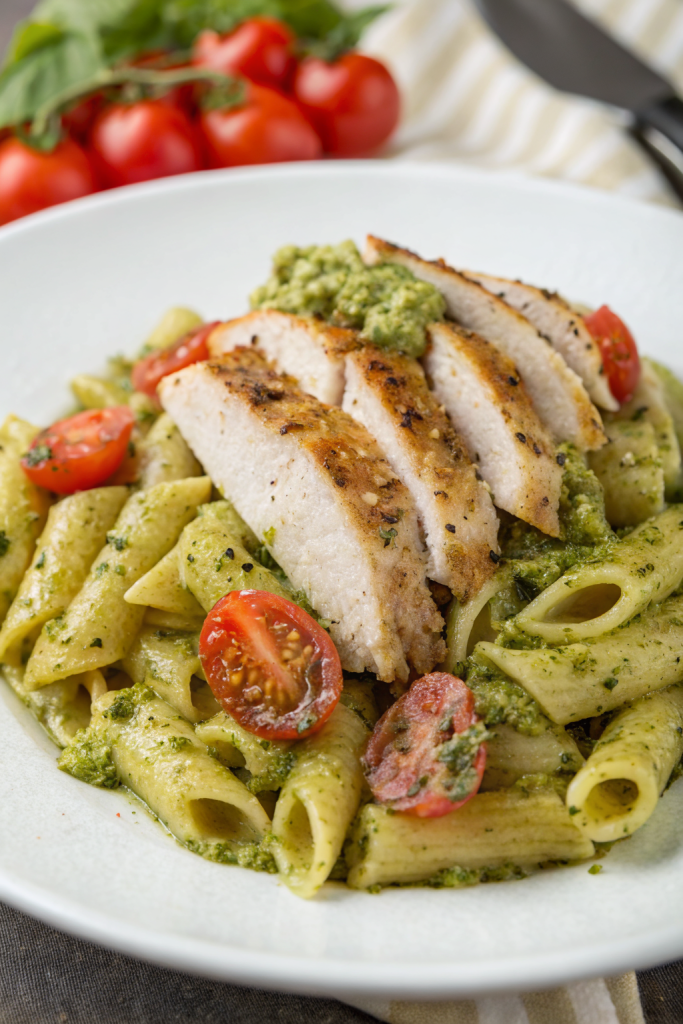
Pesto Chicken Pasta Recipe hits all the comfort-food notes: juicy chicken, garlicky basil pesto, and tender pasta wrapped in a creamy, cheesy sauce. It works for busy weeknights, casual date nights, or feeding a hungry family in about 30 minutes. I’ve made some version of this dish since my broke-college-kid days, and it still feels like a tiny victory every time the pan hits the table.
Why Pesto Chicken Pasta Recipe Is Worth It
This pesto chicken pasta recipe packs big flavor with very little effort, which makes it perfect when you feel tired but still want real food. You cook everything in simple steps, and the pesto does most of the heavy lifting with its bold basil, garlic, and parmesan punch.
You also use easy pantry shortcuts like jarred pesto and dried pasta, so you skip fussy prep and still get a restaurant-level bowl of pasta. Leftovers taste even better the next day, so you basically cook once and win twice.
“This Pesto Chicken Pasta Recipe tastes like something from a cozy Italian café, but it comes together faster than takeout ★★★★★”
Ingredients You Need
Pasta & Chicken
-
12 oz pasta
- Short shapes like penne, rotini, fusilli, or farfalle hold pesto in all the little ridges.
- Whole wheat or chickpea pasta works well if you want more fiber or protein.
-
1 to 1½ lbs boneless, skinless chicken
- Use chicken breast for leaner bites or chicken thighs for extra juicy flavor.
- Slice into thin strips or small bite-size cubes so they cook quickly and stay tender.
-
1–2 tbsp olive oil
- Extra-virgin adds nice flavor, but any neutral olive oil works.
-
1 tsp kosher salt (plus more to taste)
-
½ tsp black pepper
Pesto & Sauce
-
½ to ¾ cup basil pesto
- Jarred pesto keeps this weeknight-friendly; look for brands with olive oil and real parmesan (Rao’s, DeLallo, or Kirkland from Costco all taste great).
- Use homemade pesto if you have extra basil on hand.
-
½ to ¾ cup heavy cream or half-and-half
- Heavy cream gives a richer, silkier sauce.
- Half-and-half works if you want it a bit lighter.
-
½ cup freshly grated parmesan cheese
- Freshly grated melts smoother than the shelf-stable shaker stuff.
- Pecorino Romano adds a sharper, saltier bite if you like that.
-
2–3 cloves garlic, minced
- If your pesto already tastes very garlicky, use 1 clove or skip extra garlic.
-
½ cup pasta cooking water (reserve from the pot)
- This starchy water helps the sauce cling to the pasta and keeps it from drying out.
Veggies & Add-Ins (Optional but Recommended)
- 1 cup cherry or grape tomatoes, halved
- 1–2 cups baby spinach or chopped kale
- ¼ cup toasted pine nuts or slivered almonds (for crunch)
- Red pepper flakes, to taste (if you like a little heat)
- Fresh basil leaves, torn, for garnish
Pantry Shortcuts
- Jarred pesto: the biggest time saver in this pesto chicken pasta recipe.
- Pre-cooked rotisserie chicken: shred about 2 cups and skip raw chicken cooking steps.
- Pre-shredded parmesan: use a good-quality refrigerated one if you feel short on time.
Equipment List
- Large pot for boiling pasta
- Large deep skillet or sauté pan (12-inch works best)
- Tongs or a wooden spoon
- Measuring cups and spoons
- Cutting board and sharp knife
- Colander for draining pasta
Quick Tips & substitutions
- Salt the pasta water generously so the pasta and sauce taste seasoned from the inside out.
- Cook the pasta just to al dente; it will finish in the sauce and soak up flavor.
- Slice chicken into thin strips so it cooks quickly and stays juicy.
- Use rotisserie chicken or leftover grilled chicken when you want a 20-minute version.
- Thin jarred pesto with a spoonful of pasta water if it looks very thick or oily.
- Swap heavy cream with half-and-half or whole milk plus 1 tbsp cream cheese for creaminess.
- Use gluten-free pasta and check pesto and broth labels for gluten-free certification.
- Stir in extra veggies like peas, broccoli florets, or zucchini for more color and nutrients.
- Taste the sauce before adding more salt because pesto and parmesan already bring salt.
- Add a squeeze of lemon at the end if you want a brighter, fresher flavor.
How to Make Pesto Chicken Pasta Recipe
Step 1: Boil the Pasta
Bring a large pot of water to a rolling boil and add a generous handful of salt. Drop in the pasta and cook according to package directions until it reaches al dente. Scoop out about 1 cup of pasta water and set it aside, then drain the pasta.
Step 2: Season and Cook the Chicken
While the pasta cooks, pat the chicken dry with paper towels. Season both sides with salt and pepper. Heat olive oil in a large skillet over medium-high heat until it shimmers.
Add the chicken in a single layer and sear it until it browns on the first side, about 3–4 minutes. Flip and cook another 3–4 minutes, until the center no longer looks pink and juices run clear. Transfer the cooked chicken to a plate and keep it nearby.
Step 3: Sauté Garlic and Build the Sauce Base
Lower the heat to medium and drizzle in a touch more oil if the pan looks dry. Add the minced garlic and stir it for about 30 seconds until it smells fragrant. Do not walk away, because garlic burns fast and turns bitter.
Pour in the cream or half-and-half and stir, scraping up any browned bits from the bottom of the pan. Those browned bits carry a ton of flavor and make the pesto chicken pasta sauce taste deeper and richer. Let the cream heat until it just starts to steam and bubble gently around the edges.
Step 4: Stir in Pesto and Cheese
Whisk in the pesto until it blends smoothly with the cream. Sprinkle in the grated parmesan and stir until it melts and thickens the sauce slightly. If the sauce looks too thick, splash in a little pasta water to loosen it.
Taste the sauce and adjust with more salt or pepper if needed. At this point the sauce should taste a little stronger than you want the final dish, because the pasta will mellow it out.
Step 5: Add Chicken and Veggies
Slice or cube the cooked chicken into bite-size pieces and add it back to the skillet. Toss it in the pesto sauce so every piece gets coated. Add cherry tomatoes and spinach (or any veggies you use) and stir until the greens wilt and the tomatoes soften slightly.
If the sauce thickens too much, pour in a bit more pasta water until it reaches a silky, pourable consistency. Keep the heat on low so the sauce stays hot but does not boil hard.
Step 6: Toss with Pasta
Add the drained pasta straight into the skillet with the pesto chicken mixture. Use tongs or a big spoon to toss everything together until the pasta absorbs the sauce and looks glossy. If it looks dry at any point, add another splash of pasta water.
Sprinkle in a little more parmesan and a pinch of red pepper flakes if you like some heat. Toss again and taste one more time to check seasoning.
Step 7: Garnish and Serve
Turn off the heat and top the pesto chicken pasta with fresh basil, extra parmesan, and toasted pine nuts or almonds if you use them. The nuts add crunch and make the dish feel extra special with almost no extra effort. Serve right away while the sauce stays creamy and the cheese still stretches a little.
Recipe Variations
- Gluten-free: Use gluten-free pasta and confirm your pesto uses gluten-free ingredients.
- Low carb: Swap pasta with zucchini noodles or spaghetti squash and cook them lightly so they stay a bit firm.
- Vegan: Use vegan pesto (no cheese), coconut milk or a barista-style oat milk for the sauce, and plant-based chicken strips or chickpeas.
- Extra protein: Add white beans, chickpeas, or double the chicken for a higher-protein pesto chicken pasta recipe.
- Extra veggies: Toss in peas, roasted red peppers, sautéed mushrooms, or steamed broccoli florets.
- Spicy version: Add more red pepper flakes or a spoonful of Calabrian chili paste to the sauce.
Ways to Serve Pesto Chicken Pasta Recipe
- With a simple green salad and lemony vinaigrette.
- Alongside garlic bread or warm crusty baguette.
- With roasted vegetables like broccoli, asparagus, or green beans.
- With a side of sliced cucumbers and cherry tomatoes tossed in olive oil and salt.
- As a pasta bowl topped with extra grilled chicken or shrimp for big appetites.
Storage Success
Let the pesto chicken pasta cool until it reaches room temperature, then transfer it to airtight containers. Store it in the fridge for up to 3–4 days. Add a small splash of water, milk, or cream before reheating so the sauce loosens and turns silky again. Reheat on the stovetop over low heat or in the microwave in short bursts, stirring often so the pasta heats evenly and stays tender.
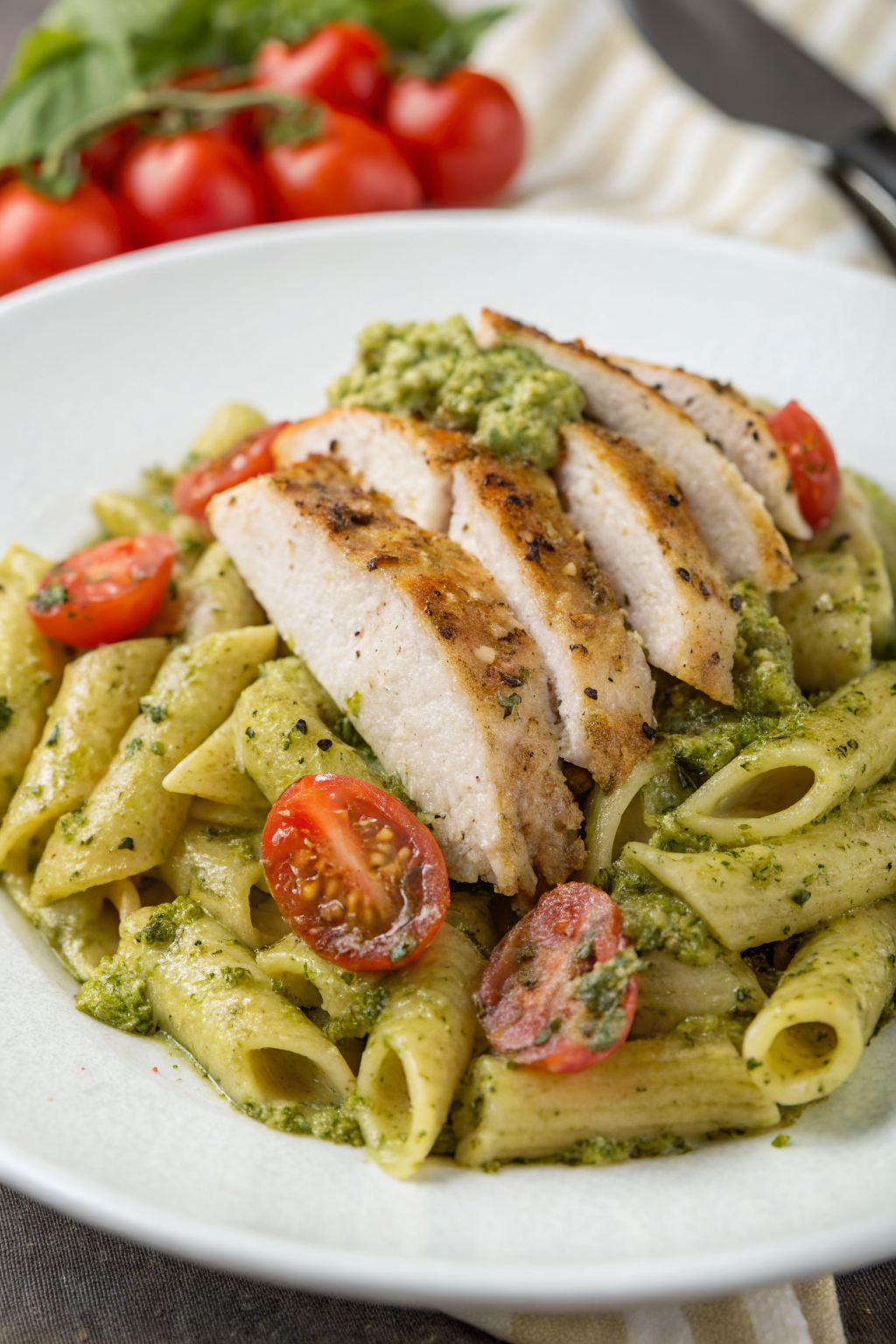
Pesto Chicken Pasta Recipe
Ingredients
Instructions
- Bring a large pot of salted water to a rolling boil. Add the pasta and cook according to package directions until al dente. Reserve about 1 cup of pasta cooking water, then drain the pasta and set aside.
- While the pasta cooks, pat the chicken dry with paper towels. Season all over with the kosher salt and black pepper.
- Heat the olive oil in a large deep skillet over medium-high heat until it shimmers. Add the chicken in a single layer and cook for 3–4 minutes per side, until golden brown and cooked through with no pink in the center. Transfer the chicken to a plate and set aside.
- Reduce the heat to medium. If the pan looks dry, add a small drizzle of additional olive oil. Add the minced garlic and sauté, stirring constantly, for about 30 seconds, just until fragrant and lightly sizzling; do not let it brown.
- Pour in the heavy cream or half-and-half, scraping up any browned bits from the bottom of the pan with a wooden spoon. Let the cream heat until it just begins to steam and bubble gently around the edges.
- Whisk in the basil pesto until it is fully combined with the cream. Add the grated Parmesan cheese and stir until it melts and slightly thickens the sauce. If the sauce looks too thick, stir in a splash of reserved pasta water to loosen it. Taste and adjust seasoning with more salt and pepper if needed.
- Slice or cube the cooked chicken into bite-size pieces and return it to the skillet. Add the halved cherry tomatoes and spinach (if using), and stir until the greens are wilted and the tomatoes just soften. If the sauce thickens too much, add more reserved pasta water a little at a time until the sauce is silky and pourable.
- Add the drained pasta directly to the skillet. Toss well with tongs until the pasta is evenly coated and glossy with the pesto cream sauce. If the pasta looks dry, add another splash of pasta water and toss again. Sprinkle in red pepper flakes if you like a bit of heat and adjust seasoning to taste.
- Remove the skillet from the heat. Top the pasta with extra Parmesan, torn fresh basil, and toasted pine nuts or slivered almonds if using. Serve immediately while hot and creamy.
Notes
Approximate per serving (1/4 of recipe): 720 calories; fat 38 g; saturated fat 13 g; carbohydrates 56 g; fiber 3 g; sugars 4 g; protein 38 g; sodium 810 mg. Values will vary based on pasta type, pesto brand, cream choice, add-ins, and portion size.
Leave a Reply