
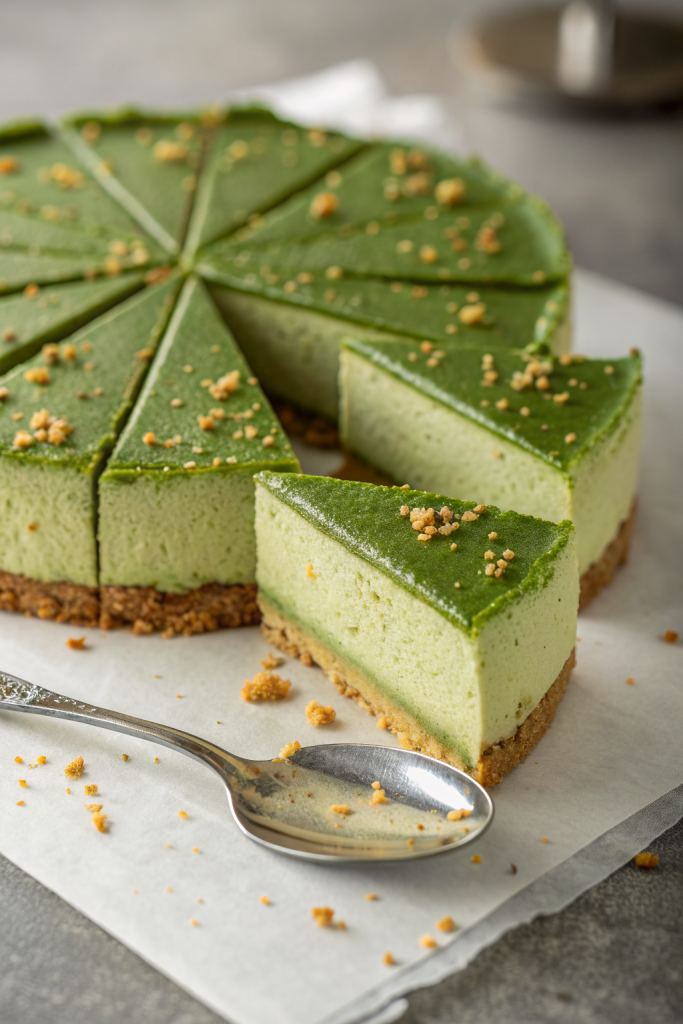
Original Matcha Japanese Cheesecake Recipe bakes up ultra-light, jiggly, and creamy with a gentle green tea flavor that feels cozy, not bitter. It suits matcha fans, cheesecake lovers, and anyone who wants an impressive dessert in about 2 hours total (including baking and cooling time before chilling). I still remember my first slice in Tokyo and how I immediately started plotting how to reverse-engineer it in my tiny American kitchen.
Why Original Matcha Japanese Cheesecake Recipe Is Worth It
This style of cheesecake tastes like a cross between a soufflé and a New York cheesecake, with a fluffy, cloud-like crumb and a silky, custardy center. The matcha adds earthy depth and a beautiful natural green color that makes the cake look fancy without much effort.
You only need simple ingredients and one pan, and the recipe uses basic techniques that home bakers can handle with a little patience. The cake also tastes even better the next day, so you can bake it ahead for gatherings and relax when guests arrive.
“This Original Matcha Japanese Cheesecake Recipe tastes like a matcha cloud that melts on your tongue and somehow still feels rich and satisfying. ★★★★★”
Ingredients You Need
Core ingredients
-
Cream cheese – 8 oz (225 g), full-fat, brick style, softened
- Avoid whipped tubs since they contain more air and water.
- I like Philadelphia or a store brand with minimal additives.
-
Unsalted butter – 3 tbsp (45 g), melted and slightly cooled
- Salted butter works in a pinch; just reduce added salt a bit.
-
Whole milk – ½ cup (120 ml), room temperature
- Use at least 2% milk; low-fat milk makes the texture less creamy.
-
Eggs – 4 large, separated, at room temperature
- Room temperature whites whip more easily and hold more air.
- Separate them carefully so no yolk gets into the whites.
-
Granulated sugar – ½ cup + 2 tbsp (130 g), divided
- Use 3 tbsp (40 g) for the yolk mixture and 90 g for the meringue.
- Superfine sugar dissolves faster, but regular sugar works fine.
-
Cake flour – ½ cup (60 g), sifted
- Cake flour keeps the crumb tender and light.
- Pantry shortcut: use all-purpose flour and remove 1 tbsp, then add 1 tbsp cornstarch.
-
Cornstarch – 2 tbsp (16 g), sifted
- Helps stabilize the structure and keeps the crumb delicate.
-
Matcha powder – 1½–2 tbsp (about 8–10 g), culinary or ceremonial grade
- Use a good-quality, vibrant green matcha; dull brownish matcha tastes bitter.
- I often use a mid-range Japanese culinary matcha, which balances flavor and price.
-
Fine sea salt – ¼ tsp
- Balances sweetness and sharpens the matcha flavor.
-
Vanilla extract – 1 tsp
- Adds warmth and rounds out the cream cheese flavor.
-
Lemon juice – 1 tsp (optional but recommended)
- Adds a subtle tang and helps stabilize the meringue.
Equipment list
- 8-inch (20 cm) round cake pan or springform pan, at least 3 inches tall
- Larger roasting pan or deep baking tray for the water bath
- Parchment paper
- Stand mixer or hand mixer
- Two mixing bowls (one very clean and grease-free for egg whites)
- Fine mesh sieve for flour and matcha
- Rubber spatula
- Aluminum foil
- Kitchen towel
- Toothpick or thin skewer to test doneness
Quick Tips & substitutions
- Line the bottom and sides of the pan with parchment so the cake releases cleanly and rises evenly.
- Wrap the outside of the pan with two layers of foil so water from the bath does not seep in.
- Use room temperature cream cheese, milk, and eggs to avoid lumps in the batter.
- Sift matcha with the flour and cornstarch to prevent green clumps.
- Whip egg whites to soft, glossy peaks, not stiff and dry, so the cake rises evenly without cracking.
- Fold the meringue gently with a spatula, using an up-and-over motion, so you keep the air in the batter.
- Bake low and slow at 300°F (150°C) so the cake sets gently and stays jiggly and moist.
- If you do not have cake flour, use ½ cup minus 1 tbsp all-purpose flour plus 1 tbsp cornstarch.
- If matcha tastes too strong for you, start with 1 tbsp and increase next time.
- If you do not own a roasting pan, use a deep oven-safe skillet or two smaller pans with hot water.
How to Make Original Matcha Japanese Cheesecake Recipe
H3: Prep the pan and oven
- Preheat the oven to 300°F (150°C).
- Line the bottom of your 8-inch pan with a circle of parchment.
- Line the sides with a tall strip of parchment that extends about 1 inch above the rim.
- Wrap the outside of the pan tightly with two layers of aluminum foil to protect it from the water bath.
- Place a kitchen towel in the bottom of your roasting pan and set the cake pan on top; the towel keeps the cake from sliding and insulates the bottom.
H3: Mix the cream cheese base
- In a medium bowl, beat the softened cream cheese with a hand mixer until completely smooth and lump-free.
- Add the melted butter and beat until the mixture looks silky.
- Pour in the milk gradually while you mix, and blend until the mixture turns smooth and slightly runny.
- Add the egg yolks one at a time, mixing well after each addition.
- Mix in vanilla, salt, and lemon juice until everything combines.
H3: Sift in dry ingredients with matcha
- In a separate bowl, sift together cake flour, cornstarch, and matcha powder.
- Sift this mixture again directly over the cream cheese base to avoid clumps.
- Gently whisk or stir until the batter turns smooth and uniform, with no streaks of flour or matcha.
- Set this bowl aside while you whip the egg whites.
H3: Whip the meringue
- In a clean, dry bowl, add the egg whites.
- Beat on medium speed until the whites look foamy and opaque.
- Gradually add the sugar (90 g) in 3–4 additions while you continue to beat.
- Increase speed to medium-high and beat until the meringue forms soft, glossy peaks that curl over when you lift the beaters.
- Stop before the peaks turn stiff and chunky, since that makes folding difficult.
H3: Fold meringue into matcha batter
- Add about one-third of the meringue to the matcha batter and gently stir to lighten the mixture.
- Add another third and fold with a rubber spatula, using broad, gentle strokes from the bottom up.
- Add the final third and fold just until no white streaks remain.
- Run the spatula through the batter a couple of times to pop any very large air pockets, but keep the batter airy.
H3: Bake in a water bath
- Pour the batter into the prepared pan and tap the pan lightly on the counter 2–3 times to release big bubbles.
- Place the roasting pan with the cake pan on the oven rack.
- Carefully pour hot tap water into the roasting pan until it reaches about halfway up the sides of the cake pan.
- Bake at 300°F (150°C) for 25 minutes.
- Without opening the oven, lower the temperature to 285°F (140°C) and bake another 30–35 minutes, until the top looks set and lightly browned.
- Gently shake the pan; the center should jiggle like soft Jell-O but not slosh.
- Insert a skewer near the center; it should come out with a few moist crumbs but no wet batter.
H3: Cool gradually
- Turn off the oven and open the door just a crack.
- Leave the cake inside for 15–20 minutes so it cools slowly and avoids a sudden collapse.
- Remove the roasting pan from the oven and lift out the cake pan.
- Take off the foil and place the pan on a wire rack.
- Run a thin knife around the edge if needed, then let the cake cool to room temperature.
- Chill the cake in the fridge for at least 4 hours, or overnight, before slicing for the best texture and flavor.
H3: Release and slice
- Once chilled, remove the cake from the pan and peel off the parchment.
- Warm a sharp knife under hot water, wipe it dry, and cut clean slices, wiping the blade between cuts.
- Dust the top lightly with extra matcha or powdered sugar if you want a simple garnish.
Recipe Variations
- Gluten-free – Swap cake flour for a gluten-free all-purpose blend and keep the cornstarch; sift well to avoid grittiness.
- Vegan-style – Use vegan cream cheese, plant milk, and a tested aquafaba meringue; add a bit more cornstarch to help set the structure.
- Low carb / keto-ish – Replace sugar with a granulated erythritol-based sweetener and swap flour for a mix of almond flour and extra cornstarch (texture changes slightly but still tastes great).
- Extra matcha – Add up to 2½ tbsp matcha for a stronger green tea punch and deeper color.
- Citrus twist – Add 1–2 tsp yuzu juice or extra lemon zest to brighten the flavor.
- Chocolate swirl – Drizzle a little melted dark chocolate over the batter and swirl with a skewer before baking.
- Red bean layer – Spread a thin layer of sweetened red bean paste (anko) on the bottom of the pan before you pour in the batter.
Ways to Serve Original Matcha Japanese Cheesecake Recipe
- Serve chilled with a light dusting of matcha or powdered sugar.
- Add a spoonful of lightly sweetened whipped cream on the side.
- Pair with hot green tea, hojicha, or jasmine tea for a cozy dessert moment.
- Top with fresh berries or sliced strawberries to add color and a bit of tartness.
- Add a drizzle of honey or condensed milk for extra sweetness if you like.
Storage Success
Store leftover Original Matcha Japanese Cheesecake Recipe tightly covered in the fridge for up to 4 days. The flavor deepens on day two, and the texture stays soft and custardy. Keep slices in an airtight container so they do not absorb fridge odors. If you want to freeze it, wrap individual slices well, freeze up to 1 month, and thaw overnight in the fridge before serving.
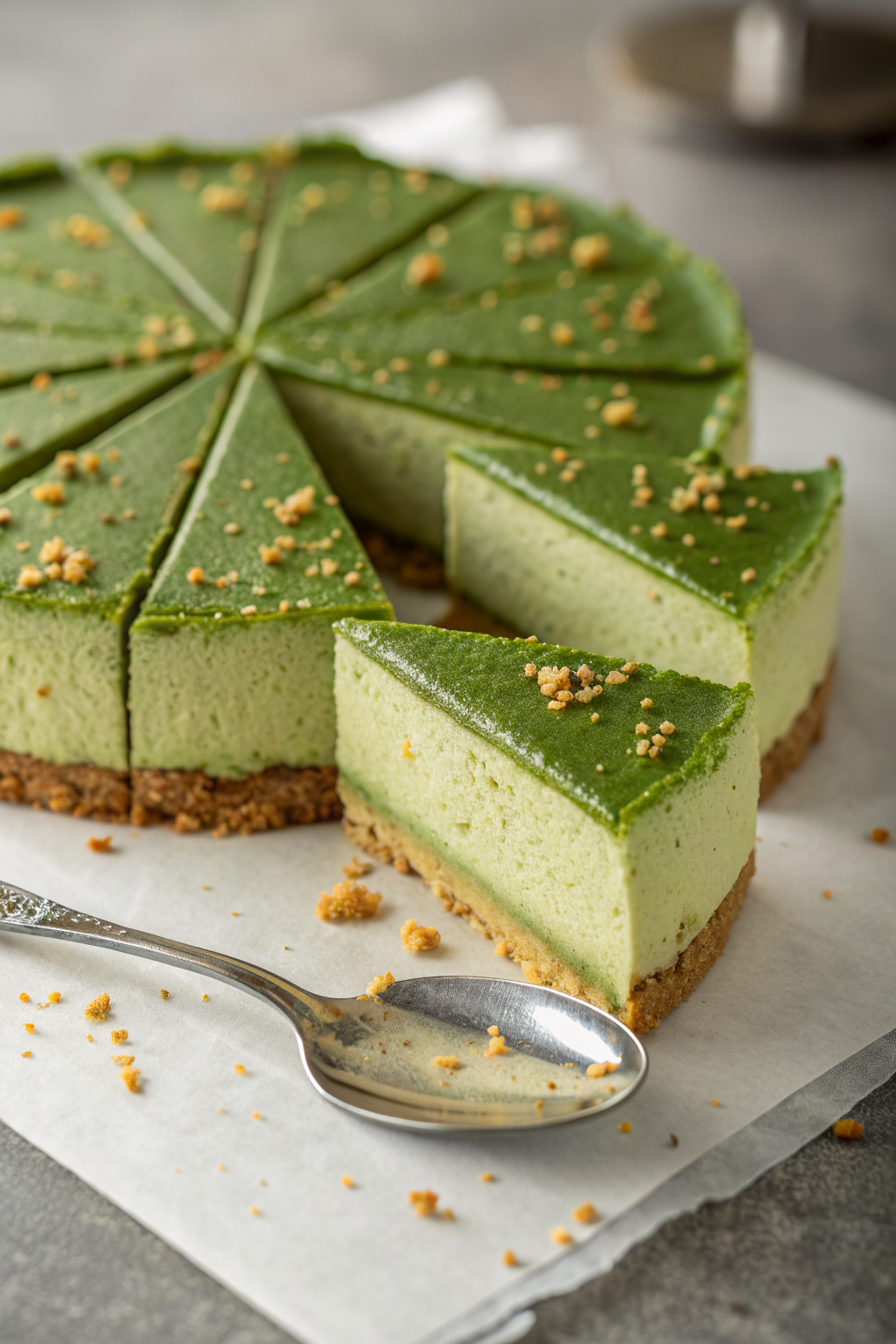
Original Matcha Japanese Cheesecake Recipe
Ingredients
Instructions
- Preheat the oven to 300°F (150°C). Line the bottom of an 8-inch round cake pan with a circle of parchment paper.
- Line the sides of the pan with a tall strip of parchment that extends about 1 inch above the rim.
- Wrap the outside of the pan tightly with two layers of aluminum foil to protect it from the water bath.
- Place a kitchen towel in the bottom of a large roasting pan and set the cake pan on top.
- In a medium bowl, beat the softened cream cheese until completely smooth and lump-free.
- Add the melted butter and beat until the mixture looks silky.
- Gradually pour in the milk while mixing until the mixture is smooth and slightly runny.
- Beat in the egg yolks one at a time, mixing well after each addition.
- Mix in the vanilla, salt, and lemon juice (if using) until combined.
- In a separate bowl, sift together the cake flour, cornstarch, and matcha powder.
- Sift this dry mixture again directly over the cream cheese base to avoid clumps.
- Gently whisk or stir until the batter is smooth and uniform with no streaks of flour or matcha. Set aside.
- In a clean, dry bowl, add the egg whites and beat on medium speed until foamy and opaque.
- Gradually add 90 g (about 1/2 cup minus 2 tablespoons) of the sugar in 3–4 additions while continuing to beat.
- Increase the speed to medium-high and beat until the meringue forms soft, glossy peaks that curl over when you lift the beaters. Do not beat to stiff, dry peaks.
- Add about one-third of the meringue to the matcha batter and gently stir to lighten the mixture.
- Add another third of the meringue and fold gently with a rubber spatula using broad, up-and-over strokes.
- Fold in the final third just until no white streaks remain, keeping the batter airy.
- Pour the batter into the prepared pan and tap the pan lightly on the counter 2–3 times to release large air bubbles.
- Place the roasting pan with the cake pan on an oven rack. Carefully pour hot tap water into the roasting pan until it reaches about halfway up the sides of the cake pan.
- Bake at 300°F (150°C) for 25 minutes.
- Without opening the oven, lower the temperature to 285°F (140°C) and bake for another 30–35 minutes, until the top looks set and lightly browned.
- Gently shake the pan; the center should jiggle like soft gelatin but not slosh. A skewer inserted near the center should come out with a few moist crumbs but no wet batter.
- Turn off the oven and open the door slightly. Let the cake sit inside for 15–20 minutes to cool gradually.
- Remove the roasting pan from the oven and lift out the cake pan. Remove the foil and place the pan on a wire rack.
- Run a thin knife around the edge if needed, then let the cake cool to room temperature.
- Cover and chill the cake in the refrigerator for at least 4 hours, or overnight, before slicing.
- Once chilled, remove the cake from the pan and peel off the parchment paper.
- Warm a sharp knife under hot water, wipe it dry, and cut clean slices, wiping the blade between cuts.
- Dust the top lightly with extra matcha or powdered sugar before serving, if desired.
Notes
Approximate per serving (1 of 12): 210–230 calories; fat 14 g; saturated fat 8 g; carbohydrates 18 g; fiber 0 g; sugars 14 g; protein 5 g; sodium 160 mg. Values will vary based on specific brands, matcha amount, and portion size.