
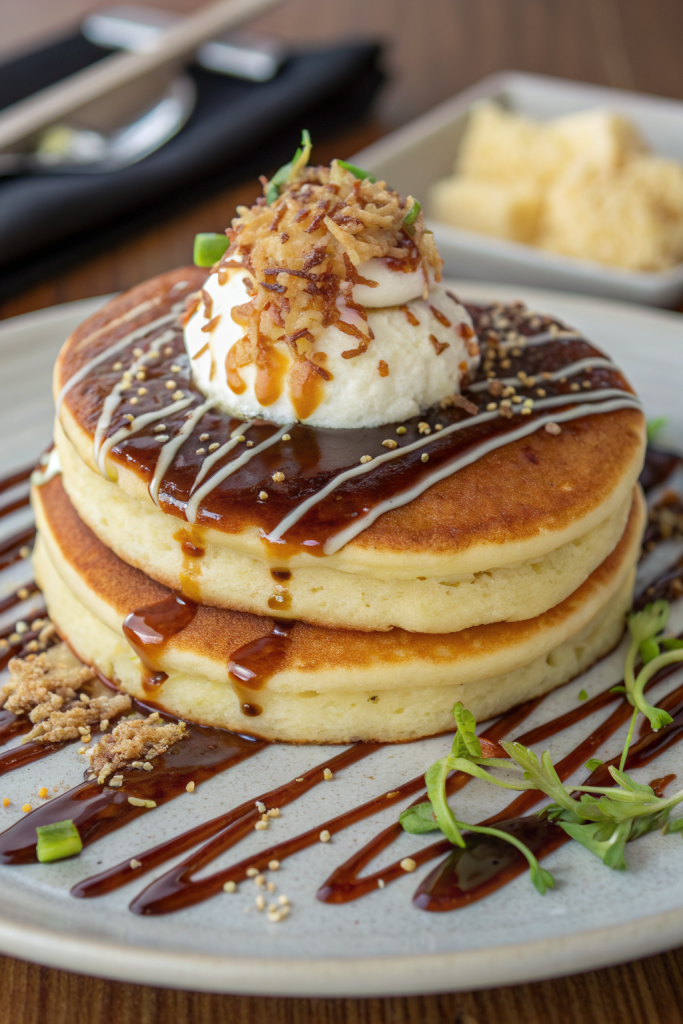
Okonomiyaki Japanese Pancakes Recipe tastes savory, a little sweet, and super satisfying, like a cross between a cabbage pancake and the best diner hash you ever ate. It works for busy weeknights or lazy weekends, and you can get it on the table in about 35–40 minutes. I first fell in love with okonomiyaki at a tiny Osaka-style spot in Los Angeles and then spent years tinkering with this version at home.
Why Make This Okonomiyaki Japanese Pancakes Recipe at Home
Homemade okonomiyaki costs a fraction of restaurant versions and uses simple pantry ingredients like flour, eggs, and cabbage. You control the toppings, the thickness, and how crispy you want the edges, so every pancake matches your favorite style.
You also skip the hunt for a specialty restaurant and make this on a regular skillet or griddle. Kids usually love it because it tastes like a saucy, cheesy pancake, and adults love it because it hits every craving at once.
This Okonomiyaki Japanese Pancakes Recipe tastes like street food comfort in a skillet and disappears from the plate in minutes ★★★★★
Ingredients You Need
Batter base
- All-purpose flour
- Use regular unbleached flour.
- You can swap up to 25% with whole wheat flour, but the pancake turns denser.
- Dashi stock (or water with dashi powder)
- Traditional recipes use dashi for deep umami flavor.
- Shortcut: mix 1 teaspoon instant dashi granules into 1 cup warm water.
- If you skip dashi, use low-sodium chicken or vegetable broth.
- Eggs
- Large eggs give structure and richness.
- Do not cut back on eggs or the pancake falls apart.
- Baking powder
- Helps the pancake puff slightly and stay tender.
Vegetables and mix-ins
- Green cabbage, finely shredded
- Use regular green cabbage, not Napa, for better crunch.
- Slice very thin so it softens quickly.
- Green onions, thinly sliced
- Pickled red ginger (beni shoga), chopped
- Adds tang and brightness.
- If you cannot find it, use a small amount of regular pickled ginger, minced.
- Tenkasu (tempura bits)
- Adds crunch and soaks up flavor.
- Shortcut: use store-bought crunchy tempura bits or even crushed plain shrimp chips in a pinch.
- Thinly sliced pork belly or bacon
- Pork belly gives the most authentic flavor.
- Thick-cut bacon works, but slice it thinner so it cooks through.
Toppings
- Okonomiyaki sauce
- Classic choice: Otafuku brand or Bulldog brand.
- Quick homemade version: mix 2 tablespoons ketchup, 2 tablespoons Worcestershire sauce, 1 tablespoon oyster sauce, and 1 teaspoon sugar.
- Japanese mayonnaise
- Kewpie brand tastes best because of its tang and umami.
- Use regular mayo if needed and add a tiny splash of rice vinegar and a pinch of sugar.
- Aonori (dried green seaweed flakes)
- Optional but adds great flavor and color.
- Katsuobushi (bonito flakes)
- Traditional topping that adds smoky, savory flavor.
- Skip it to keep the dish pescatarian-free or if you do not enjoy fish flavor.
- Extra sliced green onions
Oil and seasonings
- Neutral oil (canola, vegetable, or avocado oil) for frying
- Salt and black pepper
- Optional: a small drizzle of sesame oil in the batter for extra aroma
Equipment list
- Large mixing bowl
- Whisk or chopsticks
- Cutting board and sharp knife
- Large nonstick skillet, cast iron skillet, or flat griddle
- Spatula (a wide one makes flipping easier)
- Measuring cups and spoons
- Ladle or measuring cup for portioning batter
Tips & Mistakes
- Slice cabbage very thin so it softens quickly and blends into the batter.
- Mix the batter gently and stop when no dry flour shows; overmixing makes the pancake tough.
- Let the batter rest 5–10 minutes so the flour hydrates and the texture improves.
- Keep the skillet at medium to medium-low heat so the inside cooks through without burning the outside.
- Use enough oil to lightly coat the pan; a dry pan gives pale, rubbery pancakes.
- Spread the batter into an even round about 3/4 inch thick; too thick stays raw in the center, too thin dries out.
- Place pork slices on top of the uncooked side before flipping so the fat renders into the pancake.
- Flip only once; constant flipping breaks the pancake and squeezes out moisture.
- Do not press down hard with the spatula; light pressure only so you keep it fluffy.
- Taste the first pancake and adjust salt or sauce amounts before cooking the rest.
How to Make Okonomiyaki Japanese Pancakes Recipe
Step 1: Prep the vegetables and toppings
Finely shred the cabbage with a sharp knife or mandoline and place it in a large bowl. Slice the green onions and chop the pickled red ginger. Set out the tenkasu, pork slices, okonomiyaki sauce, mayonnaise, aonori, and bonito flakes so you can top the pancakes while they stay hot.
Step 2: Mix the batter
In a separate bowl, whisk the dashi stock, eggs, and a pinch of salt and pepper. Add the flour and baking powder, then whisk until the mixture looks smooth with no dry spots. The batter should feel slightly thicker than regular pancake batter; add a splash of dashi or water if it feels too stiff.
Pour the batter over the cabbage. Add green onions, pickled ginger, and tenkasu. Stir until the cabbage coats evenly with batter and everything distributes well.
Step 3: Heat the skillet
Place a large nonstick or cast iron skillet over medium heat. Add enough neutral oil to coat the bottom of the pan. Let the oil heat until it shimmers; you want it hot enough that a small drop of batter sizzles on contact.
Step 4: Shape the pancake
Scoop a generous amount of the cabbage batter into the skillet with a ladle or measuring cup. Use the back of the ladle or a spatula to shape it into a round about 6 inches wide and 3/4 inch thick. Tuck in any stray cabbage pieces so the edges stay neat and easier to flip.
Lay a few slices of pork belly or bacon across the top of the uncooked side. Season lightly with a pinch of salt and pepper. Keep the heat at medium or slightly below so the bottom browns slowly while the center cooks through.
Step 5: Cook the first side
Cook the pancake for about 5–6 minutes until the bottom turns golden brown and feels set. Gently lift an edge with a spatula to check the color. If it browns too fast while the center still feels very soft, lower the heat a bit.
Step 6: Flip and cook the second side
Slide a wide spatula under the pancake and flip it in one confident motion so the pork side faces down. Cook another 4–6 minutes until the pork turns cooked through and slightly crisp and the pancake feels firm in the center. You can press very lightly with the spatula to check; it should feel springy, not squishy.
If the pancake browns before the center cooks, lower the heat and cover the pan for 1–2 minutes. That short cover time helps the inside finish cooking without burning the outside.
Step 7: Finish and repeat
Transfer the cooked okonomiyaki to a plate. Repeat with the remaining batter, adding more oil as needed and adjusting the heat to keep a steady sizzle. You can keep finished pancakes warm in a low oven while you cook the rest.
Step 8: Sauce and garnish
Drizzle okonomiyaki sauce generously over the hot pancake in a zigzag pattern. Squeeze Japanese mayonnaise across in the opposite direction to make a loose crisscross pattern. Sprinkle with aonori, bonito flakes, and extra green onions.
Serve the okonomiyaki Japanese pancakes recipe hot while the edges stay crisp and the toppings still dance from the steam.
Variations I've Tried
- Seafood okonomiyaki: Add small shrimp, squid rings, or a seafood mix directly into the batter. Sear a few extra pieces on top before flipping for a nice look and extra flavor.
- Cheese okonomiyaki: Sprinkle shredded mozzarella or mild cheddar over the pancake right after flipping. The cheese melts into the top and gives a stretchy, ultra-comforting layer.
- Vegetarian version: Skip pork and bonito flakes and use extra cabbage, mushrooms, or thinly sliced tofu. Use vegetarian dashi or vegetable broth and pile on green onions and aonori.
- Spicy version: Add a small spoonful of chili paste or a drizzle of chili oil into the batter. Top with a little extra chili sauce along with the okonomiyaki sauce.
- Mini okonomiyaki: Make smaller 3–4 inch pancakes for snacks or lunch boxes. They cook faster and flip more easily, which helps beginners.
How to Serve Okonomiyaki Japanese Pancakes Recipe
Serve okonomiyaki hot from the skillet with extra sauce and mayonnaise on the side so everyone can adjust to taste. Add a simple side of miso soup, steamed rice, or a crisp cucumber salad to round out the meal. Kids usually enjoy it cut into wedges or strips they can pick up with chopsticks or forks. Pair it with iced green tea, barley tea, or sparkling water with lemon for a refreshing drink.
How to store
- Fridge: Cool leftover okonomiyaki completely, then wrap each pancake tightly or place slices in an airtight container. Store in the refrigerator for up to 3 days.
- Freezer: Wrap individual portions in plastic wrap, then place them in a freezer bag or container. Freeze for up to 1 month for best texture.
- Reheating (best method): Reheat in a lightly oiled skillet over medium heat for 3–5 minutes per side until hot and crisp again. You can use a microwave for 30–60 seconds in a pinch, then finish in a skillet for 1–2 minutes to bring back some crispness.
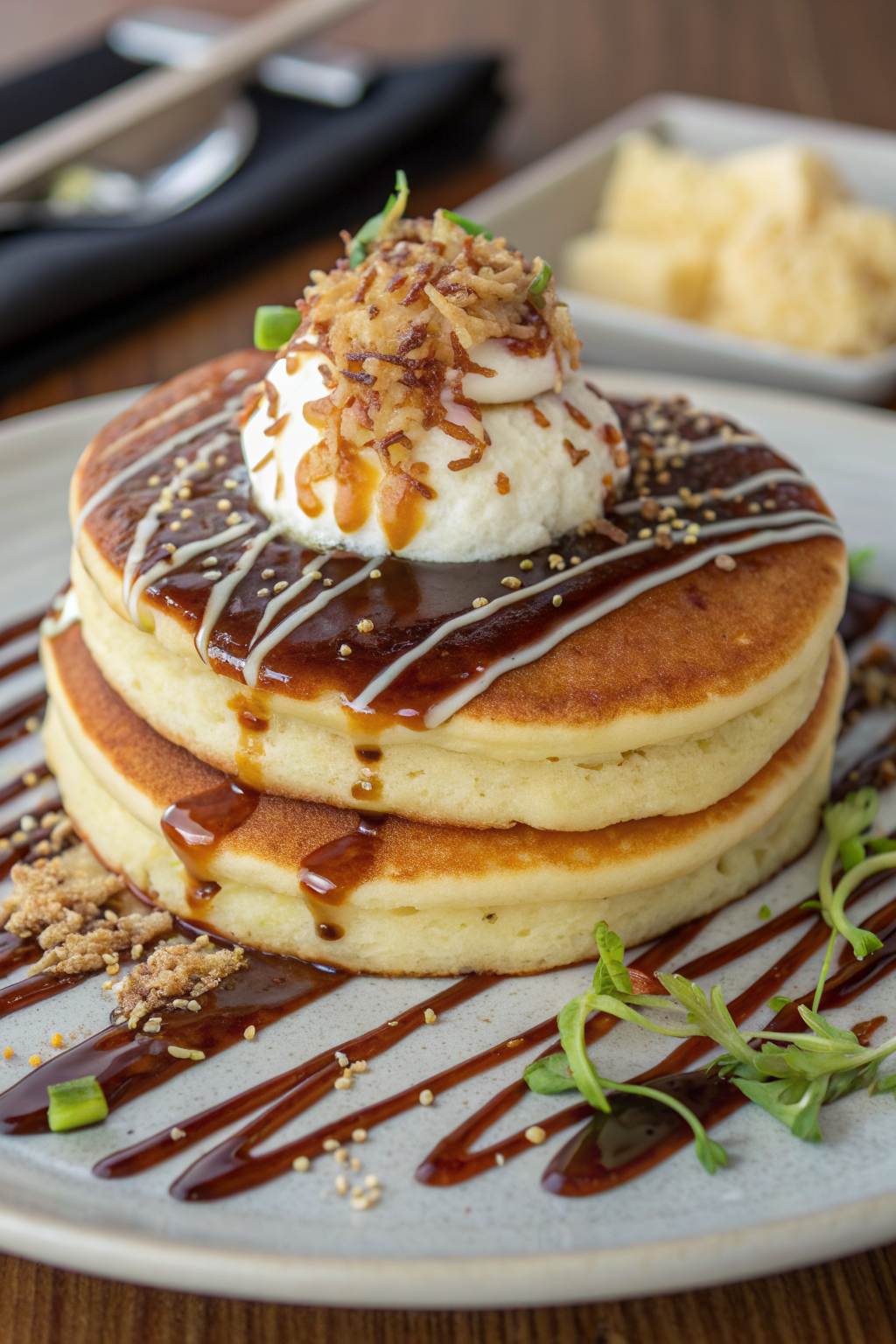
Okonomiyaki Japanese Pancakes Recipe
Ingredients
Instructions
- Finely shred the cabbage and place it in a large mixing bowl. Slice the green onions and chop the pickled red ginger. Set out the tenkasu, pork slices, okonomiyaki sauce, mayonnaise, aonori, and bonito flakes so they are ready to use.
- In a separate bowl, whisk together the dashi stock, eggs, salt, pepper, and sesame oil if using.
- Add the flour and baking powder to the wet ingredients and whisk until smooth with no dry spots. The batter should be slightly thicker than regular pancake batter; add a splash more dashi or water if it seems too stiff.
- Pour the batter over the shredded cabbage. Add the sliced green onions, chopped pickled ginger, and tenkasu. Gently stir until the cabbage and mix-ins are evenly coated. Let the mixture rest for 5–10 minutes.
- Place a large nonstick or cast iron skillet over medium heat. Add enough neutral oil to lightly coat the bottom and heat until the oil shimmers.
- Scoop a generous portion of the cabbage batter into the skillet with a ladle or measuring cup. Use the back of the ladle or a spatula to shape it into a round about 6 inches wide and 3/4 inch thick, tucking in any loose cabbage pieces.
- Lay 2 slices of pork belly or bacon across the top of the uncooked side and season lightly with a pinch of salt and pepper. Cook for 5–6 minutes, adjusting the heat as needed so the bottom browns slowly and the center begins to set.
- Slide a wide spatula under the pancake and flip it so the pork side faces down. Cook for another 4–6 minutes, until the pork is cooked through and slightly crisp and the pancake feels firm and springy in the center. If it browns too quickly, lower the heat and cover the pan for 1–2 minutes to finish cooking through.
- Transfer the cooked okonomiyaki to a plate and repeat with the remaining batter, adding more oil to the skillet as needed. Keep finished pancakes warm in a low oven if desired.
- While the okonomiyaki is hot, drizzle okonomiyaki sauce over the top in a zigzag pattern, then squeeze Japanese mayonnaise across in the opposite direction to create a loose crisscross pattern.
- Sprinkle with aonori, bonito flakes, and extra sliced green onions. Serve immediately while the edges are still crisp.
Notes
Approximate per serving (1 of 4 pancakes): 520 calories; fat 31 g; saturated fat 8 g; carbohydrates 44 g; fiber 4 g; sugars 7 g; protein 17 g; sodium 1280 mg. Values will vary based on exact ingredients, toppings, and portion size.