
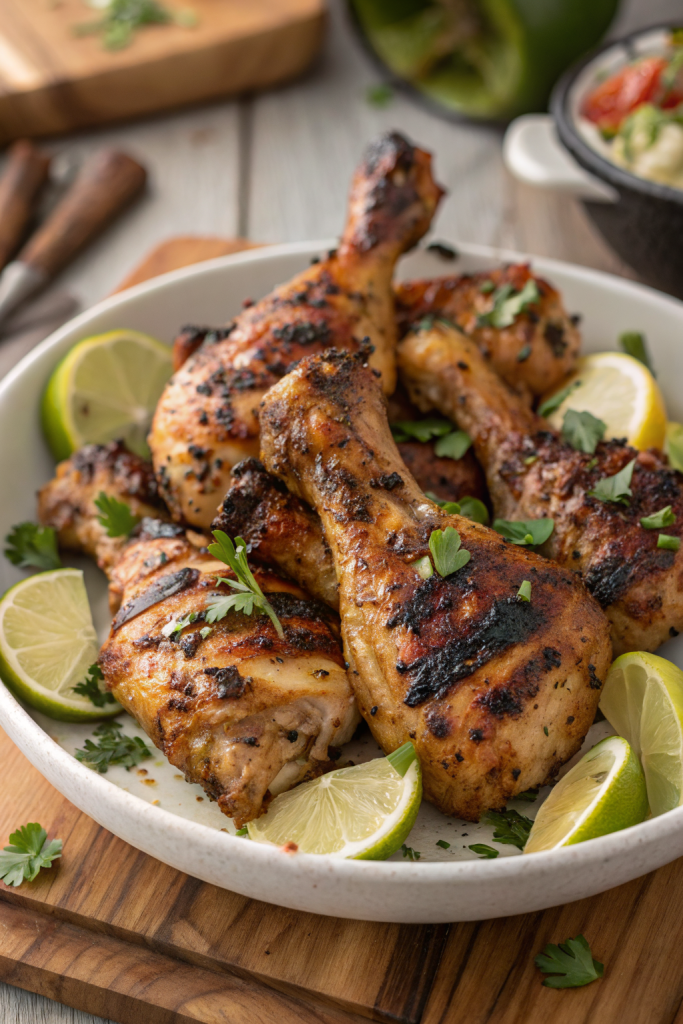
Jamaican Jerk Chicken Recipe hits you with smoky heat, citrusy tang, and warm spices that cling to juicy chicken in the best way. It works for spice lovers, meal-preppers, busy families, and anyone who wants big flavor in about 1 hour total (plus marinating time, which I count as couch time). I first fell in love with jerk chicken on a sweaty trip to Kingston, and I’ve chased that flavor ever since in my own kitchen.
Why Jamaican Jerk Chicken Recipe Is Worth It
This Jamaican Jerk Chicken Recipe brings layers of flavor that simple salt-and-pepper chicken never reaches. Scotch bonnet heat, allspice warmth, and fresh herbs team up with smoky grilling to give you complex flavor with very little hands-on work.
You toss everything in a blender, marinate the chicken, then let the grill or oven do the heavy lifting. The recipe also scales easily, so you can cook for two or a crowd without extra stress.
“This Jamaican Jerk Chicken Recipe tastes like a backyard vacation on a plate—spicy, smoky, and insanely juicy. ★★★★★”
Ingredients You Need
Chicken
- 3–4 pounds bone-in, skin-on chicken thighs and drumsticks
- Dark meat stays juicy and handles the spice better than chicken breast.
- Use all thighs if your crew loves extra tenderness.
Fresh aromatics
- 6–8 green onions (scallions), trimmed and roughly chopped
- 1 small yellow onion, roughly chopped
- 4–6 garlic cloves, peeled
- 1–2 inches fresh ginger, peeled and sliced
Herbs & peppers
- 4–6 sprigs fresh thyme (or 1 tablespoon dried thyme in a pinch)
- 1–3 Scotch bonnet peppers, stems removed
- Use 1 pepper for medium heat, 2 for hot, 3 if you live dangerously.
- Swap with habanero if you cannot find Scotch bonnet; flavor shifts slightly but still tastes great.
- 1 small bunch fresh cilantro or flat-leaf parsley (optional, but adds brightness)
Spices
- 2 tablespoons ground allspice (pimento)
- 1 teaspoon ground cinnamon
- 1 teaspoon ground nutmeg
- 1 teaspoon smoked paprika (adds extra grill-like flavor, especially if you bake)
- 1–2 teaspoons kosher salt, plus more to taste
- 1 teaspoon freshly ground black pepper
- 1–2 tablespoons brown sugar (light or dark)
- Sugar balances the heat and helps caramelization; use coconut sugar if you prefer.
Liquid ingredients
- 1/4 cup soy sauce (use low-sodium if you watch salt)
- 2 tablespoons vegetable oil or avocado oil
- 2–3 tablespoons fresh lime juice (about 1–2 limes)
- 2 tablespoons orange juice (bottled works fine)
- 1 tablespoon apple cider vinegar or white vinegar
Optional flavor boosters
- 1 tablespoon molasses or honey for deeper sweetness
- 1 teaspoon ground cloves if you like extra warm spice
- 1 teaspoon liquid smoke if you cook in the oven and want more grill flavor
Pantry shortcuts & brand notes
- Use bottled lime juice if fresh runs out; just taste and adjust.
- Use pre-minced garlic and ginger from a jar on busy nights; I still prefer fresh, but the marinade hides shortcuts well.
- Use gluten-free tamari instead of soy sauce if you need gluten-free jerk chicken.
Equipment list
- Blender or food processor (essential for smooth jerk marinade)
- Large bowl or gallon-size zip-top bags for marinating
- Tongs
- Grill (gas or charcoal) or oven with baking sheet and wire rack
- Instant-read thermometer (helps you hit juicy, safe chicken every time)
Quick Tips & substitutions
- Pat chicken dry before marinating so the jerk marinade clings better.
- Score thick parts of the chicken with shallow cuts so flavor sinks deeper.
- Wear gloves when handling Scotch bonnet peppers and avoid touching your face.
- Remove seeds and membranes from the peppers if you want milder heat.
- Use habanero peppers if you cannot find Scotch bonnet; they share similar heat.
- Swap soy sauce with tamari or coconut aminos for gluten-free jerk chicken.
- Marinate at least 2 hours, but aim for 8–24 hours for maximum flavor.
- Do not marinate longer than 24 hours or the lime and vinegar can make the texture mushy.
- Bring chicken to room temp for 20–30 minutes before cooking so it cooks more evenly.
- Use a wire rack on a sheet pan in the oven so heat circulates and the skin crisps.
- Baste with extra marinade during the first half of cooking, then stop so the surface caramelizes.
- Use leftover jerk chicken in tacos, bowls, salads, or wraps for easy lunches.
How to Make Jamaican Jerk Chicken Recipe
Blend the jerk marinade
- Add green onions, onion, garlic, ginger, thyme, Scotch bonnet peppers, allspice, cinnamon, nutmeg, smoked paprika, salt, pepper, brown sugar, soy sauce, oil, lime juice, orange juice, and vinegar to a blender or food processor.
- Blend until the mixture turns into a thick, pourable paste.
- Taste a tiny bit (careful, it brings heat) and adjust salt, sugar, or lime juice as needed.
- If the mixture feels too thick to blend, add 1–2 tablespoons more orange juice or water and blend again.
Marinate the chicken
- Pat the chicken pieces dry with paper towels.
- Place the chicken in a large bowl or zip-top bag.
- Pour most of the jerk marinade over the chicken, reserving 2–3 tablespoons in a covered container in the fridge for basting.
- Rub the marinade into every piece, including under the skin where possible.
- Cover the bowl or seal the bag, then chill at least 2 hours and up to 24 hours.
- Flip the chicken once or twice during marinating so every piece soaks evenly.
Grill method (most traditional flavor)
- Preheat your grill to medium-high heat (about 375–400°F / 190–205°C).
- Oil the grates lightly so the chicken does not stick.
- Shake off excess marinade from each piece and place the chicken skin-side down over indirect heat if you use charcoal, or over a cooler zone on a gas grill.
- Close the lid and grill for 15–20 minutes, turning occasionally so the skin browns without burning.
- Move the chicken closer to direct heat during the last 10–15 minutes to crisp the skin and deepen the char.
- Baste lightly with the reserved marinade during the first half of grilling, then stop basting so the surface caramelizes.
- Cook until the thickest part of each piece reaches 165°F (74°C) on an instant-read thermometer.
- Transfer the chicken to a platter and rest it 5–10 minutes so the juices settle.
Oven-baked method
- Preheat your oven to 400°F (205°C).
- Line a baking sheet with foil and place a wire rack on top; this setup keeps the chicken elevated so hot air circulates.
- Arrange the marinated chicken pieces on the rack, skin-side up, with a little space between each piece.
- Bake for 35–45 minutes, depending on size, until the skin browns and the internal temperature hits 165°F (74°C).
- Baste once or twice with the reserved marinade during the first 20 minutes, then let the skin crisp without more liquid.
- If you want extra char, switch the oven to broil on high for 2–3 minutes at the end, watching closely.
- Rest the chicken 5–10 minutes before serving so it stays juicy.
Stovetop plus broiler hybrid (good for apartments)
- Heat a large oven-safe skillet or grill pan over medium-high heat with a thin layer of oil.
- Sear the marinated chicken pieces skin-side down for 4–5 minutes until the skin browns deeply.
- Flip the chicken, then transfer the skillet to a 375°F (190°C) oven.
- Bake 20–25 minutes until the chicken reaches 165°F (74°C).
- Broil for 1–2 minutes at the end if you want more char.
Recipe Variations
- Gluten-free: Use tamari or coconut aminos instead of soy sauce and confirm all spices list gluten-free on the label.
- Lower carb: Reduce or skip the brown sugar and use a keto-friendly sweetener like allulose or monk fruit.
- Milder heat: Use only 1 Scotch bonnet or habanero, remove seeds and membranes, and add extra orange juice for balance.
- Extra smoky: Add 1 teaspoon liquid smoke to the marinade and grill over charcoal with a handful of pimento or hickory wood chips.
- Jerk chicken breasts: Use boneless, skinless breasts and grill over medium heat 6–8 minutes per side; pull them off at 160°F and rest so they reach 165°F gently.
- Jerk chicken thighs (boneless): Use boneless skinless thighs and cook 5–7 minutes per side on the grill or in a skillet.
- Jerk chicken skewers: Cut boneless chicken into chunks, marinate, then thread onto skewers with bell peppers and onions before grilling.
- Jerk tofu: Press extra-firm tofu, cut into slabs or cubes, marinate at least 1 hour, then grill or bake until edges crisp.
- Jerk cauliflower: Toss cauliflower florets in jerk marinade and roast at 425°F (220°C) for 25–30 minutes, stirring once.
Ways to Serve Jamaican Jerk Chicken Recipe
- Serve with coconut rice and peas plus a simple green salad.
- Add grilled pineapple slices and lime wedges on the side.
- Pair with fried plantains or baked sweet potatoes to balance the heat.
- Shred leftovers and stuff into warm tortillas with cabbage slaw and avocado.
- Slice over a big bowl of greens, black beans, and rice for a hearty lunch bowl.
- Serve with corn on the cob, mango salsa, and a cool yogurt or sour cream sauce.
Storage Success
Store leftover Jamaican Jerk Chicken Recipe in an airtight container in the fridge for up to 4 days. Cool the chicken to room temp first so condensation does not make the skin soggy. Reheat in a 350°F (175°C) oven for 10–15 minutes or in an air fryer so the skin crisps again. Freeze cooked jerk chicken in freezer bags for up to 2 months and thaw overnight in the fridge before reheating.
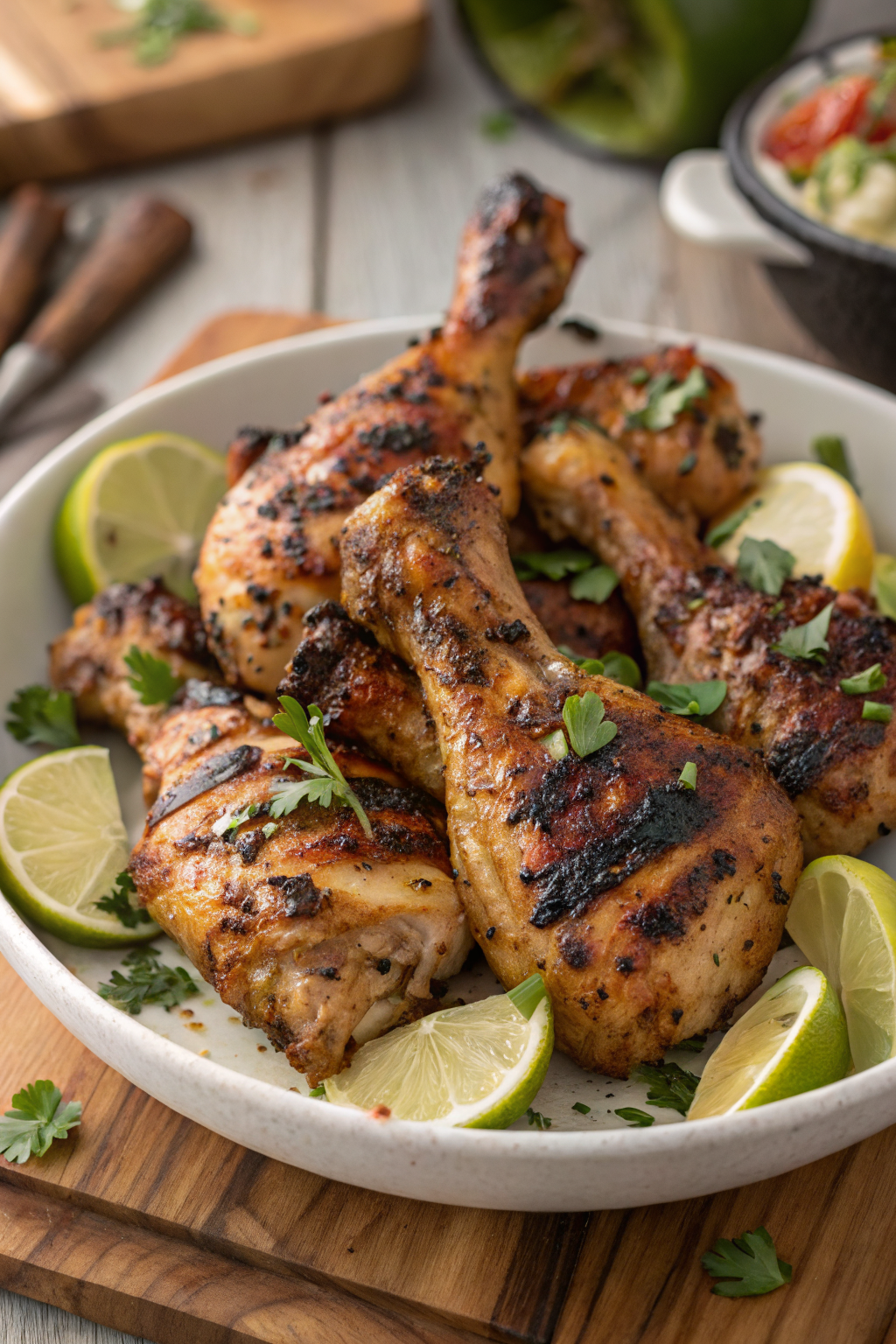
Jamaican Jerk Chicken Recipe
Ingredients
Instructions
- Add green onions, yellow onion, garlic, ginger, thyme, Scotch bonnet peppers, allspice, cinnamon, nutmeg, smoked paprika, salt, black pepper, brown sugar, soy sauce, oil, lime juice, orange juice, and vinegar to a blender or food processor. Add cilantro or parsley, molasses or honey, ground cloves, and liquid smoke if using.
- Blend until the mixture forms a thick, pourable paste, adding a splash more orange juice or water if needed to help it blend.
- Taste a tiny bit carefully and adjust salt, sugar, or lime juice to balance the heat and brightness.
- Pat the chicken pieces dry with paper towels so the marinade clings well.
- Place the chicken in a large bowl or zip-top bag.
- Pour most of the jerk marinade over the chicken, reserving 2–3 tablespoons in a covered container in the refrigerator for basting.
- Rub the marinade all over the chicken, getting it into every crevice and under the skin where possible.
- Cover the bowl or seal the bag and marinate in the refrigerator for at least 2 hours and up to 24 hours, turning the chicken once or twice so it marinates evenly.
- Preheat the grill to medium-high heat, about 375–400°F (190–205°C), and lightly oil the grates.
- Shake excess marinade from the chicken and place the pieces skin-side down over indirect heat or a cooler zone of the grill.
- Close the lid and grill for 15–20 minutes, turning occasionally so the skin browns without burning.
- Move the chicken closer to direct heat for the last 10–15 minutes to crisp the skin and deepen the char, basting lightly with the reserved marinade during the first half of cooking only.
- Grill until the thickest part of each piece reaches 165°F (74°C), then transfer to a platter and rest 5–10 minutes before serving.
- Preheat the oven to 400°F (205°C). Line a baking sheet with foil and place a wire rack on top.
- Arrange the marinated chicken pieces on the rack skin-side up, leaving space between them.
- Bake for 35–45 minutes, basting once or twice with reserved marinade during the first 20 minutes, until the skin is browned and the chicken reaches 165°F (74°C).
- For extra char, broil on high for 2–3 minutes at the end, watching closely, then rest 5–10 minutes before serving.
- Heat a large oven-safe skillet or grill pan over medium-high heat with a thin layer of oil.
- Sear the marinated chicken skin-side down for 4–5 minutes until the skin is deeply browned.
- Flip the chicken and transfer the skillet to a 375°F (190°C) oven.
- Bake 20–25 minutes, or until the chicken reaches 165°F (74°C), then broil for 1–2 minutes if you want more char before resting and serving.
Notes
Approximate per serving (about 1 piece, 1/6 of recipe): 380 calories; fat 25 g; saturated fat 7 g; carbohydrates 9 g; fiber 1 g; sugars 5 g; protein 30 g; sodium 780 mg. Values will vary based on exact chicken pieces, marinade amount retained, brands used, and portion size.
Leave a Reply