
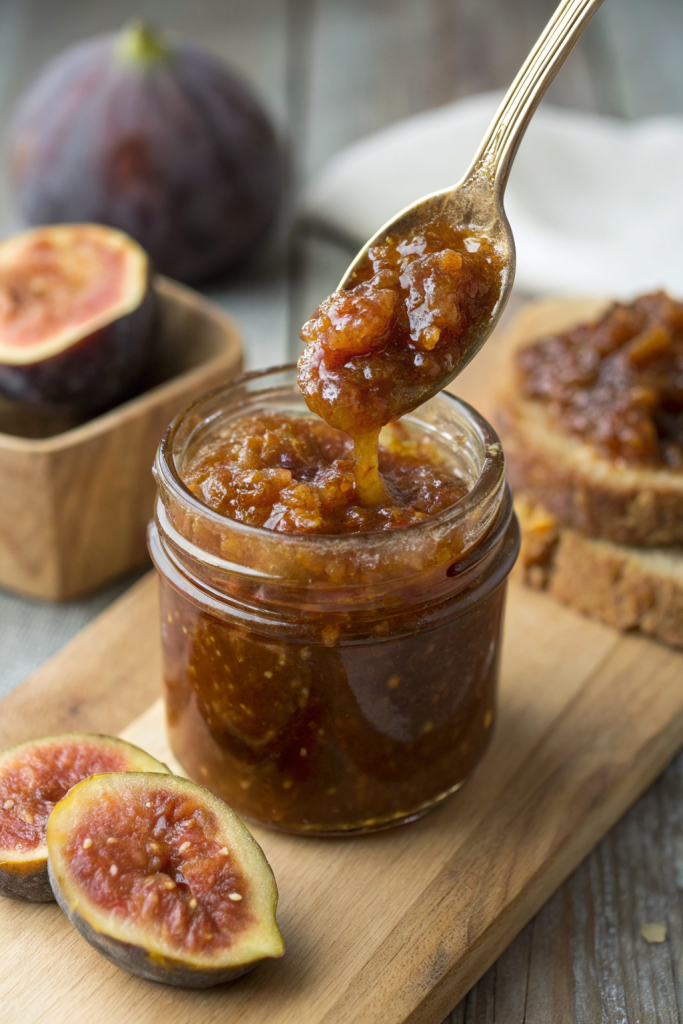
How to Make Fig Jam tastes like a spoonable fig newton with sunshine and a hint of caramel, and it works perfectly for anyone who wants a small-batch homemade jam in about 45 minutes. You can pull this off on a weeknight, even if you juggle kids, work, and a sink full of dishes. I grew up eating store-bought jam, so this recipe feels like a tiny upgrade that my younger self would high-five me for.
Why Make This Fig Jam at Home
Homemade fig jam tastes richer, fresher, and more complex than anything from a jar at the store. You control the sweetness, the texture, and the flavor boosters, so the jam fits your taste instead of the other way around.
You also use up figs that ripen all at once before they go sad and wrinkly in the fruit bowl. A small batch of fig jam turns a basic breakfast into something that feels a little special without a lot of effort.
This Fig Jam recipe tastes like fresh figs, caramel, and a hint of citrus, and it comes together easily even on a busy weeknight. ★★★★★
Ingredients You Need
Here is what you need to make a simple, classic fig jam recipe that works every time:
- Fresh ripe figs, about 2 pounds
- Use Black Mission, Brown Turkey, or Kadota.
- Choose soft but not mushy figs with no mold or large splits.
- Granulated sugar, 1 to 1¼ cups
- Use 1 cup for a less sweet, fruit-forward jam.
- Use up to 1¼ cups if your figs taste mild or if you like a sweeter spread.
- Lemon juice, 2 to 3 tablespoons, freshly squeezed
- Bottled lemon juice works in a pinch, but fresh tastes brighter.
- Lemon adds acidity, balances sweetness, and helps the jam set.
- Lemon zest, from 1 lemon
- Adds a fragrant citrus note that keeps the flavor lively.
- Salt, a small pinch
- Sharpens the fruit flavor and keeps the jam from tasting flat.
- Optional flavor boosters
- Vanilla extract, ½ teaspoon, for a dessert-like flavor.
- Ground cinnamon, ⅛ teaspoon, for a cozy note.
- Fresh thyme leaves, ½ teaspoon, for a savory twist.
You do not need commercial pectin for this How to Make Fig Jam recipe, because figs contain natural pectin and the lemon juice supports the set. If you want a firmer, more jelly-like texture, you can add 1 to 2 teaspoons of powdered pectin, but you can skip it for a softer, more rustic jam.
Equipment List
- Medium heavy-bottomed saucepan or Dutch oven
- Sharp knife and cutting board
- Measuring cups and spoons
- Wooden spoon or heatproof spatula
- Potato masher or fork
- Small plate for freezer test
- Clean glass jars with lids
- Funnel and ladle, if you have them, to make filling jars easier
Tips & Mistakes
- Use ripe figs that feel soft and smell fragrant; underripe figs give bland jam.
- Trim only the tough stem tips; keep the skins on, because they add flavor, color, and natural pectin.
- Weigh or measure the figs after trimming so the sugar ratio stays accurate.
- Start with lower sugar, then taste halfway through cooking and add a bit more if the jam tastes too tart.
- Stir often and keep the heat at medium to medium-low so the bottom does not scorch.
- Use a wide pot instead of a tall one; a wider surface helps the jam thicken faster.
- Skim off any foam that collects on top so the jam looks clear and glossy.
- Do not walk away for long periods; the jam can go from perfect to overcooked quickly near the end.
- Stop cooking when the jam thickens and slowly coats the back of a spoon; overcooking can make it taste slightly bitter.
- Use the freezer plate test to check set instead of guessing; it saves you from runny or overly stiff jam.
- Add delicate flavors like vanilla or herbs at the end of cooking so they stay bright.
- Let the jam cool 10 to 15 minutes before you transfer it to jars so the fruit pieces distribute evenly.
- Use clean, hot jars to avoid thermal shock and to keep the jam fresh longer.
- Label jars with the date so you track how long they sit in the fridge or freezer.
- Do not try to water-bath can this jam without a tested canning process; treat this as a refrigerator or freezer jam.
How to Make Fig Jam
Step 1: Prep the figs
Wash the figs gently under cool water and pat them dry with a clean towel. Trim off the tough stem tips and any bruised or moldy spots. Cut the figs into quarters for a chunky jam or smaller pieces if you prefer a smoother texture.
Measure about 6 cups of chopped figs and place them in your saucepan. If you have a kitchen scale, aim for about 2 pounds of trimmed figs.
Step 2: Add sugar, lemon, and seasonings
Add the sugar, starting with 1 cup, to the pot with the figs. Stir in the lemon juice, lemon zest, and a pinch of salt. If you plan to use cinnamon, add it now so it infuses as the jam cooks.
Stir everything together until the figs look coated and juicy. Let the mixture sit for 10 to 15 minutes so the sugar starts to draw out the fig juices.
Step 3: Start cooking the fig mixture
Set the pot over medium heat. Stir as the sugar dissolves and the figs release more juice. The mixture will look loose and syrupy at first.
Once it starts to bubble gently, reduce the heat to medium-low. Keep a steady simmer and stir every few minutes so the fruit cooks evenly.
Step 4: Mash to your preferred texture
After about 10 to 15 minutes of simmering, use a potato masher or a sturdy fork to mash the figs. Mash more for a smoother jam or less if you like visible chunks of fruit. The skins will soften and blend into the mixture.
Taste a small spoonful, blow on it so you do not burn your tongue, and check the sweetness. If you want it sweeter, add another 1 to 3 tablespoons of sugar and stir until it dissolves.
Step 5: Thicken the jam
Keep the jam at a gentle simmer and stir often. The mixture will thicken as water evaporates and the natural pectin works. Scrape the bottom and sides of the pot as you stir so nothing sticks.
As the jam thickens, you will see the bubbles slow down and look thicker and glossier. This stage usually takes another 15 to 20 minutes, depending on your pot and heat level.
Step 6: Test for doneness
Place a small plate in the freezer while the jam cooks. When the jam looks thick and glossy, spoon a small amount onto the cold plate. Wait 30 seconds, then push the edge of the jam with your finger.
If the surface wrinkles slightly and the jam holds a soft mound, you reached a good set. If it runs like syrup, keep cooking for 3 to 5 more minutes and test again.
Step 7: Add final flavor touches
When the jam passes the plate test, turn off the heat. Stir in vanilla extract or fresh thyme if you use them. Taste again and adjust with a tiny squeeze of lemon or a pinch more salt if needed.
Let the jam sit in the pot for about 10 minutes. This short rest helps the fruit pieces settle evenly instead of floating to the top in the jars.
Step 8: Fill the jars
While the jam rests, rinse your jars with very hot water to warm them. Dry them well. Place the warm jars on a towel or wooden board so they do not crack from heat shock.
Stir the jam, then ladle it into the jars, leaving about ½ inch of headspace at the top. Wipe the rims clean, then add the lids and close them tightly. Let the jars cool to room temperature before you move them to the fridge or freezer.
Variations I’ve Tried
I swap part of the sugar with honey for a deeper, floral sweetness. Honey browns a little faster, so I lower the heat slightly and stir more often. The result tastes rich and pairs nicely with yogurt and toast.
I also add a small handful of chopped dried figs to the pot for extra texture and a stronger fig flavor. The dried pieces plump up in the hot syrup and give the jam a chewy bite. This version works well on cheese boards with soft cheeses.
For a citrus-forward version, I add orange zest and a tablespoon of orange juice along with the lemon. The orange flavor plays nicely with the figs and gives the jam a brighter, almost marmalade-style vibe. Kids usually love this one on peanut butter sandwiches.
I sometimes stir in a spoonful of finely chopped fresh rosemary at the very end. The herbal note turns the jam into a great partner for grilled chicken or simple crackers with soft cheese. Use a light hand so the rosemary does not overpower the figs.
How to Serve Fig Jam
I love to spoon How to Make Fig Jam over warm toast with a little butter so it melts into all the corners. It also tastes great on pancakes, waffles, or French toast instead of syrup. Stir a spoonful into plain yogurt or oatmeal to add sweetness and texture without extra effort.
You can also use this fig jam as a glaze for roasted vegetables like carrots or sweet potatoes. Spread it on sandwiches with turkey, ham, or grilled vegetables for a sweet-savory combo. Add a small bowl of fig jam to a snack board with cheese, nuts, and crackers for an easy upgrade.
How to store
- Store fig jam in clean, tightly sealed jars in the refrigerator for up to 3 weeks.
- For longer storage, freeze the jam in freezer-safe containers, leaving some headspace, for up to 6 months.
- Thaw frozen jam overnight in the fridge before you use it.
- Reheat gently in a small saucepan over low heat or in short bursts in the microwave, stirring often, just until it loosens to a spreadable texture.
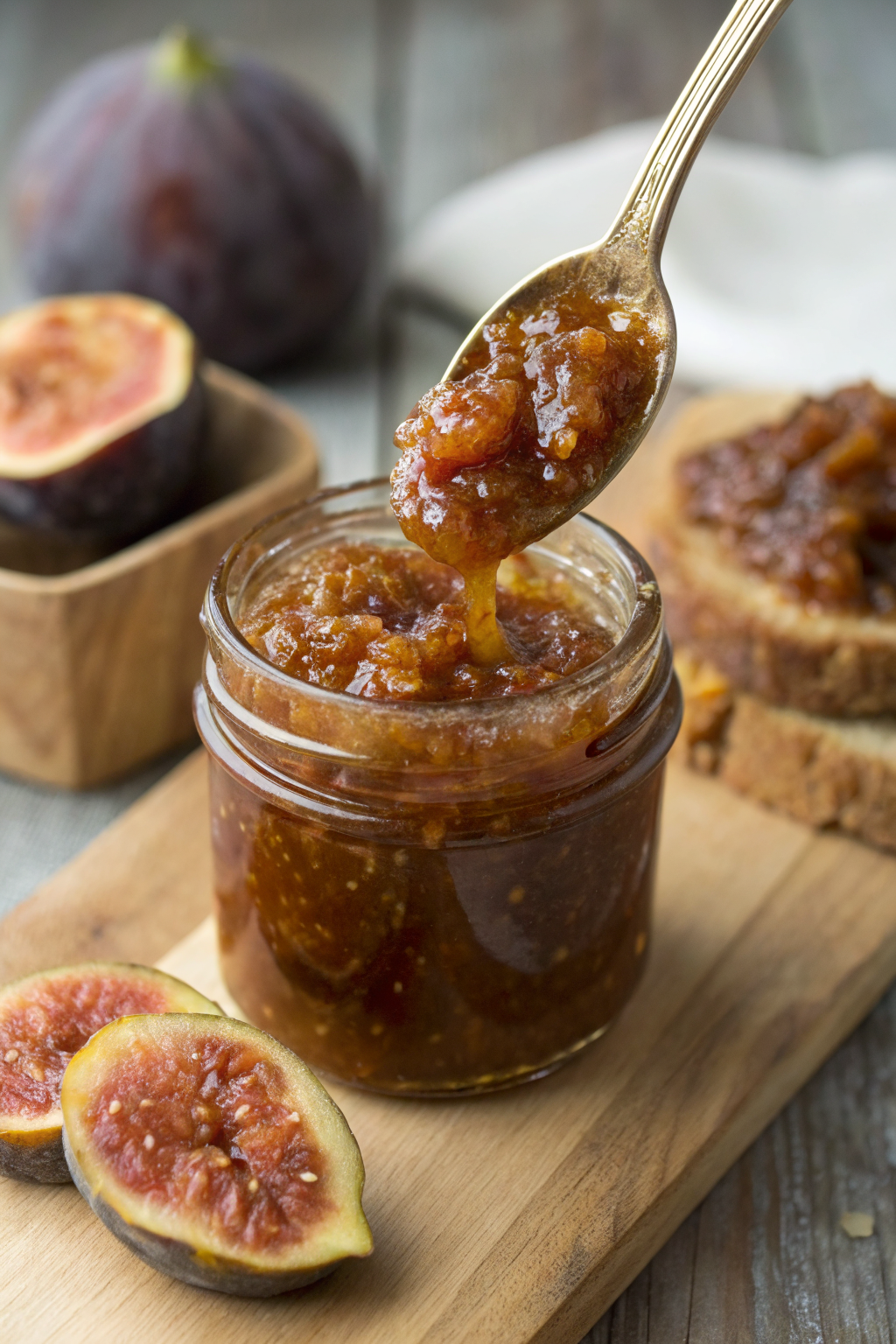
How to Make Fig Jam
Ingredients
Instructions
- Wash the figs under cool water, pat dry, trim off the tough stem tips and any bruised spots, then chop into quarters or smaller pieces for your preferred texture. Measure about 6 cups (2 pounds) of trimmed figs into a medium heavy-bottomed saucepan.
- Add 1 cup of granulated sugar, the lemon juice, lemon zest, salt, and cinnamon (if using) to the pot with the figs. Stir until the figs are well coated and juicy, then let the mixture sit for 10–15 minutes so the sugar starts to draw out the juices.
- Place the saucepan over medium heat, stirring as the sugar dissolves and the figs release more juice. Once the mixture begins to bubble, reduce the heat to medium-low and maintain a gentle simmer, stirring every few minutes.
- After 10–15 minutes of simmering, use a potato masher or sturdy fork to mash the figs to your desired texture, smoother or chunkier as you like. Taste carefully and add up to an extra 1/4 cup sugar if you prefer a sweeter jam, stirring until dissolved.
- Continue to simmer the jam over medium-low heat, stirring often and scraping the bottom and sides of the pot so it does not scorch. Cook for another 15–20 minutes, until the mixture thickens and the bubbles look slower and glossy.
- To test doneness, place a small plate in the freezer while the jam cooks. Spoon a little hot jam onto the chilled plate and wait about 30 seconds, then push the edge with your finger. If it wrinkles lightly and holds a soft mound, it is ready; if it runs like syrup, cook 3–5 minutes longer and test again.
- Once the jam reaches your desired set, remove the pan from the heat. Stir in the vanilla and fresh thyme, if using, and adjust the flavor with a tiny squeeze more lemon juice or a small pinch of salt if needed. Let the jam rest in the pot for about 10 minutes so the fruit pieces distribute evenly.
- While the jam rests, rinse clean glass jars with very hot water to warm them, then dry. Stir the jam, ladle it into the warm jars leaving about 1/2 inch of headspace at the top, wipe the rims clean, and seal with lids. Cool to room temperature, then refrigerate or freeze as desired.
Notes
Approximate per 2-tablespoon serving (about 1 ounce), using 1 cup sugar: 70 calories; fat 0 g; saturated fat 0 g; carbohydrates 18 g; fiber 1 g; sugars 16 g; protein 0 g; sodium 15 mg. Values are estimates and will vary based on exact sugar amount, fig variety, and portion size. Storage: Keep in clean, tightly sealed jars in the refrigerator for up to 3 weeks, or freeze in freezer-safe containers for up to 6 months, leaving headspace for expansion.
Leave a Reply