
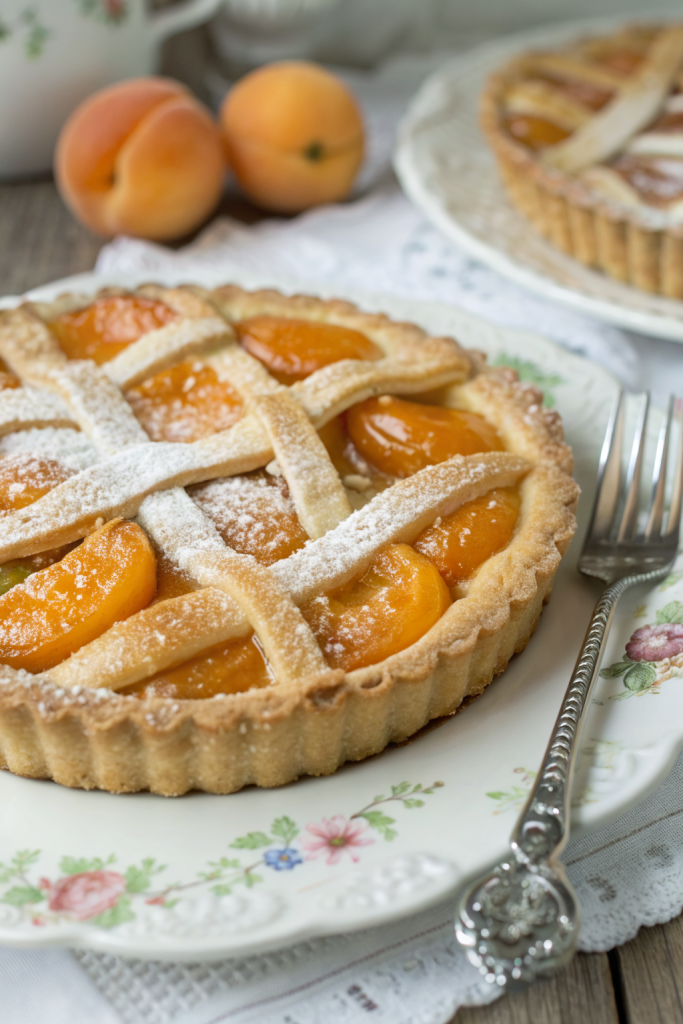
Classic Apricot Pie with Flaky Butter Crust tastes bright, buttery, and just tart enough to keep every bite interesting. It suits bakers who want a nostalgic fruit pie that feels special yet fits into a relaxed weekend afternoon, with a total time of about 2 hours including chilling and baking. I grew up eating store-bought pies, so this recipe still feels like a tiny personal victory every time I pull it from the oven.
Why You Should Try This Classic Apricot Pie with Flaky Butter Crust
This pie hits that perfect sweet-tart balance that keeps you going back for “just one more sliver” until the pan looks suspiciously empty. The flaky butter crust stays crisp at the edges, so you get a tender, jammy apricot center wrapped in golden, buttery layers.
You also get a recipe that works with fresh or frozen apricots, so you can bake it in peak summer or in the middle of January when you crave sunshine in dessert form. If you feel nervous about pie dough, this method walks you through it in a way that actually builds confidence.
“This Classic Apricot Pie with Flaky Butter Crust tastes like summer sunshine in a slice, with a crisp, buttery crust and jammy fruit that disappears fast at any gathering. ★★★★★”
Ingredients You’ll Need
For the flaky butter crust
- 2 1/2 cups (300 g) all-purpose flour
- Use a reliable brand like King Arthur or Gold Medal for consistent results.
- 1 tablespoon granulated sugar
- 1 teaspoon fine sea salt
- 1 cup (2 sticks / 226 g) cold unsalted butter, cut into small cubes
- Choose a good quality butter with at least 82 percent butterfat for better flavor and flakiness.
- 1/2 cup to 3/4 cup ice-cold water
- Start with 1/2 cup and add more a tablespoon at a time until the dough comes together.
- 1 tablespoon apple cider vinegar or white vinegar
- This helps keep the crust tender and makes the dough easier to work with.
For the apricot filling
- 6 to 7 cups fresh apricots, pitted and sliced (about 2 1/2 to 3 pounds)
- You can use frozen sliced apricots; thaw them and drain off excess liquid first.
- 3/4 to 1 cup granulated sugar
- Use 3/4 cup for very ripe, sweet apricots and 1 cup for more tart fruit.
- 1/3 cup light brown sugar, packed
- 1/4 cup cornstarch
- You can swap with 1/3 cup tapioca starch or 1/2 cup quick-cooking tapioca.
- 1/4 teaspoon fine sea salt
- 1 teaspoon pure vanilla extract
- 1/2 teaspoon almond extract
- Almond pairs beautifully with apricot; reduce to 1/4 teaspoon if you prefer a milder flavor.
- 1 tablespoon fresh lemon juice
- 1 teaspoon lemon zest (optional but highly recommended)
For finishing
- 1 large egg
- 1 tablespoon milk or heavy cream
- 1 to 2 tablespoons coarse sugar or granulated sugar for sprinkling on top
Pantry shortcuts and substitutions
- Use store-bought refrigerated pie dough in a pinch, though homemade flaky butter crust gives better flavor and texture.
- If you cannot find apricots, try a mix of apricots and peaches or apricots and nectarines to keep the flavor close.
- Use gluten-free all-purpose flour blend for the crust and cornstarch or tapioca for the filling to keep the pie gluten-free.
Equipment list
- 9-inch standard pie dish (glass or metal works best)
- Large mixing bowls
- Measuring cups and spoons
- Rolling pin
- Bench scraper or knife
- Pastry blender or food processor (optional, for cutting in butter)
- Silicone spatula or wooden spoon
- Pastry brush
- Sharp knife or small cookie cutters for venting the top crust
- Baking sheet lined with parchment paper or foil (to catch drips)
- Cooling rack
Tips & Tricks
- Chill everything for the crust: cold butter, cold flour, and ice water help you build flaky layers.
- Keep visible chunks of butter in the dough about pea sized; those pockets melt in the oven and create flakiness.
- Mix the dough just until it holds together; overworking it develops gluten and makes the crust tough.
- Wrap the dough and chill it at least 1 hour; this rest time relaxes the gluten and makes rolling easier.
- Toss the apricots gently with sugar and starch so you coat the fruit without crushing it.
- Taste a slice of apricot and adjust sugar slightly before you fill the crust; apricots vary a lot in sweetness.
- Place the pie dish on a preheated baking sheet to help the bottom crust cook through and stay crisp.
- Vent the top crust generously with slits or cutouts so steam escapes and the filling thickens properly.
- Tent the edges with foil if they brown too fast; this keeps the crust golden instead of too dark.
- Let the pie cool at least 3 hours before slicing so the filling sets and slices hold their shape.
How to Make Classic Apricot Pie with Flaky Butter Crust
Make the flaky butter crust
-
Mix the dry ingredients
Add flour, sugar, and salt to a large bowl. Whisk to combine so the salt and sugar distribute evenly. Keep the bowl in the fridge for 10 minutes if your kitchen feels warm. -
Cut in the butter
Add the cold butter cubes to the flour mixture. Use a pastry blender, two knives, or your fingertips to cut the butter into the flour until you see pea sized pieces with some smaller bits. Work quickly so the butter stays cold. -
Add the liquid
Stir the vinegar into 1/2 cup ice water. Drizzle the water mixture over the flour and butter while you toss with a fork. Add more water a tablespoon at a time until the dough starts to clump and holds together when you squeeze a small handful. -
Bring the dough together
Turn the shaggy dough onto a lightly floured surface. Gently press and fold it a few times until it forms a rough ball with visible streaks of butter. Divide the dough into two equal discs, wrap each tightly in plastic wrap, and chill for at least 1 hour and up to 2 days.
Prepare the apricot filling
-
Slice and season the apricots
Pit the apricots and slice them into wedges about 1/2 inch thick. Place the slices in a large bowl. Add granulated sugar, brown sugar, cornstarch, salt, vanilla, almond extract, lemon juice, and lemon zest. -
Combine and rest the filling
Toss the apricots gently until they look evenly coated and no dry pockets of starch remain. Let the mixture sit for 10 to 15 minutes while you roll out the crust. This short rest lets the sugar draw out some juices and helps the starch start to hydrate.
Roll out the bottom crust
-
Preheat and prep the dish
Preheat your oven to 400°F (200°C). Place a baking sheet in the oven to heat up. Lightly grease your pie dish with a thin swipe of butter or a quick mist of nonstick spray. -
Roll the first disc
Take one disc of dough from the fridge and let it sit at room temperature for 5 minutes so it softens slightly. On a lightly floured surface, roll the dough from the center outward, turning it a quarter turn after each few rolls, until it measures about 12 inches in diameter. Dust the surface and rolling pin lightly as needed to prevent sticking. -
Fit the crust into the dish
Gently roll the dough around the rolling pin or fold it in half, then transfer it to the pie dish. Ease it into the corners without stretching. Let the excess dough hang over the edges; you will trim it later.
Fill the pie
-
Add the apricot filling
Give the apricot mixture a quick stir. Spoon the fruit into the crust, scraping in any juices left in the bowl. Spread the filling into an even layer so it bakes evenly. -
Adjust starch if needed
If the apricots released a lot of liquid and the mixture looks very soupy, sprinkle an extra teaspoon or two of cornstarch over the top. This small adjustment helps the filling set nicely.
Roll out and add the top crust
-
Roll the second disc
Roll the second disc of dough into another 12 inch circle. You can keep it whole for a classic top crust or cut it into strips for a lattice. If you choose lattice, cut even strips about 3/4 to 1 inch wide. -
Cover or lattice the pie
Place the whole top crust over the filling or weave the strips into a lattice pattern. Trim the excess dough so you have about 1/2 inch overhang all around. Fold the edges of the top and bottom crust together and tuck them under to seal. -
Crimp and vent
Crimp the edges with your fingers or a fork to seal them well. If you use a full top crust, cut several slits in the center with a sharp knife so steam can escape. This step keeps the filling from bubbling out the sides.
Egg wash and bake
-
Brush and sugar the crust
Whisk the egg and milk together in a small bowl. Brush this egg wash over the top crust and edges. Sprinkle coarse sugar over the top for sparkle and crunch. -
Bake the pie
Place the pie on the preheated baking sheet in the oven. Bake at 400°F (200°C) for 20 minutes. Reduce the temperature to 350°F (175°C) and continue baking for 35 to 45 minutes, until the crust looks deep golden and the filling bubbles thickly through the vents. -
Protect the edges if needed
Check the pie after about 30 minutes of total baking time. If the edges brown faster than the center, cover them with strips of foil or a pie shield. Continue baking until the center looks set and bubbly.
Cool and serve
-
Cool the pie completely
Transfer the baked pie to a cooling rack. Let it cool at least 3 hours so the filling thickens and slices hold their shape. If you cut it too soon, the filling will run, though it will still taste great. -
Slice and enjoy
Slice the Classic Apricot Pie with Flaky Butter Crust with a sharp knife. Wipe the knife between cuts for cleaner slices. Serve slightly warm or at room temperature.
What to Serve with Classic Apricot Pie with Flaky Butter Crust
Classic Apricot Pie with Flaky Butter Crust pairs beautifully with a scoop of vanilla ice cream that melts into the warm, jammy fruit. You can also serve it with lightly sweetened whipped cream and a sprinkle of toasted sliced almonds for a little crunch. If you want something lighter, add a spoonful of plain or vanilla yogurt on the side and treat it like a fancy fruit tart. A cold glass of milk, iced tea, or sparkling water with lemon keeps the flavors bright and refreshing.
Storage Options
- Let the pie cool completely, then cover it loosely with foil or plastic wrap and keep it at room temperature for up to 1 day.
- Move leftovers to the fridge after the first day; store them covered for up to 4 days.
- Freeze individual slices or the whole pie tightly wrapped in plastic and then foil for up to 2 months.
- Reheat slices in a 325°F (165°C) oven or toaster oven for 10 to 15 minutes until warm and crisp; avoid the microwave if possible since it softens the crust.