
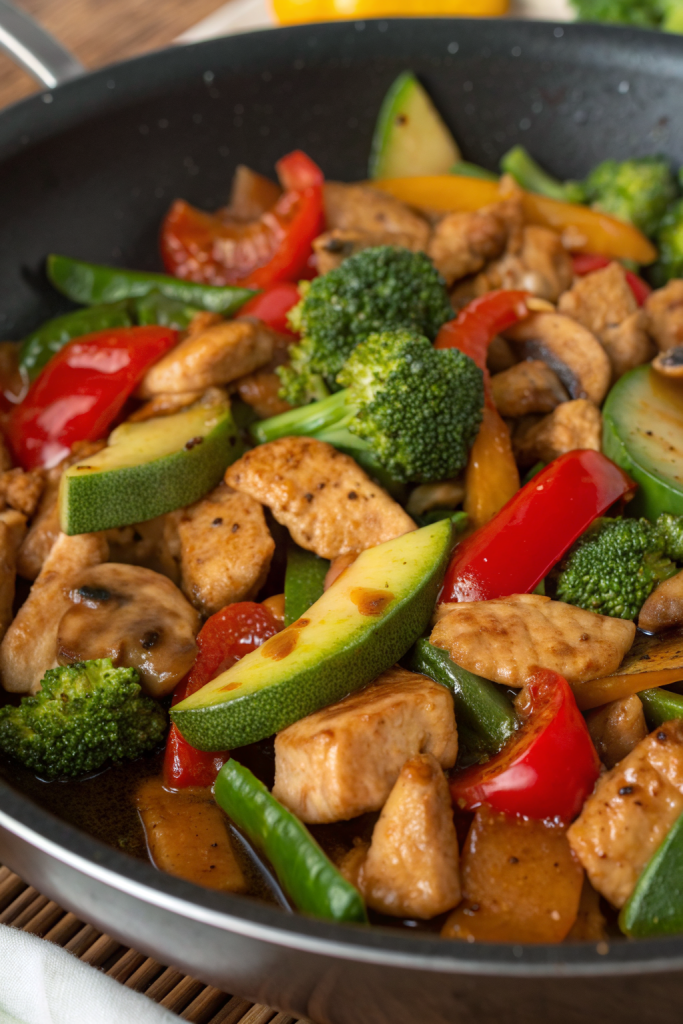
Chicken & Vegetable Stir Fry Recipe hits that perfect mix of tender chicken, crisp veggies, and a glossy, garlicky sauce that clings to every bite. It works for busy weeknights, meal prep Sundays, and anyone who wants a healthy dinner on the table in under 30 minutes. I tested versions of this dish so often that my wok basically knows this recipe by heart.
Why Chicken & Vegetable Stir Fry Recipe Is Worth It
This chicken and vegetable stir fry packs big flavor with minimal effort and dishes. The sauce tastes savory, slightly sweet, and just a little sticky, so it coats the chicken and vegetables without turning them soggy.
You control the veggies, the spice level, and the amount of sauce, so the recipe fits picky eaters and adventurous ones. Cleanup stays easy, the cook time stays short, and you get a balanced meal in one pan.
“This Chicken & Vegetable Stir Fry Recipe tastes like takeout, cooks faster than delivery, and leaves zero leftovers every time. ★★★★★”
Ingredients You Need
Chicken
- 1 ½ pounds boneless skinless chicken breast or thighs, thinly sliced
- Thighs stay juicier and forgive overcooking.
- Use pre-sliced chicken strips from the store when you feel short on time.
Vegetables
Mix and match, but aim for color and crunch.
- 1 red bell pepper, sliced into strips
- 1 yellow or orange bell pepper, sliced
- 1 cup broccoli florets (fresh or thawed from frozen and patted dry)
- 1 cup sugar snap peas or snow peas
- 1 medium carrot, thinly sliced on a diagonal
- ½ small yellow onion, thinly sliced
- 1 cup sliced mushrooms (baby bella or white button)
- 2–3 green onions, sliced, for garnish
Use pre-cut stir fry veggie mixes from the produce section when you want a shortcut. They work great and save chopping time.
Aromatics
- 3–4 cloves garlic, minced
- 1 tablespoon fresh ginger, minced or grated
- Use ginger paste from a tube as a pantry shortcut.
Stir Fry Sauce
Whisk these in a bowl or shake in a jar:
- ⅓ cup low-sodium soy sauce or tamari (for gluten-free)
- ¼ cup chicken broth or vegetable broth
- 2 tablespoons oyster sauce (adds deep savory flavor; skip for shellfish allergy and add 1 extra tablespoon soy sauce)
- 1–2 tablespoons honey or brown sugar (adjust to taste)
- 1 tablespoon rice vinegar or apple cider vinegar
- 1–2 teaspoons toasted sesame oil
- ½–1 teaspoon crushed red pepper flakes or chili garlic sauce (optional, for heat)
- 1 tablespoon cornstarch (or arrowroot powder) to thicken the sauce
Use your favorite soy sauce brand; low-sodium versions keep the dish from tasting too salty.
Chicken Marinade (simple and quick)
You can use part of the sauce as a marinade, but this quick mix adds great texture:
- 1 tablespoon soy sauce
- 1 teaspoon cornstarch
- 1 teaspoon neutral oil (canola, avocado, or grapeseed)
Oil & Garnishes
- 2–3 tablespoons neutral high-heat oil (canola, avocado, grapeseed, or peanut oil)
- Sesame seeds, for topping
- Extra sliced green onions, for topping
- Lime wedges, optional, for squeezing over the finished stir fry
Equipment
- Large wok or a wide, heavy skillet (12-inch works well)
- Cutting board and sharp knife
- Small bowl or jar for the stir fry sauce
- Tongs or a spatula
- Measuring spoons and cups
- Rice cooker or pot, if you plan to serve with rice
Quick Tips & substitutions
- Slice the chicken thin and across the grain so it cooks fast and stays tender.
- Pat the chicken dry before marinating so the cornstarch sticks and browns nicely.
- Cut vegetables into similar sizes so they cook evenly and stay crisp-tender.
- Use a hot pan; wait until the oil shimmers before you add chicken or veggies.
- Stir fry in batches so the pan does not crowd and the chicken browns instead of steaming.
- Swap soy sauce with tamari or coconut aminos if you avoid gluten or want lower sodium.
- Replace honey with maple syrup or a pinch of sugar if that fits your pantry better.
- Use frozen vegetables in a pinch; thaw and pat them dry so they do not water down the sauce.
- Skip oyster sauce and add extra soy sauce plus a splash of fish sauce for a similar savory punch.
- Add chili garlic sauce, sriracha, or red pepper flakes if you enjoy a spicy stir fry.
- Serve over cauliflower rice or zucchini noodles when you want a lower carb option.
- Double the sauce if you prefer extra to soak into rice or noodles.
How to Make Chicken & Vegetable Stir Fry Recipe
Prep the Chicken
- Slice the chicken into thin strips, about ¼ inch thick.
- Add the chicken to a bowl with soy sauce, cornstarch, and oil.
- Toss until every piece looks coated, then set the bowl aside while you prep the vegetables and sauce.
Mix the Stir Fry Sauce
- In a small bowl or jar, combine soy sauce, broth, oyster sauce, honey or brown sugar, vinegar, sesame oil, crushed red pepper (if using), and cornstarch.
- Whisk or shake until the cornstarch dissolves and the sauce looks smooth.
- Taste a drop and adjust sweetness, saltiness, or heat to match your preference.
Prep the Vegetables and Aromatics
- Wash and slice all vegetables into bite-size pieces.
- Mince the garlic and ginger, or squeeze them from tubes if you use those shortcuts.
- Keep the aromatics in a small bowl near the stove so you can add them quickly.
Sear the Chicken
- Heat 1–1 ½ tablespoons oil in a large wok or skillet over medium-high heat until it shimmers.
- Add half the chicken in a single layer and leave it alone for 1–2 minutes so it browns.
- Stir and cook another 2–3 minutes until the chicken cooks through, then transfer it to a plate.
- Repeat with the remaining chicken, adding a bit more oil if the pan looks dry, then move all cooked chicken to the plate.
Stir Fry the Vegetables
- Add another tablespoon of oil to the hot pan if needed.
- Add onion, carrots, and broccoli first and cook 2–3 minutes, stirring often, since they take longer to soften.
- Add bell peppers, snap peas, and mushrooms, then cook 2–3 more minutes until the vegetables turn bright and crisp-tender.
- Push the vegetables to the sides of the pan and leave a space in the center.
Add Aromatics
- Drizzle a small splash of oil into the center of the pan.
- Add garlic and ginger to that spot and stir for 30 seconds until they smell fragrant.
- Toss them with the vegetables so nothing burns.
Combine Chicken, Sauce, and Veggies
- Return the cooked chicken and any juices from the plate to the pan.
- Give the sauce a quick stir, then pour it over the chicken and vegetables.
- Stir constantly for 1–3 minutes as the sauce bubbles and thickens into a glossy coating.
- Once the chicken feels hot and the vegetables look shiny and coated, turn off the heat.
Finish and Serve
- Sprinkle sliced green onions and sesame seeds over the stir fry.
- Squeeze a little lime juice over the top if you like a bright finish.
- Serve the chicken and vegetable stir fry over hot rice, noodles, or cauliflower rice.
Recipe Variations
- Gluten-free: Use tamari instead of soy sauce and confirm your oyster sauce and broth carry gluten-free labels.
- Vegan: Swap chicken with extra-firm tofu or tempeh, use vegetable broth, and replace oyster sauce with a vegan stir fry sauce.
- Low carb: Serve over cauliflower rice or zucchini noodles and reduce the honey or sugar in the sauce.
- Extra protein: Add edamame, tofu cubes, or a scrambled egg at the end.
- Extra veggies: Toss in baby spinach, shredded cabbage, or bean sprouts in the last minute of cooking.
- Nutty version: Add roasted cashews or peanuts right before serving.
- Spicy version: Stir in chili garlic sauce, sriracha, or extra red pepper flakes with the sauce.
Ways to Serve Chicken & Vegetable Stir Fry Recipe
- Spoon over steamed jasmine rice, brown rice, or basmati rice.
- Toss with cooked noodles like lo mein, rice noodles, or whole wheat spaghetti.
- Serve on top of cauliflower rice or spiralized zucchini for a lighter base.
- Pack into meal prep containers with rice and extra veggies for grab-and-go lunches.
- Stuff into lettuce cups for a fresh, crunchy wrap-style dinner.
Storage Success
Store leftover chicken and vegetable stir fry in an airtight container in the fridge for up to 3–4 days. Cool it to room temperature before you seal the container so condensation does not water down the sauce. Reheat it in a skillet over medium heat with a splash of water or broth, and stir until everything warms through. Freeze portions in freezer-safe containers for up to 2 months and thaw them overnight in the fridge before reheating.