
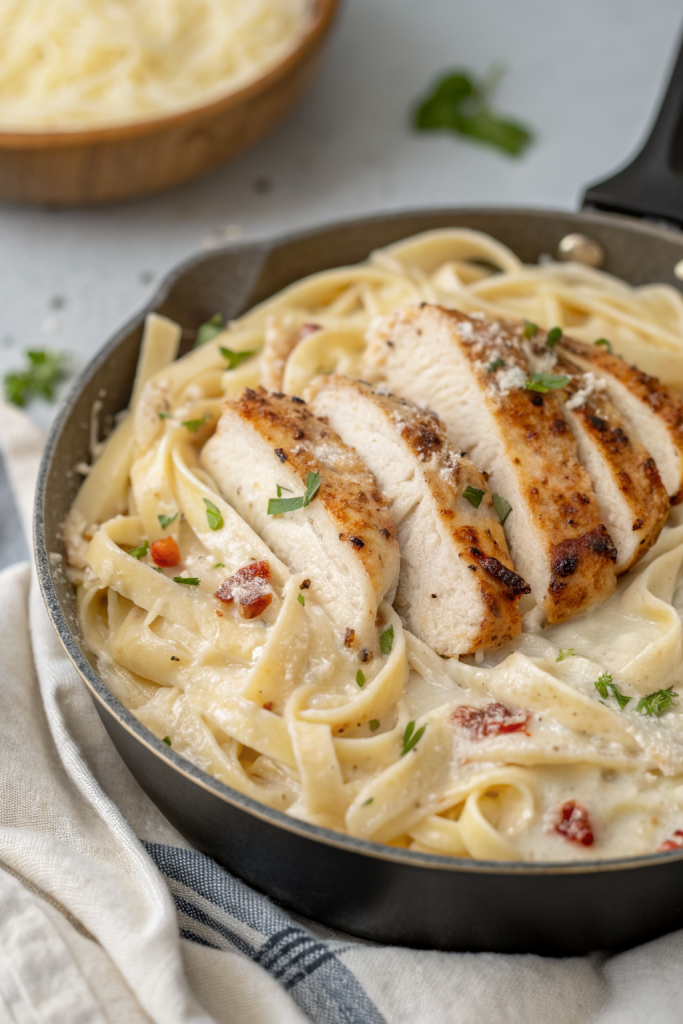
Chicken Fettuccine Alfredo Recipe tastes rich, creamy, garlicky, and just a little bit fancy while still feeling like pure cozy comfort food. It works perfectly for busy weeknights or at-home date nights, and you can get it on the table in about 35–40 minutes. I’ve cooked some version of this dish since my early twenties, and my family still requests it more than anything else I make.
Why Chicken Fettuccine Alfredo Recipe Is Worth It
This Chicken Fettuccine Alfredo Recipe gives you restaurant-style flavor with simple, familiar ingredients. The sauce turns silky and cheesy, the chicken stays juicy, and the fettuccine soaks up every drop of that garlic-Parmesan goodness.
You control the salt, the creaminess, and the portion size, so it fits both picky kids and grown-up taste buds. You also use just one skillet and one pot, which means less cleanup and more time to actually enjoy dinner.
“This Chicken Fettuccine Alfredo Recipe tastes like it came from a great Italian restaurant, but my kitchen stayed calm and my family licked their plates clean. ★★★★★”
Ingredients You Need
For the chicken
- 1 ½ pounds boneless skinless chicken breasts
- Slice them horizontally into thin cutlets so they cook quickly and stay tender.
- 1 teaspoon kosher salt
- ½ teaspoon black pepper
- 1 teaspoon garlic powder
- ½ teaspoon Italian seasoning (or a mix of dried basil and oregano)
- 2 tablespoons olive oil
- Use a neutral-tasting brand you like; extra-virgin works fine here.
For the pasta
- 12 ounces fettuccine
- Use classic durum wheat pasta; Barilla and De Cecco both hold up well in creamy sauces.
- 1 tablespoon kosher salt for the pasta water
For the Alfredo sauce
- 3 tablespoons unsalted butter
- 3 cloves garlic, minced
- Use fresh garlic if possible; jarred garlic works in a pinch but tastes sharper.
- 1 ¾ cups heavy cream
- You can swap up to ½ cup with whole milk if you want a slightly lighter sauce.
- 1 cup freshly grated Parmesan cheese, packed
- Use a block of Parmesan and grate it yourself; pre-shredded cheese often clumps because of anti-caking agents.
- ¼ teaspoon nutmeg (optional but classic)
- ½ teaspoon kosher salt, plus more to taste
- ¼ teaspoon black pepper
- ½ cup pasta cooking water (reserve from the pot)
- 2 tablespoons chopped fresh parsley, for garnish
Pantry shortcuts and notes
- Use rotisserie chicken if you want to skip cooking the chicken; shred about 2 cups and warm it gently in the sauce.
- Use refrigerated fresh fettuccine if you want a slightly quicker cook time and silkier texture.
- Use half-and-half instead of heavy cream for a lighter version, but simmer it gently so it does not break.
Equipment list
- Large pot for boiling pasta
- Large deep skillet or sauté pan (12-inch works best)
- Tongs for turning chicken and tossing pasta
- Measuring cups and spoons
- Cutting board and sharp knife
- Microplane or box grater for Parmesan
- Ladle or heatproof cup to scoop pasta water
Quick Tips & substitutions
- Salt the pasta water generously so the fettuccine tastes seasoned from the inside out.
- Cook the pasta just to al dente, then finish it in the sauce for the best texture.
- Slice chicken into thin cutlets so it cooks quickly and browns nicely without drying out.
- Use freshly grated Parmesan so the Alfredo sauce turns smooth and creamy instead of grainy.
- Add a splash of reserved pasta water if the sauce looks too thick; add more Parmesan if it looks too thin.
- Swap chicken breasts with chicken thighs if you want extra juicy meat and richer flavor.
- Use gluten-free fettuccine and a gluten-free broth-thickened sauce if you avoid gluten.
- Use half-and-half instead of heavy cream for a lighter sauce, but simmer it gently and do not boil it hard.
- Stir the sauce constantly once you add the cheese so it melts evenly and does not clump.
- Warm the serving bowls with hot water so the sauce stays silky longer.
How to Make Chicken Fettuccine Alfredo Recipe
Step 1: Season and cook the chicken
Pat the chicken breasts dry with paper towels and slice them horizontally into thin cutlets. Season both sides with salt, pepper, garlic powder, and Italian seasoning.
Heat the olive oil in a large skillet over medium-high heat until it shimmers. Lay the chicken cutlets in a single layer and cook them for about 4–5 minutes per side, until they turn golden and the juices run clear.
Move the cooked chicken to a cutting board and tent it loosely with foil. Let it rest while you cook the pasta and sauce so the juices redistribute and the meat stays tender. Slice the chicken into strips or bite-size pieces just before you add it back to the pan.
Step 2: Boil the fettuccine
Bring a large pot of water to a rolling boil. Add the tablespoon of kosher salt, then add the fettuccine and stir well so it does not stick.
Cook the pasta according to package directions until it reaches al dente, usually about 9–11 minutes for dried fettuccine. Scoop out at least 1 cup of the starchy pasta water and set it aside, then drain the pasta.
Keep the drained pasta in the pot and toss it with a teaspoon of olive oil or a small knob of butter so it does not clump while you finish the sauce. Do not rinse the pasta, because the starch on the surface helps the sauce cling.
Step 3: Build the Alfredo sauce
In the same skillet you used for the chicken, lower the heat to medium and add the butter. Let the butter melt, then add the minced garlic and sauté for about 30–60 seconds until it smells fragrant and just turns golden at the edges.
Pour in the heavy cream and stir, scraping up any browned bits from the bottom of the pan. Let the cream come to a gentle simmer, not a hard boil, and cook it for 3–4 minutes while you stir occasionally so it thickens slightly.
Sprinkle in the nutmeg, salt, and pepper. Lower the heat to medium-low and add the grated Parmesan in small handfuls, stirring constantly until it melts and the sauce turns smooth and velvety.
Step 4: Adjust the sauce texture
Add a splash (about ¼ cup) of the reserved pasta water to the sauce and stir. The starch in the water helps the sauce cling to the fettuccine and keeps it silky.
Check the thickness: the sauce should coat the back of a spoon and leave a clean line when you run your finger through it. Add more pasta water a little at a time if the sauce looks too thick, or add a small handful of Parmesan if it looks too thin.
Taste and adjust the seasoning with more salt and pepper if you need it. The sauce should taste slightly saltier than you want the final dish, because the pasta and chicken will mellow it out.
Step 5: Combine pasta, chicken, and sauce
Add the sliced chicken and any juices from the cutting board into the skillet with the Alfredo sauce. Stir gently so the chicken warms through and gets coated.
Transfer the cooked fettuccine straight into the skillet. Toss with tongs for 1–2 minutes over low heat so the pasta absorbs the sauce and everything comes together.
If the mixture tightens up too much, add another splash of pasta water and toss again until the sauce loosens and turns glossy. Sprinkle in the chopped parsley and toss once more.
Step 6: Plate and garnish
Twirl portions of fettuccine onto plates or shallow bowls, making sure each serving gets plenty of chicken and sauce. Spoon any extra sauce from the pan over the top.
Finish with a little extra grated Parmesan and a pinch of black pepper. Add a sprinkle of fresh parsley for color and a fresh, herby note.
Serve the Chicken Fettuccine Alfredo Recipe hot while the sauce still feels silky and the cheese stays melted.
Recipe Variations
- Gluten-free: Use gluten-free fettuccine and check that your Parmesan and seasonings list gluten-free on the label.
- Lighter version: Swap half of the heavy cream with whole milk or chicken broth and simmer gently so the sauce still thickens.
- Extra protein: Add crispy bacon pieces or sautéed shrimp along with the chicken.
- Veggie boost: Stir in steamed broccoli florets, peas, or sautéed mushrooms during the last couple of minutes of tossing.
- Spicy kick: Add red pepper flakes to the garlic and butter step for a gentle heat.
- Herb twist: Use fresh basil or thyme along with the parsley for a more aromatic sauce.
- Low carb: Serve the Alfredo chicken and sauce over zucchini noodles or spaghetti squash instead of fettuccine.
- No chicken: Skip the chicken and double the veggies for a creamy fettuccine Alfredo that still feels hearty.
Ways to Serve Chicken Fettuccine Alfredo Recipe
- With a simple green salad tossed in a light lemon and olive oil dressing.
- Alongside roasted or steamed broccoli, asparagus, or green beans.
- With garlic bread or warm crusty bread to scoop up extra sauce.
- With a fruit salad on the side to balance the richness.
- With a small Caesar-style salad minus anchovies if you want a milder flavor.
Storage Success
Cool leftover Chicken Fettuccine Alfredo Recipe to room temperature, then store it in an airtight container in the fridge for up to 3 days. Add a splash of milk or cream before you reheat it so the sauce loosens up again. Reheat gently on the stove over low heat or in the microwave at 50–60% power, stirring every minute so the sauce stays smooth. Skip freezing this dish, because the cream sauce tends to separate and lose its silky texture after thawing.
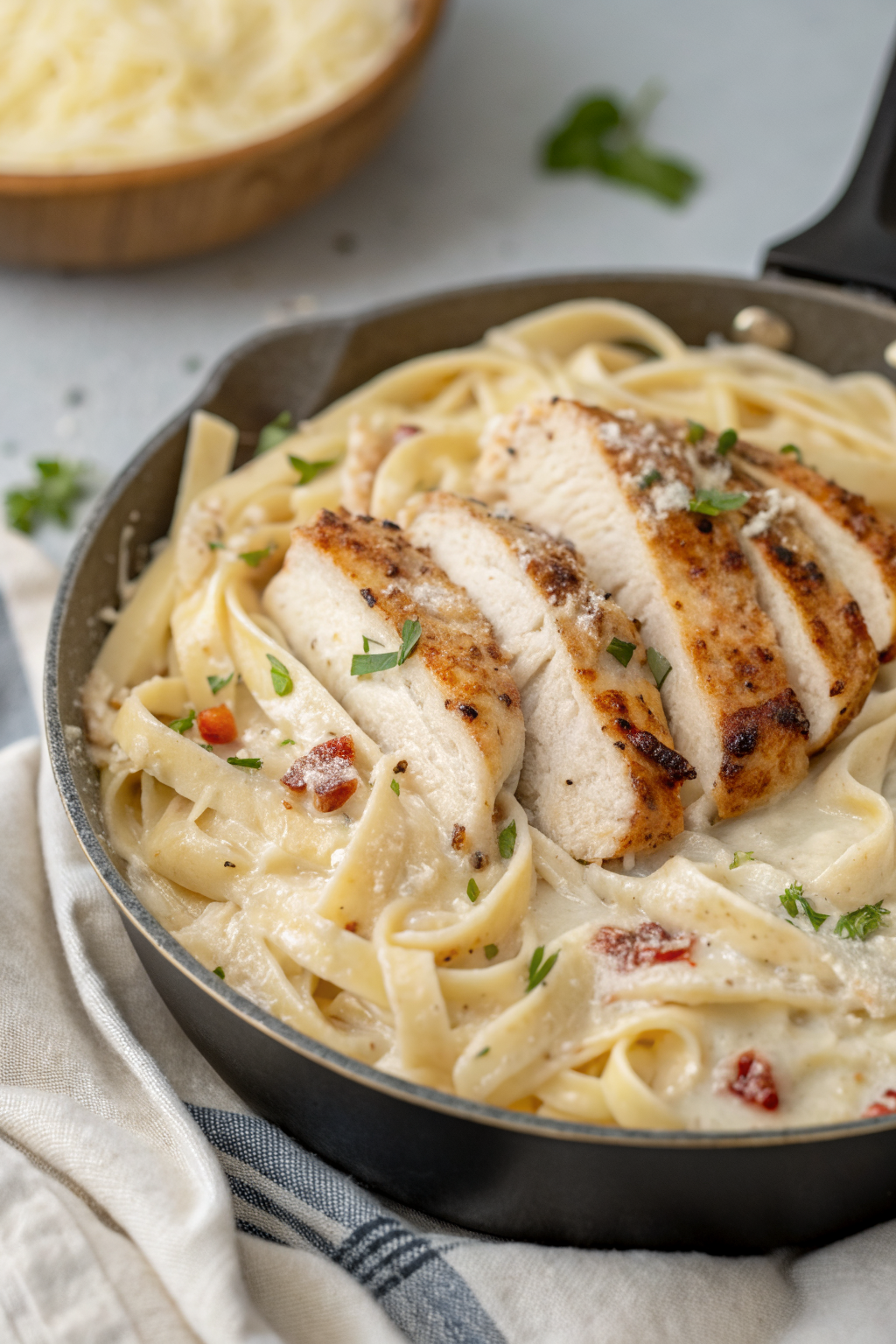
Chicken Fettuccine Alfredo Recipe
Ingredients
Instructions
- Pat the chicken breasts dry with paper towels and slice them horizontally into thin cutlets.
- Season both sides of the chicken cutlets with kosher salt, black pepper, garlic powder, and Italian seasoning.
- Heat the olive oil in a large skillet over medium-high heat until it shimmers.
- Add the chicken cutlets in a single layer and cook for 4–5 minutes per side, until golden and cooked through and the juices run clear.
- Transfer the cooked chicken to a cutting board, tent loosely with foil, and let rest while you cook the pasta and sauce. Slice into strips or bite-size pieces just before adding back to the pan.
- Bring a large pot of water to a rolling boil. Add the tablespoon of kosher salt, then add the fettuccine and stir to prevent sticking.
- Cook the pasta according to package directions until al dente, usually 9–11 minutes for dried fettuccine.
- Reserve at least 1 cup of the starchy pasta cooking water, then drain the pasta.
- Return the drained pasta to the pot and toss with a small amount of olive oil or butter so it does not clump. Do not rinse the pasta.
- In the same skillet used for the chicken, reduce the heat to medium and add the butter.
- Once the butter has melted, add the minced garlic and sauté for 30–60 seconds until fragrant and just turning golden at the edges.
- Pour in the heavy cream, scraping up any browned bits from the bottom of the pan, and bring to a gentle simmer.
- Simmer the cream for 3–4 minutes, stirring occasionally, until it thickens slightly.
- Stir in the nutmeg, kosher salt, and black pepper.
- Lower the heat to medium-low and add the grated Parmesan in small handfuls, stirring constantly until the cheese melts and the sauce is smooth and velvety.
- Add about 1/4 cup of the reserved pasta water to the sauce and stir until it is slightly loosened and silky. Add more pasta water as needed to reach a consistency that coats the back of a spoon.
- Taste and adjust the seasoning with additional salt and pepper if needed.
- Add the sliced chicken and any accumulated juices to the skillet and stir gently to warm through in the sauce.
- Transfer the cooked fettuccine into the skillet and toss with tongs over low heat for 1–2 minutes until the pasta is well coated and heated through. Add more pasta water if the sauce becomes too thick.
- Sprinkle with chopped fresh parsley and toss once more.
- Twirl portions of fettuccine onto plates or shallow bowls, making sure each serving gets plenty of chicken and sauce.
- Spoon any remaining sauce from the pan over the top and garnish with extra grated Parmesan and a pinch of black pepper if desired.
- Serve hot while the sauce is still silky and the cheese is melted.
Notes
Approximate per serving (about 1/6 of recipe): 690 calories; fat 41 g; saturated fat 20 g; carbohydrates 45 g; fiber 2 g; sugars 3 g; protein 34 g; sodium 730 mg. Values will vary based on specific brands, add-ins, and portion size.
Leave a Reply