
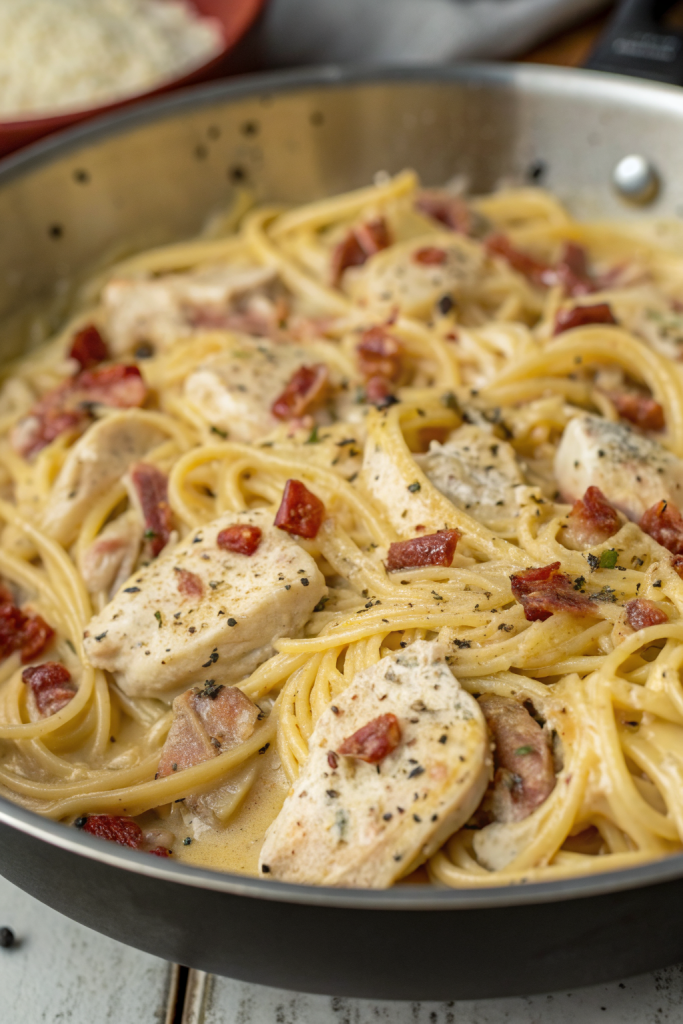
Chicken Carbonara Recipe tastes rich, creamy, smoky from the bacon, and super cozy, like a hug in pasta form. It works perfectly for busy weeknights or at-home date nights, and you can get it on the table in about 30 minutes. I first made a version of this in my tiny college apartment, and I still judge every stove by whether it can handle a skillet of carbonara without burning the bacon.
Why Make This Chicken Carbonara Recipe at Home
You control the creaminess, the salt, and the amount of bacon, which feels like a superpower. Restaurant versions often sit heavy or taste bland, while this one hits that sweet spot of silky sauce, juicy chicken, and plenty of flavor.
You also save money and time, since the whole dish cooks in one pot plus one skillet. Cleanup stays easy, and you still get a pasta dinner that tastes like you fussed over it for hours.
“This Chicken Carbonara Recipe tastes like a restaurant meal, but I whipped it up on a Tuesday in under 30 minutes. ★★★★★”
Ingredients You Need
Pasta
- 12 ounces spaghetti, bucatini, or fettuccine
- Use regular durum wheat pasta for the best bite.
- Whole wheat pasta works, but it absorbs more sauce, so keep a bit of extra pasta water handy.
Chicken
-
1 pound boneless skinless chicken breasts, thinly sliced or pounded to even thickness
- You can swap in boneless skinless chicken thighs for more flavor and tenderness.
- Cut the chicken into bite-size strips so it cooks quickly and mixes easily with the pasta.
-
1 teaspoon kosher salt
-
½ teaspoon black pepper
-
½ teaspoon garlic powder
-
1 tablespoon olive oil
Bacon & Aromatics
-
6 slices thick-cut bacon, chopped
- Pancetta works nicely if you want a slightly fancier vibe.
- Turkey bacon works in a pinch, but add a bit more olive oil to make up for the lower fat.
-
3 cloves garlic, minced
-
½ teaspoon crushed red pepper flakes (optional, for a gentle kick)
Eggs & Cheese (Carbonara Base)
-
3 large eggs, at room temperature
-
1 large egg yolk, at room temperature
-
1 cup freshly grated Parmesan cheese
- Use a block of Parmesan and grate it yourself; pre-grated cheese often clumps and does not melt as smoothly.
- Pecorino Romano works as a sharper, saltier swap for part of the Parmesan.
-
¼ cup finely grated Pecorino Romano (optional, for extra tang)
-
½ teaspoon freshly ground black pepper
-
¼ teaspoon kosher salt (taste the bacon and cheese before adding more)
Liquids & Extras
-
½ to ¾ cup reserved hot pasta water
- This starchy water helps the sauce coat every strand of pasta without cream.
- Keep more than you think you need; you can always add, but you cannot take it out.
-
2 tablespoons chopped fresh parsley (optional, for color and freshness)
-
Extra grated Parmesan for serving
Pantry Shortcuts & Brand Notes
- Use high quality dry pasta like De Cecco or Barilla for consistent texture.
- Shelf-stable grated Parmesan in a green can does not melt as smoothly, so mix it with at least some freshly grated cheese.
- Pre-minced garlic in a jar works on busy nights, but fresh garlic gives a better aroma.
Equipment List
- Large pot for boiling pasta
- Large deep skillet or sauté pan
- Tongs or pasta fork
- Heatproof measuring cup for pasta water
- Mixing bowl for egg and cheese mixture
- Whisk or fork
- Cutting board and sharp knife
Tips & Mistakes
- Salt the pasta water generously so the noodles carry flavor from the inside out.
- Cook the pasta just to al dente, since it continues cooking when you toss it with the hot skillet and sauce.
- Keep the egg and cheese mixture at room temperature so it blends smoothly with the hot pasta.
- Turn off the heat before you add the egg mixture, or you risk scrambled eggs instead of a silky sauce.
- Whisk the eggs and cheese thoroughly to avoid clumps and streaks.
- Reserve more pasta water than you think you need, since it rescues a sauce that looks too thick.
- Slice the chicken evenly so it cooks at the same rate and stays juicy.
- Do not crowd the skillet when you brown the chicken, or it steams instead of searing.
- Cook the bacon until crisp but not burnt, since burnt bacon makes the whole dish taste bitter.
- Taste before adding extra salt, because bacon and cheese already bring a lot of saltiness.
- Toss the pasta quickly with the egg mixture, since the sauce sets fast while the pasta stays hot.
- Serve the Chicken Carbonara Recipe right away, because the sauce thickens as it cools.
How to Make Chicken Carbonara Recipe
Step 1: Prep and Boil the Pasta
Bring a large pot of salted water to a boil. Aim for water that tastes pleasantly salty, like the sea. Add the pasta and cook until al dente, usually 1 to 2 minutes less than the package suggests.
Scoop out at least 1 cup of the hot pasta water and set it aside. Drain the pasta, then keep it in the pot or a large bowl so it stays warm. Toss it lightly with a teaspoon of olive oil if you worry about sticking.
Step 2: Mix the Egg and Cheese Sauce
In a medium bowl, add the eggs, egg yolk, Parmesan, Pecorino if using, black pepper, and a pinch of salt. Whisk until the mixture looks thick, creamy, and well combined. You want no streaks of egg white and no big clumps of cheese.
Set the bowl near the stove so you can reach it quickly. The hot pasta will gently cook the eggs and turn this mixture into a glossy sauce. Keep the bowl at room temperature while you cook the chicken and bacon.
Step 3: Cook the Chicken
Pat the chicken dry with paper towels. Season both sides with salt, pepper, and garlic powder. Heat 1 tablespoon olive oil in a large skillet over medium high heat.
Add the chicken in a single layer and cook 3 to 4 minutes per side until golden and cooked through. Stir or flip the pieces so they brown evenly. Transfer the cooked chicken to a plate and keep it near the stove.
Step 4: Cook the Bacon and Aromatics
In the same skillet, add the chopped bacon. Cook over medium heat until the bacon turns crisp and releases plenty of fat, about 5 to 7 minutes. Stir occasionally so it cooks evenly and does not burn.
Spoon off a little bacon fat if the skillet looks very greasy, but leave at least 2 tablespoons for flavor. Add the minced garlic and crushed red pepper flakes. Stir and cook 30 to 60 seconds until the garlic smells fragrant.
Step 5: Combine Pasta, Chicken, and Bacon
Add the cooked chicken back into the skillet with the bacon and garlic. Toss everything so the chicken picks up that bacon flavor. Reduce the heat to low.
Add the hot drained pasta to the skillet. Toss with tongs so the pasta, chicken, and bacon mix evenly. If the skillet feels crowded, work carefully and keep the pasta moving.
Step 6: Add the Egg and Cheese Mixture
Turn the heat under the skillet completely off. Wait about 30 seconds so the pan cools slightly but still feels very hot. Pour the egg and cheese mixture over the pasta.
Toss quickly and constantly with tongs, lifting the pasta so the sauce coats every strand. Add a splash of hot reserved pasta water, about ¼ cup at first, and keep tossing. The sauce should turn glossy and cling to the pasta without looking dry or runny.
Step 7: Adjust the Sauce and Seasoning
Check the texture of the Chicken Carbonara Recipe. If it looks too thick or sticky, add more hot pasta water a little at a time and toss again. Aim for a silky sauce that lightly coats the pasta and chicken.
Taste and add more black pepper or a pinch of salt if needed. Sprinkle in the chopped parsley for freshness and color. Toss once more to distribute everything evenly.
Step 8: Plate and Serve
Twirl portions of pasta onto plates or into shallow bowls. Top with extra bits of bacon and chicken from the skillet. Shower with more grated Parmesan if your heart says yes, which mine usually does.
Serve the Chicken Carbonara Recipe immediately while it tastes hot and creamy. The sauce thickens as it sits, so enjoy it right away for the best texture.
Variations I've Tried
I swap half the bacon with diced pancetta when I want a slightly fancier flavor without much extra effort. I also use chicken thighs instead of breasts when I crave extra juicy bites that hold up well in the sauce. Sometimes I toss in a handful of peas or sautéed spinach to sneak in some greens without complaints from picky eaters.
I tried a version with a squeeze of lemon and a bit of lemon zest, which added a bright twist that cut through the richness. I also tested a lighter version with less bacon and more chicken, which still tasted satisfying but felt a bit easier on weeknights. If you need a gluten free option, use your favorite gluten free pasta and keep the rest of the recipe the same.
How to Serve Chicken Carbonara Recipe
Serve Chicken Carbonara Recipe hot with extra grated Parmesan and plenty of black pepper on top. A simple side salad with crisp lettuce, cucumbers, and a light vinaigrette balances the richness nicely. Garlic bread or warm crusty bread makes a great side to scoop up any leftover sauce.
You can also pair it with roasted vegetables like broccoli, green beans, or asparagus for more color and texture. I like to serve smaller portions as a starter for a bigger family meal, then follow with a lighter main or more veggies. Leftovers taste great for lunch, especially with a quick splash of extra pasta water or broth to loosen the sauce.
How to store
- Cool leftovers of Chicken Carbonara Recipe to room temperature within 1 hour, then transfer them to an airtight container.
- Store in the fridge for up to 3 days; the sauce thickens, but the flavor stays rich.
- Freeze portions in freezer safe containers for up to 2 months, and label them with the date.
- Reheat gently in a skillet over low heat with a splash of water or chicken broth, stirring often until hot and creamy again.
- You can also reheat in the microwave at 50 percent power in short bursts, stirring between each burst to avoid overcooking the chicken and eggs.
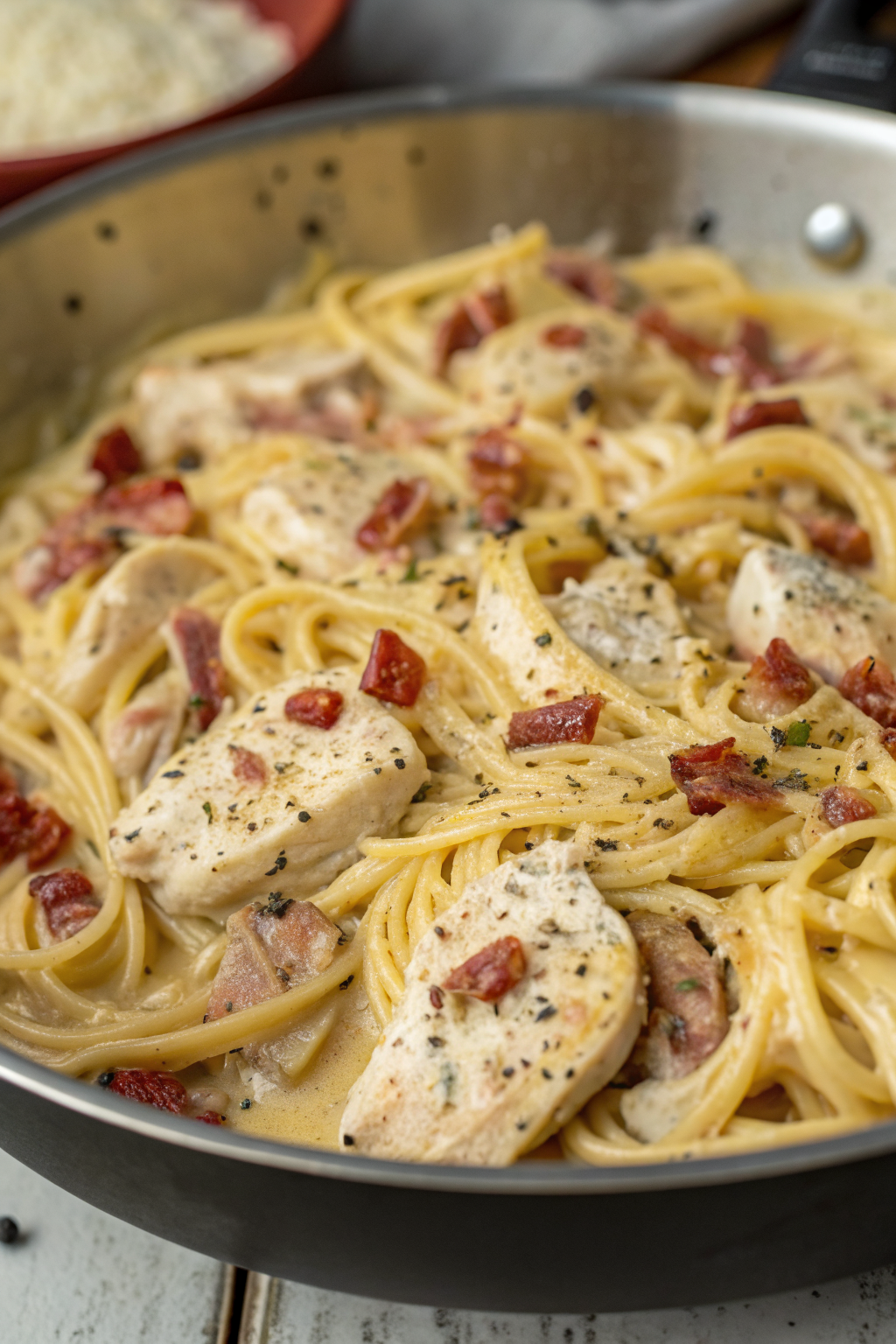
Chicken Carbonara Recipe
Ingredients
Instructions
- Bring a large pot of generously salted water to a boil. Add the pasta and cook until al dente, usually 1 to 2 minutes less than the package directions.
- Reserve at least 1 cup of the hot pasta water, then drain the pasta. Keep the pasta in the pot or a large bowl so it stays warm; toss with a small drizzle of olive oil if you are worried about sticking.
- In a medium bowl, whisk together the eggs, egg yolk, Parmesan, Pecorino Romano (if using), black pepper, and salt until thick, creamy, and well combined with no streaks of egg white.
- Set the bowl near the stove and keep it at room temperature while you cook the chicken and bacon.
- Pat the chicken dry with paper towels. Season both sides with the salt, black pepper, and garlic powder.
- Heat the olive oil in a large skillet over medium-high heat. Add the chicken in a single layer and cook for 3 to 4 minutes per side, until golden and cooked through.
- Transfer the cooked chicken to a plate and keep it near the stove.
- In the same skillet, add the chopped bacon. Cook over medium heat, stirring occasionally, until the bacon is crisp and has rendered its fat, about 5 to 7 minutes.
- If there is a lot of fat, spoon off a bit, leaving at least 2 tablespoons in the skillet.
- Add the minced garlic and crushed red pepper flakes (if using). Cook, stirring, for 30 to 60 seconds, just until fragrant.
- Return the cooked chicken and any accumulated juices to the skillet with the bacon and aromatics. Toss to coat the chicken in the bacon fat.
- Reduce the heat to low. Add the hot drained pasta to the skillet and toss with tongs until the pasta, chicken, and bacon are evenly combined.
- Turn the heat under the skillet completely off and let the pan cool for about 30 seconds while still very hot.
- Pour the egg and cheese mixture over the pasta and immediately toss quickly and constantly with tongs, lifting and turning the pasta so the sauce coats every strand.
- Add about 1/4 cup of the reserved hot pasta water and continue tossing until the sauce becomes glossy and clings to the pasta without looking dry.
- If the sauce looks too thick or sticky, add more reserved pasta water a little at a time, tossing until you reach a silky, creamy consistency.
- Taste and adjust seasoning with more black pepper or a pinch of salt if needed. Stir in the chopped parsley, if using.
- Twirl portions of pasta into shallow bowls, top with extra bits of chicken and bacon from the skillet, and finish with more grated Parmesan if desired. Serve immediately while hot and creamy.
Notes
Approximate per serving (1/4 of recipe): 810 calories; fat 40 g; saturated fat 14 g; carbohydrates 64 g; fiber 3 g; sugars 3 g; protein 47 g; sodium 1190 mg. Values are estimates and will vary based on specific brands, exact ingredient amounts, and portion size.