
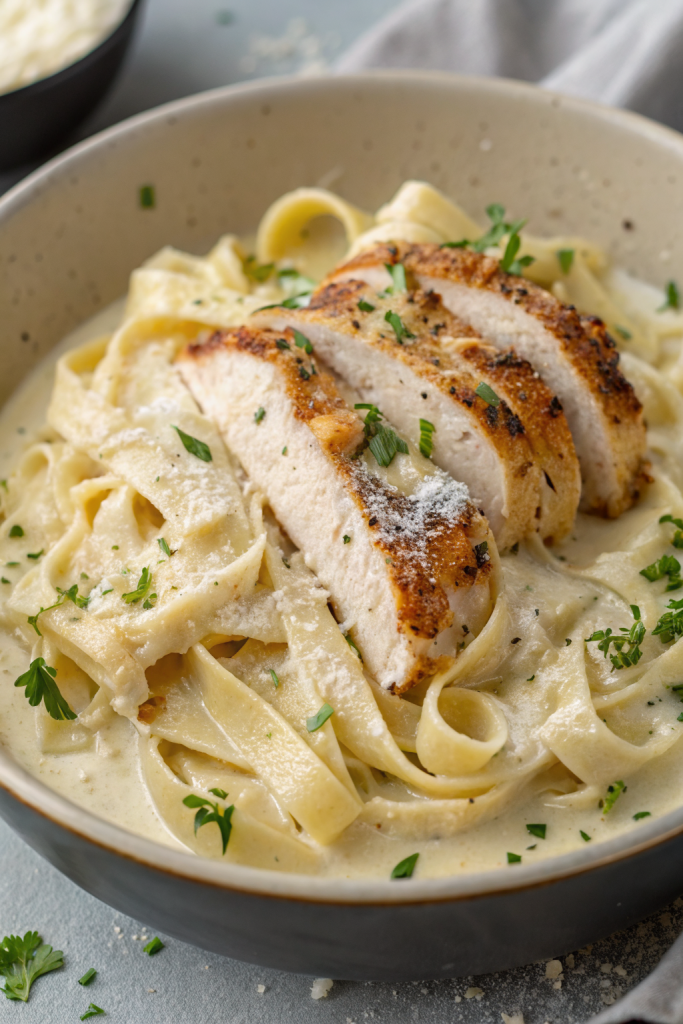
Chicken Alfredo Pasta Recipe tastes rich, creamy, garlicky, and just cheesy enough to make you close your eyes for a second at the table. It suits busy weeknights, date nights at home, or family dinners, and you can get it on the table in about 30–35 minutes. I still remember burning my first Alfredo sauce in a tiny apartment kitchen, so think of this as the version I wish someone had handed me back then.
Why Chicken Alfredo Pasta Recipe Is Worth It
This Chicken Alfredo Pasta Recipe gives you restaurant-style comfort with simple supermarket ingredients. You control the salt, the garlic, and the creaminess, so it tastes fresher and lighter than most takeout versions.
You cook everything in a straightforward order, so the dish fits into a weeknight schedule without stress. Leftovers also reheat surprisingly well, which means lunch the next day already solves itself.
“Creamy, garlicky, and better than my local chain restaurant Alfredo by a mile—my whole family asked for seconds. ★★★★★”
Ingredients You Need
Pasta and Chicken
- 12 ounces fettuccine
- Use any long pasta: linguine, tagliatelle, or even spaghetti if that’s what you have.
- 1.25–1.5 pounds boneless skinless chicken breasts or thighs
- Thighs stay juicier and forgive overcooking a bit more.
- 1 teaspoon kosher salt
- ½ teaspoon black pepper
- 1 teaspoon Italian seasoning or dried oregano + basil mix
- 1–2 tablespoons olive oil (or avocado oil)
Alfredo Sauce
- 3 tablespoons unsalted butter
- Use salted butter and reduce added salt slightly if that’s what you keep on hand.
- 3 cloves garlic, minced (or 1 teaspoon garlic powder in a pinch)
- 1¾ cups heavy cream
- Half-and-half works, but the sauce turns slightly thinner; simmer it a bit longer.
- 1 cup freshly grated Parmesan cheese, packed
- Use a wedge and grate it yourself; pre-shredded Parmesan often clumps and turns grainy.
- ¼ teaspoon kosher salt, plus more to taste
- ¼ teaspoon black pepper
- Pinch of nutmeg (optional, but it adds that classic Italian-restaurant flavor)
Optional Flavor Boosters
- ½ cup grated Pecorino Romano (swap in for part of the Parmesan if you like a sharper bite)
- ¼ teaspoon red pepper flakes for a gentle kick
- 2 tablespoons chopped fresh parsley for garnish
- Zest of ½ lemon to brighten the richness
Pantry Shortcuts
- Use rotisserie chicken, shredded or sliced, instead of raw chicken to save time.
- Use jarred minced garlic if you need speed, but sauté it gently so it does not burn.
- Use shelf-stable grated Parmesan only in emergencies; it changes the texture and flavor.
Equipment List
- Large pot for boiling pasta
- Large deep skillet or sauté pan (12-inch works best)
- Tongs for turning chicken and tossing pasta
- Measuring cups and spoons
- Whisk for the sauce
- Cutting board and sharp knife
- Fine grater or microplane for cheese and nutmeg
Quick Tips & substitutions
- Salt the pasta water generously; it should taste like the sea so the noodles carry flavor.
- Cook the pasta just to al dente; it finishes in the sauce and soaks up flavor.
- Slice chicken into cutlets or bite-size pieces so it cooks quickly and evenly.
- Pat chicken dry before seasoning so it browns instead of steaming.
- Use freshly grated Parmesan or Pecorino; pre-shredded cheese often turns clumpy.
- Swap heavy cream with half-and-half and simmer longer for a lighter version.
- Use rotisserie chicken or leftover grilled chicken when you want a 20-minute dinner.
- Stir the sauce gently and keep the heat on low after adding cheese to avoid graininess.
- Thin the sauce with reserved pasta water if it looks too thick.
- Add a squeeze of lemon juice at the end if the sauce tastes too heavy.
How to Make Chicken Alfredo Pasta Recipe
Step 1: Boil the Pasta
Bring a large pot of water to a strong boil and add a big handful of kosher salt. Add the fettuccine and cook it until al dente, usually 1–2 minutes less than the package suggests. Scoop out 1–1½ cups of starchy pasta water and set it aside, then drain the pasta.
Step 2: Season and Cook the Chicken
Pat the chicken dry with paper towels. Season both sides with salt, pepper, and Italian seasoning. Heat olive oil in a large skillet over medium-high heat until it shimmers.
Add the chicken in a single layer and leave some space between pieces. Sear the first side until it turns golden brown, about 4–5 minutes. Flip and cook the second side until the center reaches 165°F, about 3–5 more minutes depending on thickness.
Move the cooked chicken to a cutting board and let it rest for a few minutes. Slice it into strips or bite-size pieces. Keep it nearby so you can add it back to the pasta later.
Step 3: Start the Alfredo Base
Lower the heat under the same skillet to medium. Add the butter and let it melt, scraping up the browned bits from the chicken with a wooden spoon. Add the minced garlic and sauté until it smells fragrant, about 30–60 seconds; do not let it brown.
Pour in the heavy cream while you stir. Bring the mixture to a gentle simmer, not a rolling boil. Let it bubble softly for 3–5 minutes so it thickens slightly.
Step 4: Add Cheese and Seasonings
Turn the heat down to low. Add the Parmesan in small handfuls, whisking after each addition until it melts smoothly. Sprinkle in salt, black pepper, nutmeg, and any red pepper flakes if you use them.
Taste the sauce and adjust seasoning. If it tastes flat, add a pinch more salt or a little extra Parmesan. If it tastes too thick at this point, add a splash of reserved pasta water and whisk again.
Step 5: Combine Pasta, Chicken, and Sauce
Add the drained fettuccine straight into the skillet with the Alfredo sauce. Toss with tongs so every strand gets coated. Add the sliced chicken on top and toss again so the chicken warms through in the sauce.
If the mixture looks tight or sticky, add reserved pasta water a few tablespoons at a time. Keep tossing until the sauce looks glossy and clings to the pasta instead of pooling. Turn off the heat and let the pasta sit for 1–2 minutes so everything melds.
Step 6: Finish and Serve
Sprinkle chopped parsley and a little extra Parmesan over the top. Add lemon zest if you like a fresh note against the richness. Plate the Chicken Alfredo Pasta Recipe while it still looks silky and hot, since cream sauces thicken as they cool.
Serve with a simple green salad or steamed vegetables to balance the richness. Keep extra grated cheese at the table because someone always asks for more.
Recipe Variations
- Gluten-free: Use gluten-free fettuccine or penne and check that your broth or seasonings list gluten-free if you add them.
- Vegan: Use olive oil instead of butter, coconut cream or cashew cream instead of heavy cream, and a good vegan Parmesan-style cheese.
- Low carb: Swap pasta with zucchini noodles or steamed broccoli florets; keep the same sauce and chicken.
- Extra protein: Add crispy bacon bits, grilled shrimp, or extra chicken.
- More veggies: Toss in steamed broccoli, peas, spinach, or sautéed mushrooms during the final toss.
- Spicy version: Add more red pepper flakes or a pinch of cayenne to the sauce.
- Herb-forward: Stir in fresh basil, thyme, or chives at the end for a brighter flavor.
Ways to Serve Chicken Alfredo Pasta Recipe
- With a simple green salad and a light vinaigrette.
- Alongside garlic bread or warm crusty baguette.
- With roasted vegetables like broccoli, asparagus, or carrots.
- Over steamed cauliflower or zucchini noodles instead of traditional pasta.
- With a side of fresh fruit salad for a lighter finish.
Storage Success
Cool leftovers to room temperature, then store the Chicken Alfredo Pasta Recipe in an airtight container in the fridge for up to 3–4 days. Add a splash of milk or cream before reheating so the sauce loosens and turns silky again. Reheat gently on the stove over low heat or in the microwave at 50–60% power, stirring a few times. If the sauce thickens too much, add a spoonful of pasta water or broth if you have some saved, and stir until it looks smooth.
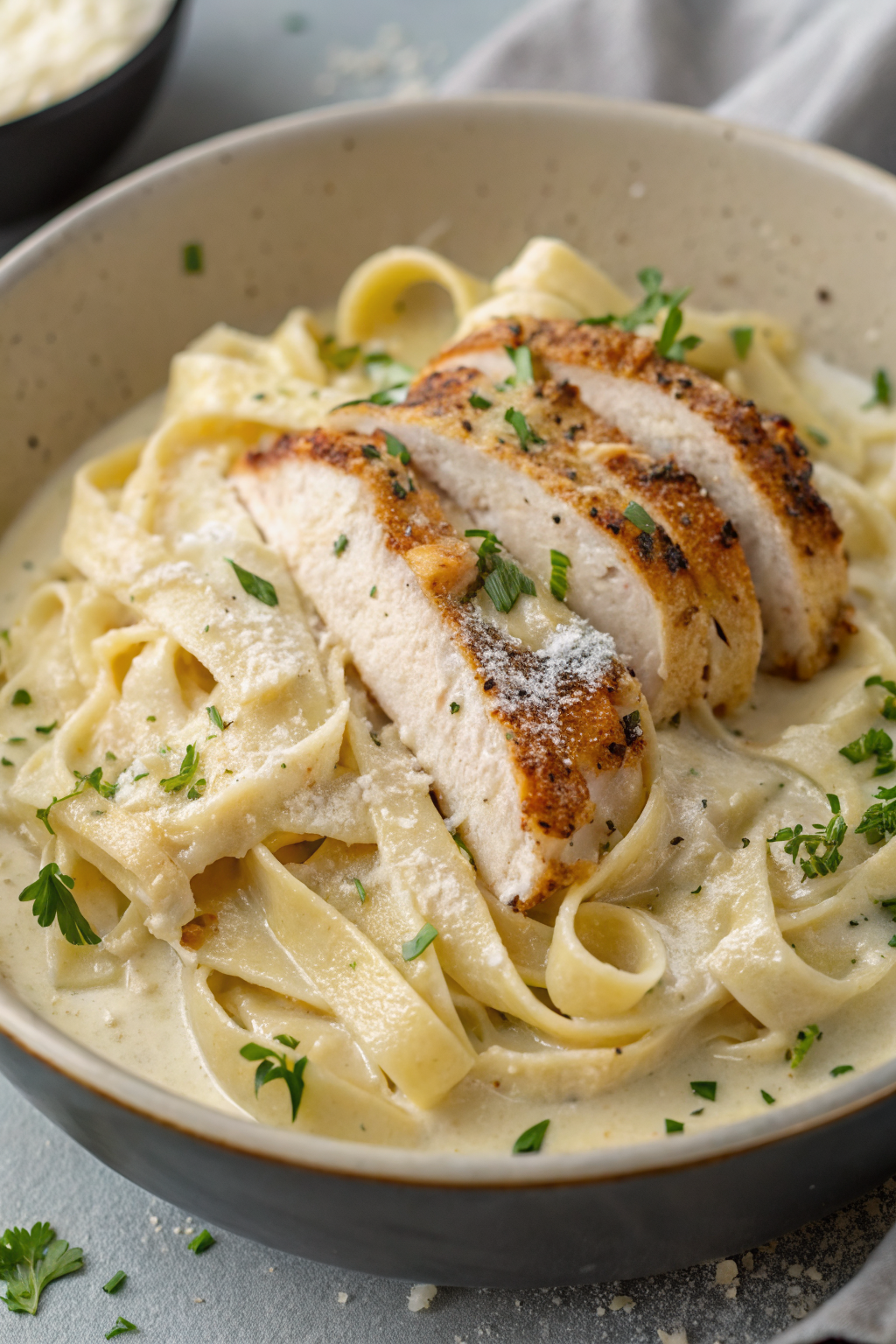
Chicken Alfredo Pasta Recipe
Ingredients
Instructions
- Bring a large pot of water to a strong boil and salt it generously so it tastes like the sea.
- Add the fettuccine and cook until al dente, about 1–2 minutes less than the package directions.
- Scoop out 1–1 1/2 cups of starchy pasta water and set aside, then drain the pasta.
- Pat the chicken dry with paper towels. Season both sides with kosher salt, black pepper, and Italian seasoning.
- Heat the olive oil in a large skillet over medium-high heat until it shimmers.
- Add the chicken in a single layer, leaving space between pieces, and sear the first side until golden brown, about 4–5 minutes.
- Flip and cook the second side until the center reaches 165°F, about 3–5 minutes more depending on thickness.
- Transfer the chicken to a cutting board to rest for a few minutes, then slice into strips or bite-size pieces and set aside.
- Reduce the heat under the same skillet to medium. Add the butter and let it melt, scraping up the browned bits from the bottom of the pan.
- Add the minced garlic and sauté until fragrant, about 30–60 seconds, without letting it brown.
- Pour in the heavy cream while stirring and bring to a gentle simmer, not a rolling boil.
- Let the cream bubble softly for 3–5 minutes until it thickens slightly.
- Lower the heat to low. Add the Parmesan in small handfuls, whisking after each addition until smooth and melted.
- Season with kosher salt, black pepper, and a pinch of nutmeg, plus red pepper flakes if using. Taste and adjust seasoning as needed.
- Add the drained fettuccine to the skillet with the Alfredo sauce and toss with tongs until the pasta is well coated.
- Add the sliced chicken to the skillet and toss again so it warms through in the sauce.
- If the sauce looks too thick or sticky, add reserved pasta water a few tablespoons at a time, tossing until the sauce is glossy and clings to the pasta.
- Turn off the heat and let the pasta rest for 1–2 minutes to allow the flavors to meld.
- Garnish with chopped fresh parsley, extra Parmesan, and lemon zest if desired. Serve immediately while hot and silky.
Notes
Approximate per serving (4 servings): 820 calories; fat 46 g; saturated fat 24 g; carbohydrates 55 g; fiber 2 g; sugars 3 g; protein 45 g; sodium 780 mg. Values will vary based on exact ingredients, brands, and portion sizes.
Leave a Reply