
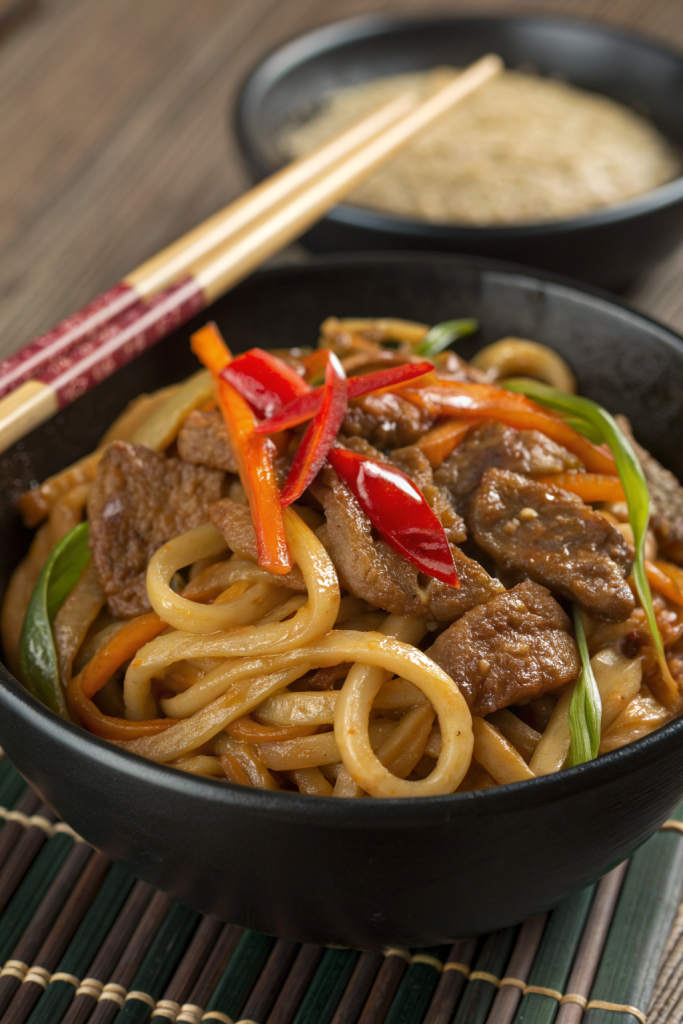
Black Pepper Beef Udon Recipe hits all the cozy takeout vibes with chewy noodles, tender beef, and a glossy, peppery sauce that wakes up your taste buds without burning your face off. It works perfectly for busy weeknights, date-night-in, or meal prep, and you can get it on the table in about 30 minutes. I tested versions of this dish so many times that my family started asking if we had moved into a noodle shop.
Why Black Pepper Beef Udon Recipe Is Worth It
This Black Pepper Beef Udon Recipe delivers restaurant-style flavor with simple grocery store ingredients. The sauce tastes savory, slightly sweet, buttery, and loaded with fresh cracked black pepper, and the udon noodles soak up every drop.
You cook everything in one large pan, so cleanup stays easy. The recipe also scales up nicely, so you can feed a crowd or stash extra portions for lunch.
“This Black Pepper Beef Udon Recipe tastes like your favorite noodle shop special, but even better at home. ★★★★★”
Ingredients You Need
Beef and Marinade
- 1 pound beef sirloin or flank steak, thinly sliced against the grain
- Sirloin stays tender and cooks quickly.
- Flank steak works great if you slice it very thin.
- 1 tablespoon soy sauce
- 1 teaspoon cornstarch
- 1 teaspoon neutral oil (canola, avocado, or grapeseed)
- 1 teaspoon oyster sauce (adds depth and umami)
Udon and Vegetables
- 2 packs (about 14–16 ounces total) frozen or vacuum-sealed udon noodles
- Frozen udon usually gives the best chewy texture.
- Shelf-stable udon works in a pinch; just avoid overcooking.
- 1 small onion, thinly sliced
- 1 small red bell pepper, thinly sliced
- 1 cup snap peas or snow peas, trimmed
- 3–4 green onions, sliced (white and green parts separated)
- 3 cloves garlic, minced
- 1 teaspoon fresh ginger, minced or grated
Black Pepper Sauce
- 2 tablespoons soy sauce
- 1 tablespoon oyster sauce
- 1 tablespoon dark soy sauce (optional, for color and deeper flavor)
- 1 tablespoon Worcestershire sauce
- 1 tablespoon brown sugar or honey
- 2–3 teaspoons freshly ground black pepper
- Freshly ground pepper matters here; coarse grind tastes best.
- 1 tablespoon unsalted butter
- 2–3 tablespoons water or low-sodium beef broth (to loosen the sauce as needed)
- 1 teaspoon sesame oil (for finishing)
Garnishes (Optional but tasty)
- Extra sliced green onions
- Toasted sesame seeds
- Chili flakes or chili oil for heat
- Lime wedges for a bright squeeze at the end
Pantry Shortcuts & Brand Notes
- Use pre-minced garlic and ginger from a jar when you feel tired; they still taste good in a bold sauce like this.
- Choose a good-quality soy sauce (Kikkoman, Yamasa, or a similar brand) for balanced saltiness.
- Any mainstream oyster sauce works, though Lee Kum Kee tends to give reliable flavor.
Equipment List
- Large nonstick skillet or wok
- Cutting board and sharp knife
- Tongs or chopsticks for tossing noodles
- Small bowl for mixing the sauce
- Measuring spoons and cups
Quick Tips & substitutions
- Slice the beef while it still feels slightly firm from the fridge so you get thin, even strips.
- Use chicken, pork, or extra-firm tofu instead of beef if that fits your needs.
- Swap udon with thick spaghetti or linguine when you cannot find udon; cook it just shy of al dente.
- Rinse frozen udon under warm water to loosen the strands before stir-frying.
- Grind black pepper fresh and a bit coarse; fine pre-ground pepper tastes flat here.
- Keep the pan hot and cook the beef in a single layer so it browns instead of steams.
- Add a splash of water or broth if the noodles look dry while you toss them with the sauce.
- Use tamari or a gluten-free soy sauce if you need a gluten-conscious version.
How to Make Black Pepper Beef Udon Recipe
Step 1: Prep the Beef
Add the sliced beef to a bowl.
Stir in soy sauce, cornstarch, oyster sauce, and neutral oil until the beef looks evenly coated.
Set the bowl aside while you prep the vegetables and sauce so the beef absorbs flavor.
Step 2: Mix the Black Pepper Sauce
In a small bowl, combine soy sauce, oyster sauce, dark soy sauce, Worcestershire sauce, brown sugar, and black pepper.
Stir until the sugar dissolves and the sauce looks smooth.
Keep the bowl near the stove so you can pour it in quickly when the noodles go into the pan.
Step 3: Loosen the Udon Noodles
Run frozen or vacuum-sealed udon under warm water and gently separate the strands with your fingers or chopsticks.
Drain well and set the noodles aside.
Avoid soaking them too long so they keep a nice chewy bite.
Step 4: Sear the Beef
Heat a large skillet or wok over medium-high heat and add a drizzle of oil.
Spread the marinated beef in a single layer and let it sear without moving it for about 1 minute.
Stir and cook another 1–2 minutes until the beef looks browned on the outside but still slightly pink in the center, then transfer it to a plate.
Step 5: Stir-Fry the Aromatics and Veggies
In the same pan, add a bit more oil if the surface looks dry.
Add onion and the white parts of the green onions, then cook 2–3 minutes until they soften and pick up some color.
Add garlic, ginger, bell pepper, and snap peas, and stir-fry 2–3 minutes until the vegetables turn crisp-tender.
Step 6: Add Udon and Sauce
Add the loosened udon noodles to the pan with the vegetables.
Pour the black pepper sauce over the noodles and toss everything with tongs until the noodles soak up the sauce.
Splash in 2–3 tablespoons of water or broth if the noodles look sticky or dry, and keep tossing until they look glossy.
Step 7: Finish with Beef, Butter, and Sesame Oil
Return the seared beef and any juices from the plate to the pan.
Add butter and toss until it melts into the noodles and sauce, which gives a silky, rich finish.
Drizzle in sesame oil, toss again, and taste; adjust with extra black pepper or a tiny bit more soy sauce if you want a stronger kick.
Step 8: Garnish and Serve
Turn off the heat and sprinkle in the green parts of the green onions.
Top with toasted sesame seeds and chili flakes if you like some heat.
Serve the Black Pepper Beef Udon Recipe hot in big bowls so the steam carries that peppery aroma right to your face.
Recipe Variations
- Gluten-conscious version: Use gluten-free tamari, a gluten-free oyster-style sauce, and gluten-free noodles such as rice noodles or certified gluten-free udon.
- Vegan version: Swap beef with extra-firm tofu or tempeh, use mushroom sauce instead of oyster sauce, and cook everything in oil instead of butter.
- Low-carb version: Replace udon with shirataki noodles or spiralized zucchini, and thicken the sauce with a tiny bit of xanthan gum instead of cornstarch.
- Extra veggie version: Add mushrooms, shredded cabbage, carrots, or baby spinach to bulk up the dish with more color and fiber.
- Spicy version: Stir in chili garlic sauce, gochujang, or your favorite chili oil along with the black pepper sauce.
Ways to Serve Black Pepper Beef Udon Recipe
- Serve in deep bowls with extra black pepper and green onions on top.
- Add a soft-boiled or jammy egg on each bowl for extra richness and protein.
- Pair with a simple cucumber salad or steamed broccoli to balance the rich noodles.
- Pack leftovers in a thermos or microwave-safe container for a satisfying work or school lunch.
Storage Success
Store leftover Black Pepper Beef Udon Recipe in an airtight container in the fridge for up to 3 days. The noodles will soak up more sauce as they sit, so add a splash of water or broth when you reheat them. Reheat in a skillet over medium heat or in the microwave, and stir halfway so everything warms evenly. Skip freezing this dish, since udon noodles tend to turn mushy after a freeze-thaw cycle.
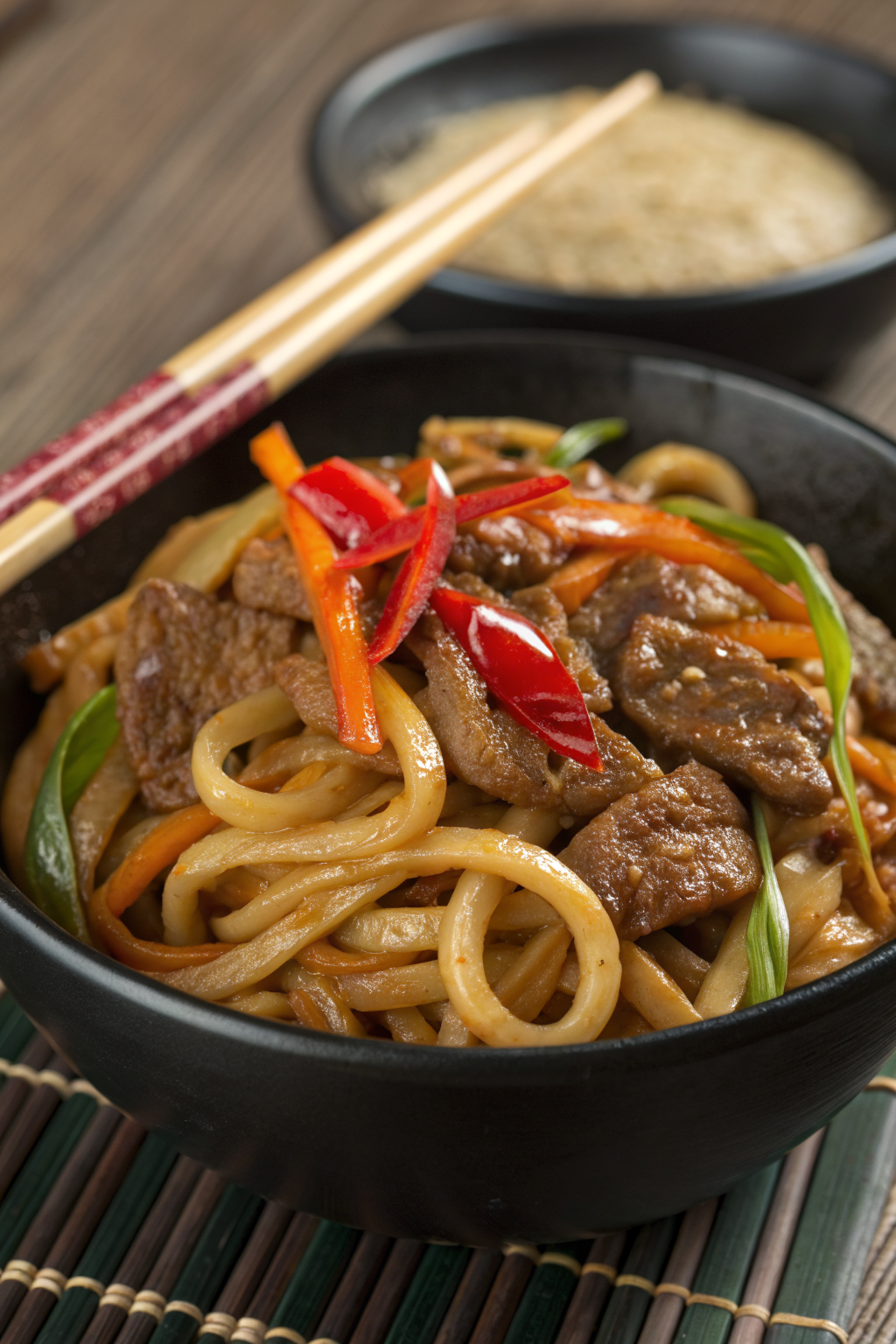
Black Pepper Beef Udon Recipe
Ingredients
Instructions
- Place the thinly sliced beef in a bowl and add soy sauce, cornstarch, oyster sauce, and neutral oil.
- Stir until the beef is evenly coated, then set aside to marinate while you prepare the vegetables and sauce.
- In a small bowl, combine soy sauce, oyster sauce, dark soy sauce (if using), Worcestershire sauce, brown sugar or honey, and freshly ground black pepper.
- Stir until the sugar dissolves and the sauce is smooth. Keep it near the stove for when you add the noodles.
- Run the frozen or vacuum-sealed udon under warm water, gently separating the strands with your fingers or chopsticks.
- Drain well and set aside, taking care not to soak the noodles too long so they stay chewy.
- Heat a large skillet or wok over medium-high heat and add a drizzle of oil.
- Spread the marinated beef in a single layer and let it sear without moving for about 1 minute.
- Stir and cook for another 1–2 minutes until the beef is browned on the outside but still slightly pink in the center. Transfer the beef and any juices to a plate.
- In the same pan, add a little more oil if needed.
- Add the sliced onion and the white parts of the green onions. Cook for 2–3 minutes until softened and lightly golden.
- Add the garlic, ginger, red bell pepper, and snap peas or snow peas. Stir-fry for 2–3 minutes until the vegetables are crisp-tender.
- Add the loosened udon noodles to the pan with the vegetables.
- Pour the black pepper sauce over the noodles and toss everything together until the noodles soak up the sauce.
- If the noodles look sticky or dry, splash in 2–3 tablespoons of water or beef broth and continue tossing until the noodles look glossy and well coated.
- Return the seared beef and any accumulated juices to the pan.
- Add the butter and toss until it melts into the noodles and sauce for a silky finish.
- Drizzle in the sesame oil, toss again, and taste. Adjust with extra black pepper or a small splash of soy sauce if you want a stronger flavor.
- Turn off the heat and stir in the green parts of the green onions.
- Top with toasted sesame seeds and chili flakes or chili oil if you like heat.
- Serve hot in deep bowls, with lime wedges on the side if desired.
Notes
Approximate per serving (1 of 4): 520 calories; fat 20 g; saturated fat 7 g; carbohydrates 60 g; fiber 4 g; sugars 10 g; protein 28 g; sodium 1500 mg. Values are estimates and will vary based on specific brands, add-ins, and portion sizes.