
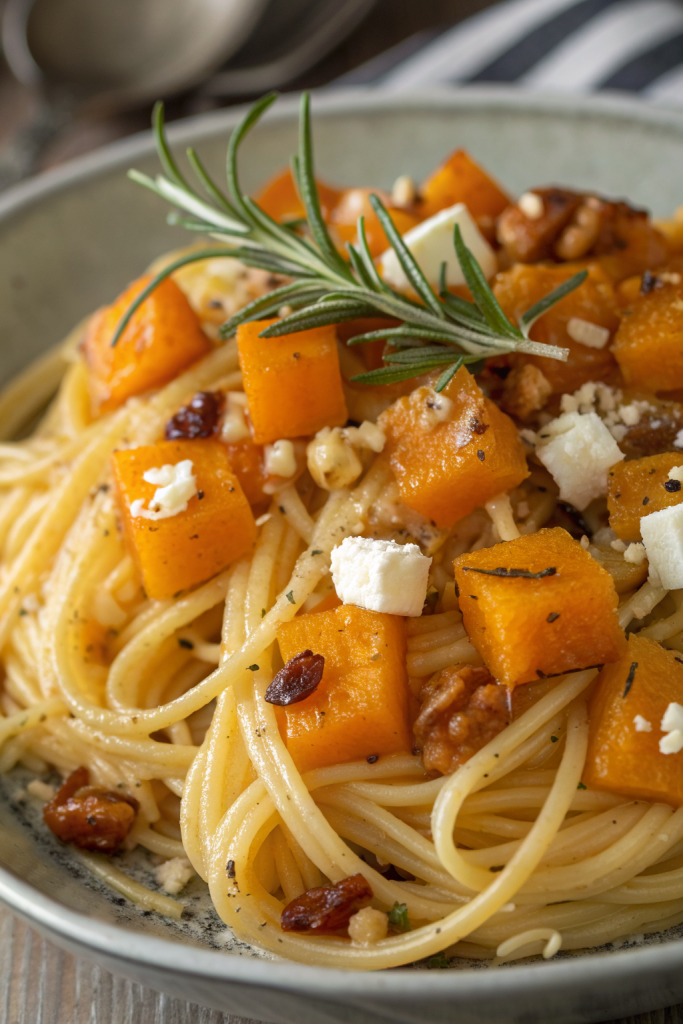
Baked Feta Butternut Squash Pasta Recipe hits that perfect balance of salty, sweet, creamy, and cozy, with caramelized squash and tangy feta in every bite. It works great for busy weeknights, date nights at home, or meal prep, and you can bring it to the table in about 45–55 minutes total. I first tested this on a random Tuesday in sweatpants, and my family still talks about “that orange pasta night.”
Why Baked Feta Butternut Squash Pasta Recipe Is Worth It
This pasta tastes rich and creamy, yet it skips any heavy cream. Roasted butternut squash turns sweet and jammy, while feta melts into a salty, tangy sauce that clings to every noodle.
You toss everything into one pan for the oven, boil pasta on the side, and mix it all together at the end. Cleanup stays easy, the flavor tastes restaurant-level, and leftovers hold up beautifully for lunch.
“This Baked Feta Butternut Squash Pasta Recipe tastes like fall comfort food in a bowl, but with weeknight effort levels. ★★★★★”
Ingredients You Need
Produce
- 1 medium butternut squash (about 2–2.5 pounds), peeled, seeded, and cut into ¾-inch cubes
- 4–5 garlic cloves, peeled and left whole
- 1 small red onion, sliced into thin wedges (optional, but adds sweetness)
- 1 small lemon (zest and juice)
- Fresh sage leaves (6–8 leaves), chopped, or 1 teaspoon dried sage
- Fresh thyme (1–2 teaspoons leaves), or ½ teaspoon dried thyme
- Fresh baby spinach or baby kale (2–3 cups loosely packed), optional for greens boost
Dairy
- 1 block feta cheese (7–8 ounces), packed in brine if possible
- Brined feta melts creamier and tastes tangier than pre-crumbled feta.
- ¼–⅓ cup grated Parmesan or Pecorino Romano, plus extra for serving
Pantry
- 10–12 ounces short pasta
- Good options: rigatoni, penne, fusilli, cavatappi, shells, or orecchiette.
- 3–4 tablespoons extra-virgin olive oil
- ½ teaspoon crushed red pepper flakes (adjust to heat preference)
- 1 teaspoon kosher salt, plus more for pasta water
- ½ teaspoon freshly ground black pepper
- ½ teaspoon smoked paprika (optional, adds depth and color)
- 1–2 teaspoons honey or maple syrup (optional, balances feta tang)
Optional add-ins
- ½ cup toasted walnuts or pecans, roughly chopped
- ¼ cup roasted pumpkin seeds (pepitas)
- ½ cup cooked chickpeas or white beans for extra protein
- ¼ cup sun-dried tomatoes, chopped, for extra umami
Equipment
- Large baking dish or oven-safe skillet (9×13-inch works well)
- Large pot for boiling pasta
- Sharp chef’s knife and sturdy cutting board
- Vegetable peeler
- Colander
- Microplane or fine grater for lemon zest and Parmesan
- Tongs or a large spoon for tossing everything together
Quick Tips & substitutions
- Cut the butternut squash into even cubes so it roasts at the same speed.
- Use pre-cut butternut squash from the store to save time on busy nights.
- Choose a feta block in brine instead of crumbles, since it melts creamier.
- Swap butternut squash with peeled delicata or kabocha squash if you prefer.
- Use any short pasta shape that holds sauce well, like rigatoni or fusilli.
- Salt the pasta water generously so the noodles carry flavor.
- Reserve at least 1 cup of starchy pasta water to loosen the sauce.
- Add baby spinach or kale directly to the hot pasta and sauce so it wilts quickly.
- Stir in a drizzle of honey or maple syrup if the feta tastes too sharp.
- Toast nuts in a dry skillet for a few minutes to boost crunch and flavor.
How to Make Baked Feta Butternut Squash Pasta Recipe
Step 1: Prep the squash and pan
Preheat the oven to 400°F (200°C). Peel the butternut squash, slice it in half lengthwise, scoop out the seeds, and cut it into ¾-inch cubes. Spread the squash cubes in a single layer in a large baking dish, and tuck the garlic cloves and red onion wedges around them.
Drizzle the squash mixture with 2–3 tablespoons of olive oil. Sprinkle with salt, pepper, smoked paprika, chopped sage, and thyme. Toss everything right in the baking dish so the squash coats evenly, and clear a space in the center for the feta block.
Step 2: Add the feta and season
Place the feta block in the center of the baking dish, nestled into the squash. Drizzle the feta with a little more olive oil and a pinch of red pepper flakes. Zest half the lemon over the top of the squash and feta to build bright flavor from the start.
Slide the baking dish into the oven. Roast for 25–30 minutes, until the squash turns tender and edges caramelize lightly. The feta will soften, brown slightly on top, and look melty around the edges.
Step 3: Boil the pasta
While the squash and feta roast, bring a large pot of salted water to a boil. Add the pasta and cook until it reaches al dente, following the package time as a guide. Stir occasionally so the pasta does not stick.
Before you drain the pasta, scoop out about 1–1½ cups of the starchy cooking water and set it aside. Drain the pasta well. Keep it nearby so you can toss it with the sauce while everything stays hot.
Step 4: Build the feta-squash sauce
Pull the baking dish from the oven once the squash turns fork-tender and the feta softens. Squeeze the roasted garlic cloves gently with tongs or a fork so they mash into the pan. Use a large spoon to mash the feta and some of the squash together, which forms a thick, creamy base.
Pour in a splash of hot pasta water and stir until the mixture loosens into a sauce-like consistency. Add lemon juice from half the lemon and taste. Adjust with more salt, pepper, red pepper flakes, or a drizzle of honey or maple syrup if you want more balance.
Step 5: Toss the pasta and greens
Add the hot drained pasta directly into the baking dish with the feta-squash mixture. Toss well so every piece of pasta picks up sauce and roasted bits. If the sauce looks thick, add more pasta water a little at a time until it turns glossy and silky.
Fold in baby spinach or kale, if you use it, and let the heat from the pasta wilt the greens. Sprinkle in grated Parmesan or Pecorino and toss again so it melts into the sauce. Taste once more and adjust seasoning, lemon, or chili flakes to your liking.
Step 6: Finish and serve
Top the pasta with extra herbs, more grated cheese, and toasted nuts or seeds if you want crunch. Squeeze the remaining lemon over the top for brightness. Serve the Baked Feta Butternut Squash Pasta Recipe hot, straight from the baking dish, and watch it disappear faster than you expected.
Recipe Variations
- Gluten-free: Use your favorite gluten-free pasta shape and stir gently, since some brands break easily.
- Vegan: Swap feta with a vegan feta-style cheese and use nutritional yeast instead of Parmesan.
- Low carb: Replace pasta with roasted cauliflower florets or zucchini noodles, and toss them with the feta-squash mixture.
- Extra protein: Add cooked chicken sausage, rotisserie chicken, or canned chickpeas.
- Spicy version: Increase red pepper flakes and add a pinch of chili powder.
- Herb-forward: Add fresh basil, parsley, or chives at the end for a fresh, green finish.
- Extra creamy: Stir in a spoonful of ricotta or mascarpone with the hot pasta.
Ways to Serve Baked Feta Butternut Squash Pasta Recipe
- Pair with a simple green salad with lemony dressing.
- Serve alongside roasted broccoli, green beans, or Brussels sprouts.
- Add garlic bread or warm crusty bread to scoop up extra sauce.
- Pack it in a thermos for a cozy work or school lunch.
- Serve small portions as a side dish next to grilled chicken or salmon-style plant protein.
Storage Success
Let the Baked Feta Butternut Squash Pasta Recipe cool to room temperature, then store it in an airtight container in the fridge for up to 3–4 days. Add a splash of water or broth before reheating so the sauce loosens and turns creamy again. Reheat on the stovetop over medium heat or in the microwave, stirring halfway so it heats evenly. If you have fresh herbs or extra cheese, sprinkle them on top after reheating to bring the flavors back to life.
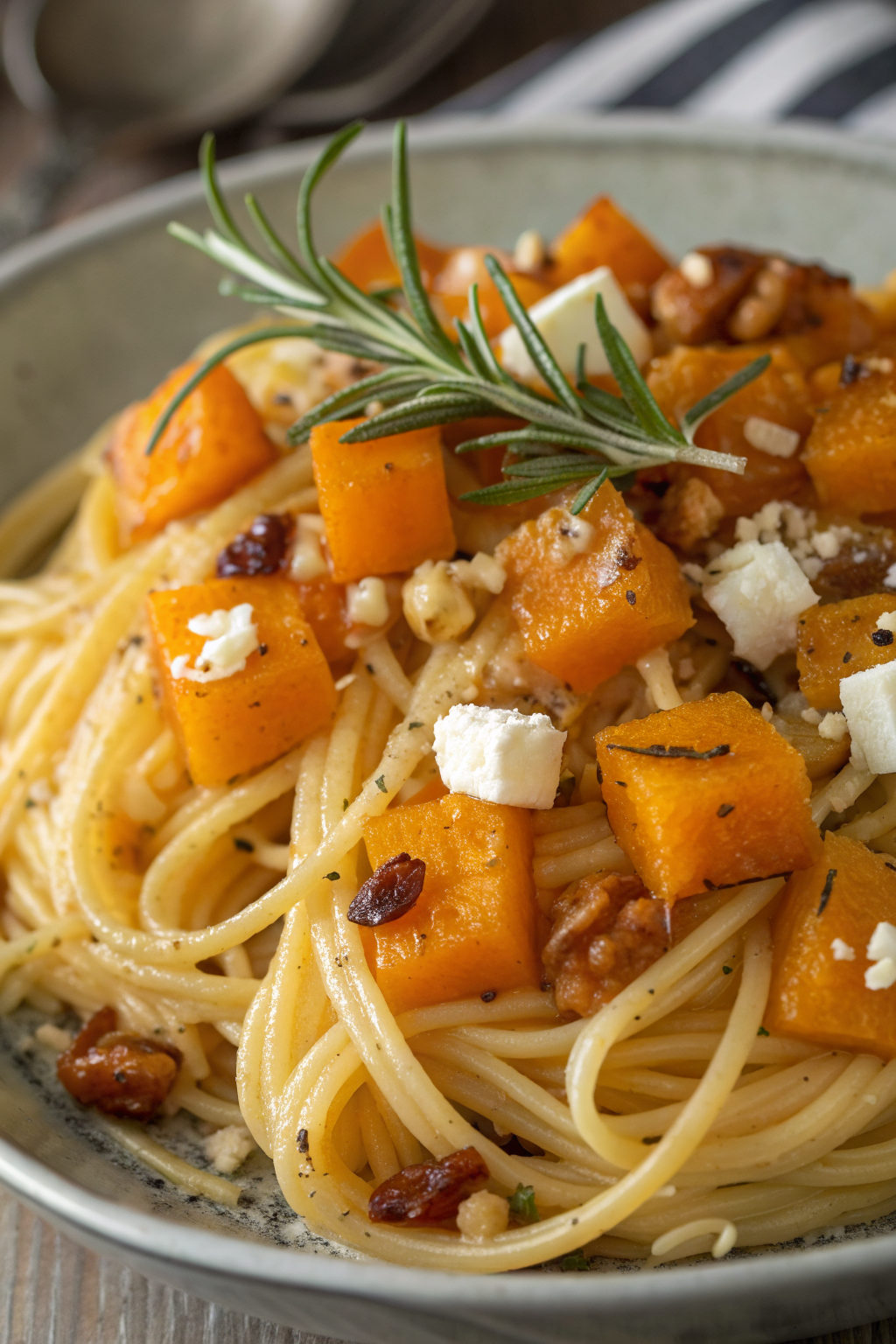
Baked Feta Butternut Squash Pasta Recipe
Ingredients
Instructions
- Preheat the oven to 400°F (200°C). Peel the butternut squash, slice it in half lengthwise, scoop out the seeds, and cut it into 3/4-inch cubes. Spread the squash in a single layer in a large baking dish and tuck the garlic cloves and red onion wedges around it.
- Drizzle the squash mixture with 2–3 tablespoons olive oil. Sprinkle with kosher salt, black pepper, smoked paprika, chopped sage, and thyme. Toss everything in the baking dish to coat evenly, then clear a space in the center for the feta block.
- Place the feta block in the center of the baking dish, nestled into the squash. Drizzle the feta with a little more olive oil and a pinch of red pepper flakes. Zest about half the lemon over the squash and feta.
- Roast for 25–30 minutes, until the squash is tender and lightly caramelized on the edges and the feta is softened and starting to brown on top.
- While the squash and feta roast, bring a large pot of generously salted water to a boil. Add the pasta and cook until al dente according to package directions, stirring occasionally. Reserve 1–1 1/2 cups of the starchy cooking water, then drain the pasta.
- Remove the baking dish from the oven. Gently mash the roasted garlic cloves with a fork or tongs. Use a large spoon to mash the feta and some of the squash together to form a thick, creamy base.
- Add a splash of the hot reserved pasta water and stir until the mixture loosens into a sauce-like consistency. Squeeze in juice from about half the lemon, then taste and adjust with more salt, pepper, red pepper flakes, or a drizzle of honey or maple syrup if desired.
- Add the hot drained pasta directly to the baking dish. Toss well so the pasta is coated with the feta–squash sauce, adding more pasta water a little at a time until the sauce is glossy and silky.
- Fold in the baby spinach or baby kale, if using, allowing the heat of the pasta and sauce to wilt the greens. Sprinkle in the grated Parmesan or Pecorino and toss again until it melts into the sauce. Adjust seasoning and add more lemon juice to taste.
- Top with extra herbs, more grated cheese, and toasted nuts if using. Serve hot straight from the baking dish.
Notes
Approximate per serving (1 of 4): 610 calories; fat 24 g; saturated fat 9 g; carbohydrates 80 g; fiber 6 g; sugars 8 g; protein 22 g; sodium 880 mg. Values are estimates and will vary based on specific ingredients, add-ins, and portion size.