
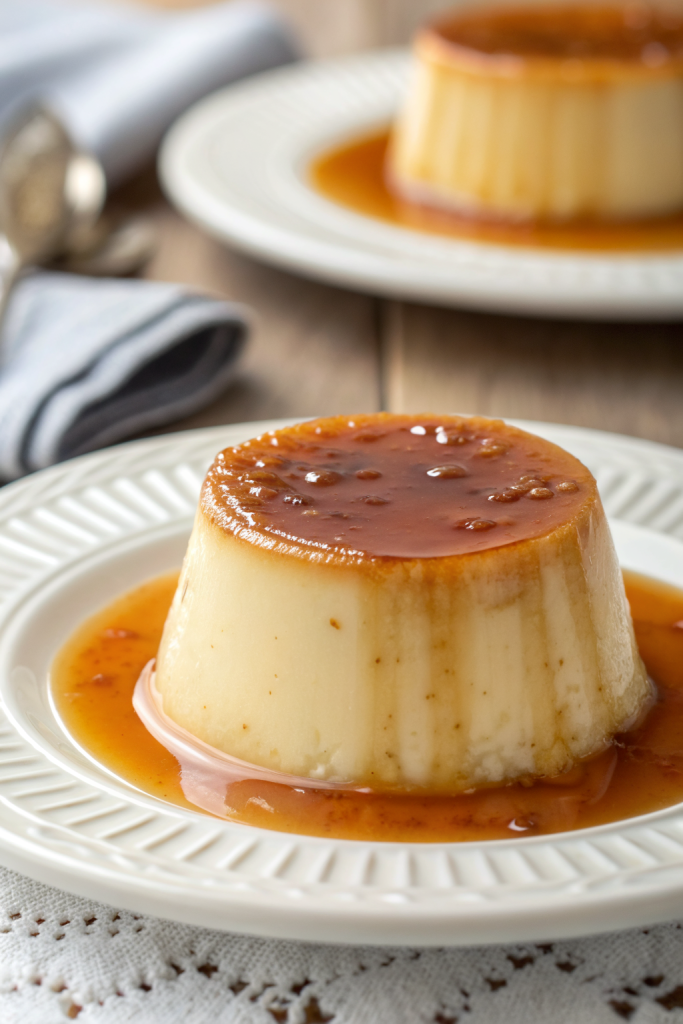
Japanese Silky Custard Purin Recipe tastes like a cross between crème caramel and flan, but lighter, softer, and so smooth it almost wiggles off the spoon. It suits anyone who loves gentle, milky desserts and wants a café-style treat in about 1 hour total, plus chilling time. I still remember stress-eating three cups in one night while testing this recipe, so you’re in very good company.
Why You Should Try This Japanese Silky Custard Purin Recipe
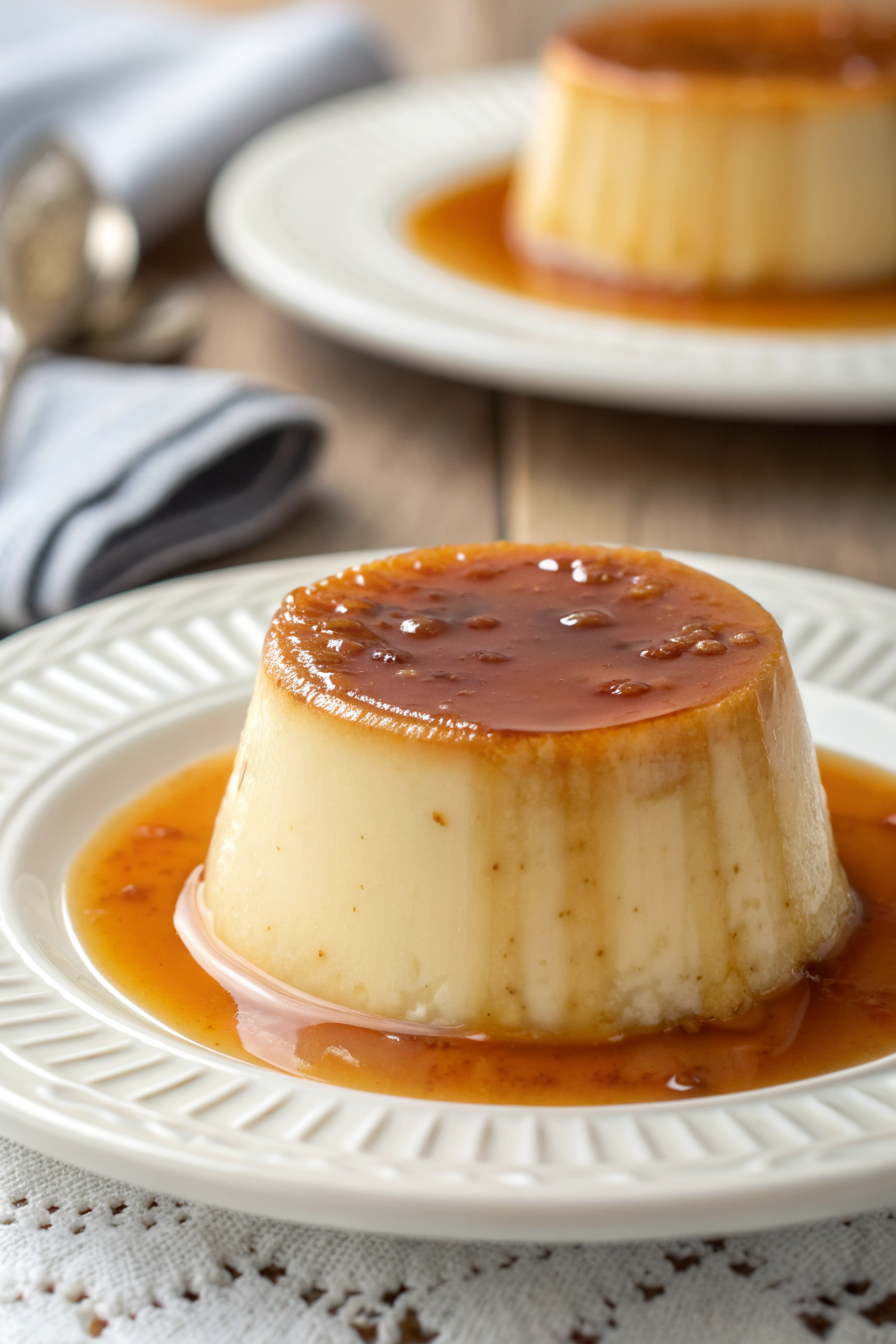
This Japanese Silky Custard Purin Recipe gives you a glossy caramel top, a soft jiggle, and a custard that melts the second it hits your tongue. It feels fancy enough for guests yet uses simple pantry staples like eggs, sugar, and milk.
You can adjust the sweetness and richness easily, so it works for kids and adults. You also cook it gently, which keeps the texture ultra smooth and avoids that scrambled-egg situation we all fear.
“This Japanese Silky Custard Purin Recipe tastes like a cloud of caramel custard happiness in a cup, and my family now requests it every weekend. ★★★★★”
Ingredients You’ll Need
For the caramel
- 5 tablespoons granulated sugar
- 2 tablespoons water
- 1 tablespoon hot water (to loosen the caramel at the end)
Notes:
Use regular white sugar here, not brown sugar, so the caramel stays clear and shiny. A light-colored saucepan helps you see the color change more easily.
For the custard
- 2 large eggs (room temperature)
- 2 large egg yolks (room temperature)
- 2 cups whole milk (or 1 ¾ cups whole milk + ¼ cup heavy cream for extra richness)
- 6 tablespoons granulated sugar
- 1 teaspoon vanilla extract (or ½ teaspoon vanilla paste)
- Small pinch of salt
Substitution tips:
You can use 2% milk, but the purin turns slightly less rich and creamy. Avoid non-dairy milk if you want the classic Japanese silky custard purin texture, since most plant milks turn the custard a bit grainy. Use good vanilla since the flavor stays front and center.
Equipment
- 4 to 6 heatproof ramekins or small pudding cups (about 4 to 6 ounces each)
- Small saucepan for caramel
- Medium saucepan for milk mixture
- Fine mesh strainer
- Large baking dish or deep roasting pan for water bath
- Kettle or pot to heat water for the water bath
- Whisk
- Measuring cups and spoons
- Plastic wrap or foil
Tips & Tricks
- Warm the eggs in a bowl of lukewarm water for 5 to 10 minutes so they blend more smoothly with the milk.
- Heat the milk until it steams and small bubbles appear around the edge, then stop so you do not cook the eggs later.
- Whisk the eggs gently and avoid whipping in too much air, which prevents bubbles and keeps the custard silky.
- Strain the custard mixture through a fine mesh sieve to catch any eggy bits and foam.
- Skim off surface bubbles with a spoon or the edge of a paper towel before baking so the top sets smooth.
- Wrap the baking dish loosely with foil to shield the custard from direct oven heat and keep the texture tender.
- Bake at a low temperature and check early; the center should jiggle like soft jelly, not liquid.
- Cool the purin slowly at room temperature before chilling so it does not form condensation or a rubbery top.
- Run a thin knife around the edge before unmolding and warm the bottom of the ramekin briefly in hot water to release the caramel.
How to Make Japanese Silky Custard Purin Recipe
Step 1: Prepare the ramekins and oven
Preheat your oven to 300°F (150°C). Place your ramekins in a deep baking dish or roasting pan so they sit flat and do not touch too tightly. Set a kettle of water to heat so you have hot water ready for the water bath.
Step 2: Make the caramel
Add 5 tablespoons sugar and 2 tablespoons water to a small saucepan. Swirl the pan gently and cook over medium heat until the sugar dissolves and the mixture starts to bubble. Keep cooking and swirl occasionally until the color turns a deep amber; watch closely since it can darken quickly.
Turn off the heat and carefully add 1 tablespoon hot water while you swirl the pan to loosen the caramel. The caramel will bubble vigorously, so keep your hand at a safe distance. Once it smooths out, quickly pour the caramel into the bottom of each ramekin, tilting each cup to coat the base evenly.
Step 3: Heat the milk mixture
In a medium saucepan, add the milk (and cream if using) and 6 tablespoons sugar with a small pinch of salt. Heat over medium-low until the sugar dissolves and the milk feels hot but not boiling, with small bubbles around the edges. Turn off the heat and stir in the vanilla extract.
Let the milk mixture sit for a few minutes so it cools slightly. You want it warm, not scorching, so it does not cook the eggs on contact.
Step 4: Mix the eggs
In a mixing bowl, add the 2 eggs and 2 egg yolks. Whisk gently until the eggs blend and look uniform, but avoid whipping in lots of bubbles. If you see foam on top, you can skim it off later.
Step 5: Combine eggs and milk
Slowly pour the warm milk mixture into the eggs while you whisk constantly but gently. Pour in a thin stream so the eggs adjust to the heat gradually. Keep whisking until the mixture looks smooth and even.
Step 6: Strain and remove bubbles
Place a fine mesh strainer over a large measuring cup or bowl with a spout. Pour the custard mixture through the strainer to catch any cooked egg bits or chalazae. Skim off any bubbles on the surface with a spoon or the edge of a paper towel.
Step 7: Fill the ramekins
Pour the strained custard gently over the set caramel in each ramekin. Leave a little space at the top of each cup so the custard does not spill when you move the pan. If new bubbles form on the surface, skim them off again for the smoothest finish.
Step 8: Set up the water bath
Slide the baking dish with the filled ramekins into the oven rack first, so you do not slosh custard everywhere. Carefully pour hot water into the baking dish around the ramekins until the water reaches about halfway up their sides. Cover the whole dish loosely with foil so steam can escape a bit while the custard stays protected.
Step 9: Bake the purin
Bake at 300°F (150°C) for about 35 to 45 minutes, depending on the size of your ramekins. Start checking at 30 minutes by gently jiggling one ramekin. The edges should look set, while the center should wobble softly like gelatin, not runny liquid.
If the custard still looks very loose, bake for another 5 to 10 minutes and check again. Once it reaches that soft jiggle stage, carefully remove the baking dish from the oven. Lift the ramekins out of the water bath with tongs or a towel and place them on a cooling rack.
Step 10: Cool and chill
Let the purin cool at room temperature until the cups no longer feel hot, about 30 to 45 minutes. Cover each ramekin with plastic wrap and transfer them to the fridge. Chill for at least 4 hours, though overnight chilling gives the best flavor and texture.
Step 11: Unmold and serve
To unmold, slide a thin knife around the edge of each custard to release it from the ramekin. Dip the bottom of the ramekin in a bowl of hot water for 10 to 15 seconds to loosen the caramel. Place a plate on top, flip the whole thing, and gently lift the ramekin so the custard drops out and the caramel sauce flows over the top.
If you prefer, you can also serve it straight from the cup with a spoon. The caramel still melts into the custard and tastes just as good.
What to Serve with Japanese Silky Custard Purin Recipe
This Japanese Silky Custard Purin Recipe pairs beautifully with fresh fruit like sliced strawberries, kiwi, or a few juicy orange segments. A small scoop of vanilla or matcha ice cream next to the purin turns it into a café-style dessert plate. You can also serve it with hot green tea, roasted barley tea, or a simple cup of black tea for a nice balance to the sweetness.
Kids often love it with a glass of cold milk or a mild milk tea. If you host a dessert night, offer a little toppings bar with whipped cream, toasted nuts, or a sprinkle of cocoa powder so everyone customizes their own cup.
Storage Options
- Store the purin covered in the fridge for up to 3 days; keep each ramekin wrapped so it does not absorb fridge odors.
- Keep the custard in the ramekins until serving, since unmolded purin breaks more easily and dries out faster.
- Avoid freezing this Japanese Silky Custard Purin Recipe, since freezing changes the texture and makes it watery and grainy.
- Serve it cold straight from the fridge; if you want a slightly softer texture, let the cups sit at room temperature for 5 to 10 minutes before serving.
Japanese Silky Custard Purin Recipe
Ingredients
Instructions
- Preheat the oven to 300°F (150°C). Place 4 to 6 heatproof ramekins in a deep baking dish or roasting pan so they sit flat with a little space between them.
- Heat water in a kettle or pot so it is ready for the water bath later.
- Add 5 tablespoons granulated sugar and 2 tablespoons water to a small saucepan. Cook over medium heat, gently swirling, until the sugar dissolves and the mixture bubbles.
- Continue cooking, swirling occasionally, until the caramel turns a deep amber color.
- Remove from heat and carefully add 1 tablespoon hot water while swirling; it will bubble vigorously. Stir until smooth.
- Quickly pour the caramel into the bottom of each ramekin, tilting to coat the base evenly. Set aside to firm up.
- In a medium saucepan, combine the whole milk, 6 tablespoons sugar, and a pinch of salt. Heat over medium-low until the sugar dissolves and the milk is hot with small bubbles around the edge but not boiling.
- Remove from heat and stir in the vanilla extract. Let cool slightly until warm, not scorching.
- In a bowl, whisk together the 2 eggs and 2 egg yolks gently until uniform, avoiding whipping in too much air.
- Slowly pour the warm milk mixture into the eggs in a thin stream, whisking gently and continuously so the eggs warm gradually without curdling.
- Set a fine mesh strainer over a large measuring cup or bowl with a spout. Pour the custard mixture through the strainer to remove any cooked bits and foam.
- Skim off any bubbles on the surface with a spoon or the edge of a paper towel.
- Gently pour the strained custard over the set caramel in each ramekin, leaving a little space at the top. Skim off any new bubbles that appear.
- Slide the baking dish with the filled ramekins onto an oven rack. Carefully pour hot water into the baking dish until it reaches about halfway up the sides of the ramekins.
- Cover the baking dish loosely with foil to protect the custard from direct heat while allowing some steam to escape.
- Bake at 300°F (150°C) for 35 to 45 minutes. Begin checking at 30 minutes; the edges should be set while the center jiggles softly like gelatin, not liquid.
- When done, remove the baking dish from the oven and lift the ramekins out of the water bath. Place on a rack to cool.
- Let the purin cool at room temperature until no longer hot, about 30 to 45 minutes. Cover each ramekin with plastic wrap and refrigerate for at least 4 hours or overnight.
- To unmold, run a thin knife around the edge of each custard. Briefly dip the bottom of the ramekin in hot water for 10 to 15 seconds.
- Place a plate on top of the ramekin, invert, and gently lift to release the custard so the caramel flows over it. Serve chilled, or enjoy directly from the ramekin with a spoon.
Notes
Approximate per serving (1 of 4): 220 calories; fat 8 g; saturated fat 3 g; carbohydrates 29 g; fiber 0 g; sugars 28 g; protein 7 g; sodium 80 mg. Values are estimates and will vary based on exact ingredients, milk type, and portion size.