
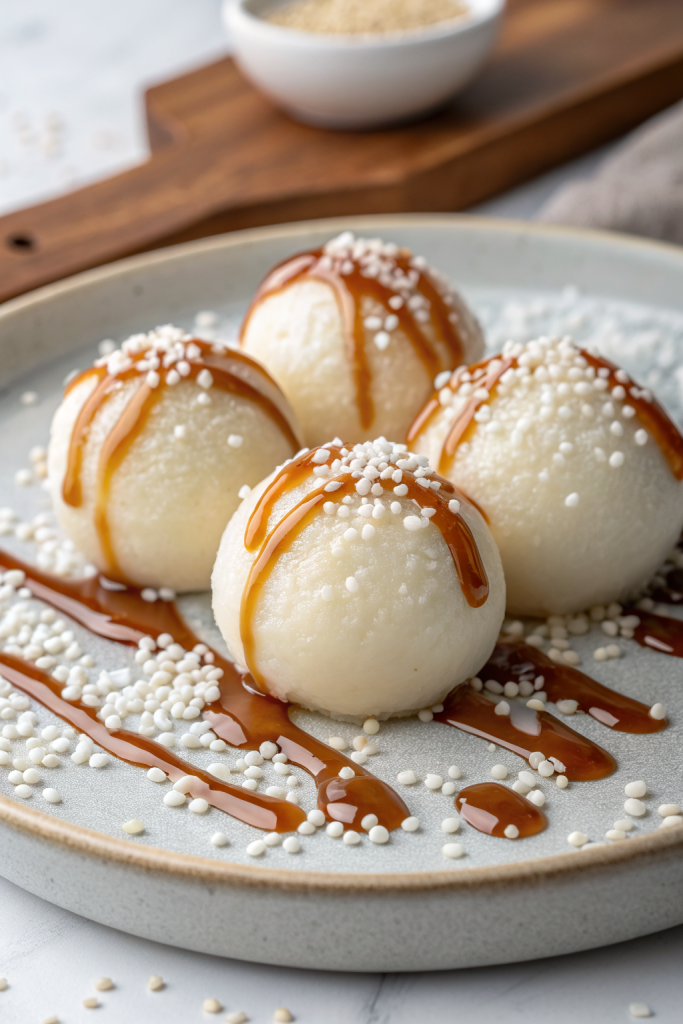
Shiratama Dango Japanese Dessert Recipe tastes chewy, lightly sweet, and incredibly soothing, perfect for anyone who loves mochi-style textures and gentle flavors. It works well for busy home cooks because you can finish a batch in about 30 minutes from start to finish. I first tried shiratama dango in a tiny Tokyo cafe and then spent years tweaking this version in my American kitchen so you can enjoy it without hunting down a plane ticket.
Why Make This Shiratama Dango Japanese Dessert Recipe at Home
You control the texture at home, which matters a lot with shiratama dango. You can keep the dumplings softer, bouncier, or firmer just by adjusting water and cooking time, and you avoid additives that some packaged versions use.
You also customize toppings to match your mood and pantry. Matcha syrup, sweet red bean paste, fruit, or kinako all taste amazing with the same base dumpling, so one recipe turns into many desserts.
Soft, chewy, and not too sweet, this Shiratama Dango Japanese Dessert Recipe tastes like a dessert cafe treat that you easily pull off in your own kitchen. ★★★★★
Ingredients You Need
Core ingredients
-
Shiratamako (glutinous rice flour)
- Use about 100 g (a generous 3/4 cup) shiratamako.
- Shiratamako gives the best chewy yet light texture. I like brands such as Shirakiku or Koda Farms when I find them in Asian markets or online.
- If you only find mochiko (sweet rice flour), you can use it, but the texture turns slightly denser and less bouncy.
-
Water
- Start with about 80 to 90 ml (5 to 6 tablespoons) room temperature water.
- Add water gradually because humidity and brand affect how much you need.
- Aim for a dough that feels like soft earlobe cartilage: smooth, pliable, and not sticky.
-
Sugar (optional but recommended)
- Use 1 to 2 teaspoons granulated sugar in the dough for a subtle sweetness.
- Sugar also keeps the dumplings a bit softer after chilling.
Classic toppings and sauces
Pick one or mix and match. You do not need all of these.
-
Anko (sweet red bean paste)
- Use smooth (koshian) for a silky finish or chunky (tsubuan) for more texture.
- Canned or pouch anko works great and saves time. I often keep a shelf stable pouch in the pantry for quick Japanese desserts.
-
Kinako sugar mix
- 2 tablespoons kinako (roasted soybean flour)
- 1 to 1½ tablespoons sugar
- A tiny pinch of salt
- Stir together in a small bowl. This mix tastes nutty and toasty and coats the warm dumplings beautifully.
-
Kuromitsu style brown sugar syrup shortcut
- 2 tablespoons dark brown sugar or Okinawan black sugar
- 1 tablespoon water
- Heat in a small saucepan until the sugar dissolves and thickens slightly, then cool.
- This shortcut mimics kuromitsu flavor without hunting for specialty syrup.
-
Fresh fruit
- Sliced strawberries, kiwi, mango, or canned mandarin oranges taste great.
- Fruit adds color and freshness, especially if you serve the dumplings in a parfait style dessert.
-
Matcha drizzle (optional)
- 1 teaspoon matcha powder
- 1½ to 2 tablespoons hot water
- 1 to 2 teaspoons sugar or honey
- Whisk until smooth. This adds a gentle bitterness that balances the sweetness.
Pantry shortcuts
- Use canned anko instead of cooking beans from scratch.
- Use store bought kuromitsu if you keep it on hand and skip the brown sugar syrup step.
- Use frozen fruit when fresh fruit costs too much or looks sad in the store. Thaw and pat dry before serving.
Equipment list
- Medium mixing bowl
- Small bowl or cup for water
- Kitchen scale or measuring cups and spoons
- Small saucepan or pot for boiling water
- Slotted spoon or mesh strainer
- Bowl of ice water
- Small bowls for toppings and serving
- Clean kitchen towel or plastic wrap to cover shaped dumplings before cooking
Tips & Mistakes
- Add water to the shiratamako gradually and mix with your fingers so you feel the texture change.
- Stop adding water when the dough feels like a soft earlobe and no dry flour streaks remain.
- If the dough cracks when you roll it, knead in a few drops of water until it smooths out.
- If the dough sticks to your hands, dust your palms with a tiny bit of shiratamako and knead again.
- Roll dumplings about 2 to 2.5 cm (3/4 to 1 inch) wide so they cook evenly and stay pleasantly bite sized.
- Keep dumplings similar in size so they cook at the same rate and avoid undercooked centers.
- Cover shaped dumplings with a slightly damp towel so they do not dry out while you finish rolling.
- Boil plenty of water so the dumplings move freely and do not clump.
- Stir gently right after you add dumplings to the pot so they do not stick to the bottom.
- Cook dumplings for 1 to 2 minutes after they float so the centers cook through and stay chewy.
- Transfer dumplings straight into ice water so they stop cooking and keep a springy bite.
- Do not soak them in ice water for longer than 5 to 10 minutes or they start to firm up too much.
- Coat cooled dumplings with syrup or anko soon after draining so they do not stick together.
- Serve the dumplings the same day for the best texture since they firm up in the fridge.
- If they turn too firm after chilling, warm them briefly in hot water to soften them again.
How to Make Shiratama Dango Japanese Dessert Recipe
Step 1: Mix the shiratamako dough
- Add 100 g shiratamako to a medium bowl.
- Stir in 1 to 2 teaspoons sugar if you want a lightly sweet base.
- Pour in about half of the water and mix with your fingers or a spoon until the flour clumps.
- Add the remaining water a little at a time and knead until the dough comes together in a smooth, soft ball.
- Press the dough with your fingers and check that it feels like a soft earlobe: pliable, not sticky, and not crumbly.
- If it feels dry or cracks, add a few drops of water and knead again. If it feels sticky, sprinkle in a teaspoon of shiratamako and knead.
Step 2: Shape the dumplings
- Divide the dough into two or three logs so you handle it easily.
- Roll each log into a rope about 1.5 to 2 cm thick.
- Cut the rope into equal pieces about 2 to 2.5 cm wide.
- Roll each piece between your palms into a smooth ball.
- Gently press the center of each ball with your finger to form a slight dimple. This helps them cook evenly and hold toppings or syrup.
- Place shaped dumplings on a plate, cover with a slightly damp towel or plastic wrap, and set aside while you heat the water.
Step 3: Boil the dumplings
- Fill a medium pot with plenty of water and bring it to a steady boil.
- Prepare a bowl of ice water and keep it near the stove.
- Add dumplings to the boiling water in batches so you do not crowd the pot.
- Stir gently right after you add them so they do not stick to the bottom or each other.
- Watch as the dumplings sink and then float to the surface.
- After they float, cook them for 1 to 2 more minutes so the centers set and stay pleasantly chewy.
Step 4: Chill in ice water
- Scoop cooked dumplings out with a slotted spoon and transfer them straight into the ice water.
- Let them sit in the ice water for about 5 minutes so they cool and firm up slightly.
- Swirl them gently once or twice so they do not stick together.
- Drain the dumplings in a strainer and shake off excess water.
Step 5: Prepare toppings and sauces
- While the dumplings chill, stir together kinako, sugar, and a pinch of salt in a small bowl if you plan a kinako coating.
- If you want brown sugar syrup, heat 2 tablespoons dark brown sugar with 1 tablespoon water in a small pan until it bubbles and thickens slightly, then cool.
- If you plan a matcha drizzle, whisk matcha, hot water, and sugar until smooth and lump free.
- Set out anko, fruit, or any other toppings so you can assemble bowls quickly once you drain the dumplings.
Step 6: Assemble and serve
- Place a portion of drained shiratama dango into each serving bowl.
- Spoon anko on the side or on top of the dumplings.
- Drizzle with brown sugar syrup or matcha sauce if you use them.
- Sprinkle kinako sugar mix over the dumplings or serve it on the side for dipping.
- Add sliced fruit or a scoop of vanilla or matcha ice cream if you want a parfait style dessert.
- Serve the Shiratama Dango Japanese Dessert Recipe immediately while the texture feels soft and bouncy.
Variations I've Tried
-
Matcha shiratama dango
- Mix 1 to 2 teaspoons matcha powder into the shiratamako before you add water.
- You get pale green dumplings with a gentle tea aroma that pairs beautifully with sweet red bean paste.
-
Black sesame shiratama dango
- Stir in 1 to 2 tablespoons finely ground black sesame seeds and a teaspoon of sugar into the flour.
- Serve with sweetened condensed milk or vanilla ice cream for a nutty, slightly smoky flavor.
-
Coconut shiratama dango
- Replace part of the water with coconut milk and add a little extra sugar.
- Serve the dumplings in chilled coconut milk with fruit like mango and pineapple for a tropical twist.
-
Zenzai style warm dessert
- Serve freshly boiled dumplings directly in a bowl of warm sweet red bean soup.
- This version works especially well on cold evenings when you want something cozy.
-
Fruit parfait style
- Layer shiratama dango with yogurt, granola, and fresh fruit in a glass.
- Drizzle a little honey or brown sugar syrup on top for a cafe style dessert that still feels light.
How to Serve Shiratama Dango Japanese Dessert Recipe
Serve shiratama dango slightly chilled or at room temperature so the texture stays soft and chewy. Pair the dumplings with anko, kinako sugar mix, or brown sugar syrup, and add fresh fruit for color and freshness. You can also serve them over a scoop of vanilla or matcha ice cream for a more indulgent dessert bowl. If you want something lighter, serve the dumplings in a small bowl with chilled sweetened soy milk or regular milk and a drizzle of syrup.
How to store
-
Short term storage in the fridge
- Store plain cooked and cooled shiratama dango in an airtight container, covered with cold water, in the fridge for up to 1 day.
- Change the water once if it turns cloudy.
- Before serving, warm them briefly in hot water, then cool slightly so they regain a soft, bouncy texture.
-
Storing with toppings
- Store anko, syrups, and kinako mix separately from the dumplings so they do not turn soggy or gummy.
- Add toppings right before serving for the best flavor and texture.
-
Freezer storage
- Lay cooked and cooled dumplings on a parchment lined tray and freeze until solid, then transfer to a freezer bag.
- Keep them in the freezer for up to 1 month.
- Reheat from frozen in gently simmering water until they float and soften, then cool slightly before serving.
-
Best reheating method
- Warm refrigerated or frozen dumplings in hot water until they soften and float.
- Drain well and serve with fresh toppings so they taste almost like a new batch.
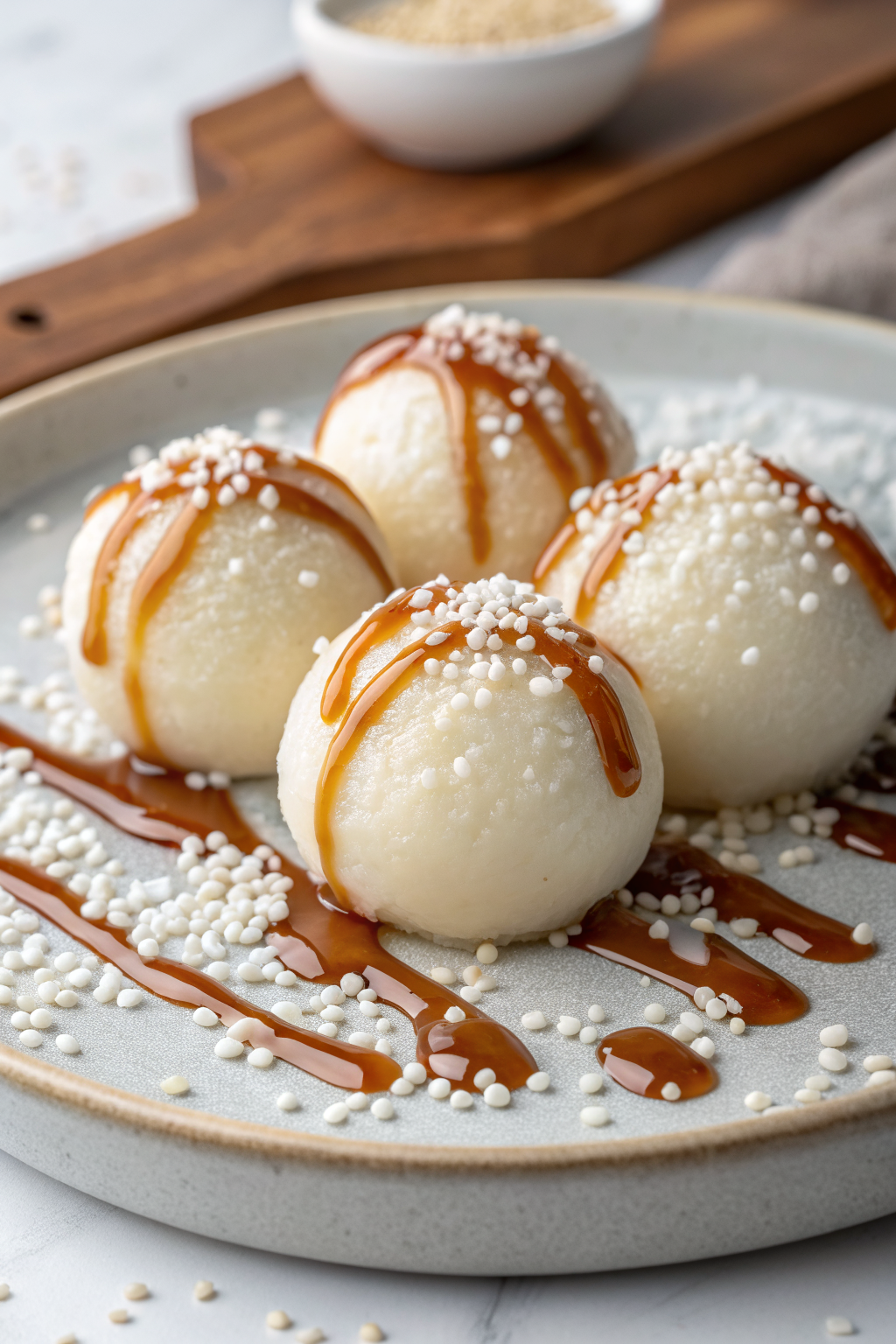
Shiratama Dango Japanese Dessert Recipe
Ingredients
Instructions
- Add the shiratamako to a medium mixing bowl and stir in the sugar if using.
- Pour in about half of the water and mix until the flour forms clumps.
- Add the remaining water gradually, kneading until the dough comes together into a smooth, soft ball.
- Check the texture: it should feel like a soft earlobe—pliable, smooth, and not sticky or crumbly. Add a few drops of water if it feels dry or cracks, or a little extra shiratamako if it feels sticky.
- Divide the dough into two or three pieces and roll each into a rope about 1.5–2 cm thick.
- Cut each rope into pieces about 2–2.5 cm wide.
- Roll each piece between your palms into a smooth ball, then gently press the center with a finger to make a small dimple.
- Place the shaped dumplings on a plate and cover with a slightly damp towel or plastic wrap so they do not dry out.
- Bring a medium pot of water to a steady boil and prepare a bowl of ice water.
- Add the dumplings to the boiling water in batches so they are not crowded, stirring gently so they do not stick to the bottom or to each other.
- Let the dumplings cook until they float to the surface, then continue boiling them for 1–2 minutes to cook the centers through.
- Use a slotted spoon to transfer the cooked dumplings directly into the ice water.
- Let them chill for about 5 minutes, swirling occasionally so they do not stick together.
- Drain the dumplings in a strainer and shake off excess water.
- For the kinako sugar mix, stir together the kinako, sugar, and a pinch of salt in a small bowl.
- For the brown sugar syrup, heat the dark brown sugar and water in a small pan until the sugar dissolves and the mixture thickens slightly, then let it cool.
- For the matcha drizzle, whisk the matcha, hot water, and sugar or honey in a small bowl until smooth and lump-free.
- Divide the drained shiratama dango among serving bowls.
- Top with anko if using, then drizzle with brown sugar syrup or matcha sauce.
- Sprinkle with the kinako sugar mix or serve it on the side for dipping.
- Add fresh fruit or a scoop of ice cream if you like, and serve immediately while the dumplings are soft and bouncy.
Notes
Approximate per serving (1/4 of dumplings only, without toppings): 120–140 calories; fat 0 g; saturated fat 0 g; carbohydrates 28–30 g; fiber 0–1 g; sugars 3–6 g (depending on sugar used in dough); protein 2–3 g; sodium 0–5 mg. Toppings such as anko, kinako, syrups, fruit, or ice cream will significantly change nutrition values. These numbers are estimates and will vary with specific ingredients, brands, and portion sizes.