
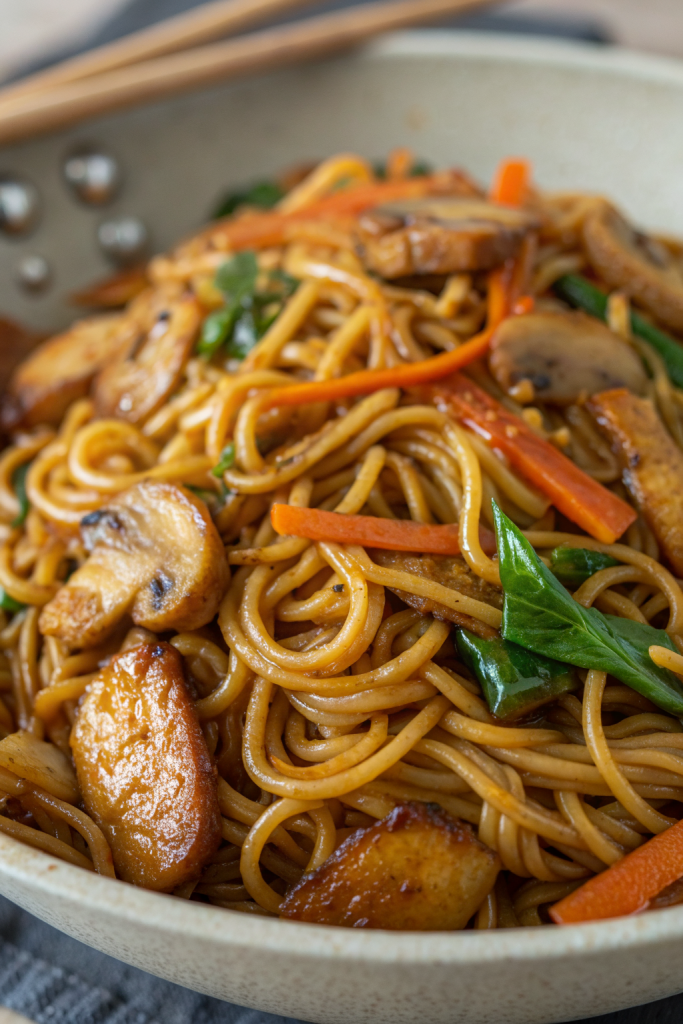
Quick Yaki Udon Recipe hits all the cozy notes: chewy noodles, savory-sweet sauce, juicy protein, and crisp-tender veggies in every bite. It works perfectly for busy nights when you want real flavor in under 20 minutes and zero drama. I first threw this together after a long shift in a tiny apartment kitchen, and it still feels like my weeknight superpower.
Why Make This Quick Yaki Udon Recipe at Home
You control everything at home: salt, sweetness, veggies, and how saucy you like your noodles. Takeout yaki udon often tastes too oily or too salty, while this version tastes balanced, glossy, and full of chewy texture.
You also finish this dish in less time than it takes a delivery driver to find your door. Cleanup stays simple, you use one pan, and you can toss in whatever lonely vegetables sit in your fridge.
“This Quick Yaki Udon Recipe tastes like restaurant noodles but comes together faster than instant ramen ★★★★★”
Ingredients You Need
Here is what you need for a classic, flexible Quick Yaki Udon Recipe.
Udon noodles
- 14 to 16 oz fresh or frozen udon noodles
- Fresh or frozen udon gives the best chewy texture.
- Use vacuum-packed shelf-stable udon if that is what you have, but cook it slightly under the package time so it stays bouncy.
Protein options
Pick one or mix two:
- 6 oz thinly sliced beef (ribeye, sirloin, or hot pot style)
- 6 oz boneless chicken thigh, sliced thin
- 6 oz peeled shrimp, patted dry
- 6 oz extra-firm tofu, pressed and cubed
- 2 eggs, lightly beaten, for a quick scramble version
I like thinly sliced beef for classic flavor, but chicken thighs stay juicy and budget friendly. Tofu works great if you dry it well and brown it nicely.
Vegetables
Use what you like, but this combo hits the classic yaki udon vibe:
- 1 small onion, sliced
- 1 cup green cabbage, shredded
- 1 small carrot, cut into matchsticks
- 3 to 4 scallions, sliced (white and green parts separated)
- 1/2 cup mushrooms, sliced (shiitake or cremini work well)
- 1/2 small bell pepper, sliced (optional)
You can swap cabbage for napa cabbage or even bagged coleslaw mix as a shortcut. Frozen mixed veggies also work in a pinch.
Sauce ingredients
This sauce gives that glossy, savory-sweet flavor:
- 3 tbsp soy sauce (use low sodium if you watch salt)
- 1 tbsp oyster sauce (adds depth; use vegetarian oyster sauce or extra soy if needed)
- 1 tbsp Worcestershire sauce (Japanese brands taste classic, but any works)
- 1 to 1½ tbsp mirin or mild rice wine
- 1 tsp sugar or honey
- 1 to 2 tsp sesame oil
- 1 to 2 tsp neutral oil for stir frying (canola, grapeseed, avocado)
- 1 to 2 cloves garlic, minced
- 1 tsp grated ginger (optional but tasty)
If you do not have mirin, use a mix of water and a pinch of sugar. Taste the sauce before you cook and adjust sweetness or salt.
Toppings
- Toasted sesame seeds
- Extra scallion greens, sliced
- Shichimi togarashi or crushed red pepper, to taste
- Katsuobushi flakes, if you like that smoky flavor
Equipment list
- Large nonstick skillet or wok
- Tongs or chopsticks for tossing noodles
- Small bowl for mixing sauce
- Pot for boiling udon if using dried or shelf-stable noodles
- Colander for draining noodles
Tips & Mistakes
- Pre-mix the sauce in a small bowl so you move fast once the pan heats.
- Slice protein and vegetables thin so they cook quickly and stay tender.
- Do not overcook udon or it turns mushy; keep it slightly chewy.
- Rinse frozen or vacuum-packed udon briefly under hot water to loosen strands before stir frying.
- Dry your protein well with paper towels so it browns instead of steaming.
- Heat the pan until it almost smokes before adding oil so you get a nice sear.
- Do not crowd the pan; cook protein in batches if needed to keep good color.
- Add the sauce at the end and toss quickly so noodles soak it up without burning.
- Taste and adjust seasoning with a splash of soy or a pinch of sugar at the very end.
- Avoid stirring constantly; give ingredients a moment to sit and caramelize for better flavor.
How to Make Quick Yaki Udon Recipe
Step 1: Prep the noodles and sauce
- If you use fresh or frozen udon, run them under hot tap water or dip them in boiling water for 30 to 60 seconds until they loosen.
- Gently separate the strands with chopsticks or tongs and set them aside to drain.
- In a small bowl, whisk soy sauce, oyster sauce, Worcestershire, mirin, sugar, and sesame oil until the sugar dissolves.
- Taste the sauce and adjust sweetness or salt to your liking before you start cooking.
Step 2: Prep protein and vegetables
- Slice your chosen protein into thin bite-size strips or cubes.
- Pat the protein dry with paper towels so it browns nicely.
- Slice onion, cabbage, carrot, mushrooms, bell pepper, and scallions.
- Keep scallion greens separate for topping at the end.
Step 3: Cook the protein
- Heat a large skillet or wok over medium-high heat until hot.
- Add a teaspoon of neutral oil and swirl to coat the pan.
- Add the protein in a single layer and let it sit for 30 to 60 seconds so it sears.
- Stir and cook until it just cooks through, then transfer it to a plate and keep it nearby.
Step 4: Stir fry the vegetables
- In the same pan, add a little more oil if the pan looks dry.
- Add onion and the white parts of scallions and cook 1 to 2 minutes until they soften slightly.
- Add carrot, cabbage, mushrooms, and bell pepper and cook 2 to 3 minutes until crisp-tender.
- Add garlic and ginger and stir for 30 seconds until fragrant so they do not burn.
Step 5: Add noodles and sauce
- Add the loosened udon noodles to the pan with the vegetables.
- Toss gently with tongs to mix everything without breaking the noodles.
- Pour the sauce around the edges of the pan so it sizzles and coats the noodles.
- Toss for 1 to 2 minutes until the noodles soak up the sauce and look glossy.
Step 6: Finish and serve
- Return the cooked protein to the pan and toss with the noodles.
- Add scallion greens and toss again for 30 seconds.
- Taste and adjust with a splash of soy or a pinch of sugar if you want more punch.
- Serve hot, topped with sesame seeds, extra scallions, chili flakes, or katsuobushi.
Variations I've Tried
- Spicy yaki udon: Add a spoonful of chili crisp or gochujang to the sauce and finish with extra chili flakes. The noodles soak up the heat and still keep that chewy comfort.
- Garlic butter yaki udon: Stir a tablespoon of butter and extra minced garlic into the pan at the end. This version tastes rich and cozy, like Japanese noodles met garlic bread.
- Veggie-packed yaki udon: Load the pan with broccoli, snap peas, baby spinach, and extra mushrooms. This version works great when you want a fridge-clearing dinner that still tastes intentional.
- Eggy breakfast yaki udon: Push noodles to one side, pour beaten eggs into the empty space, scramble, then mix everything together. It tastes like a noodle omelet in the best way.
How to Serve Quick Yaki Udon Recipe
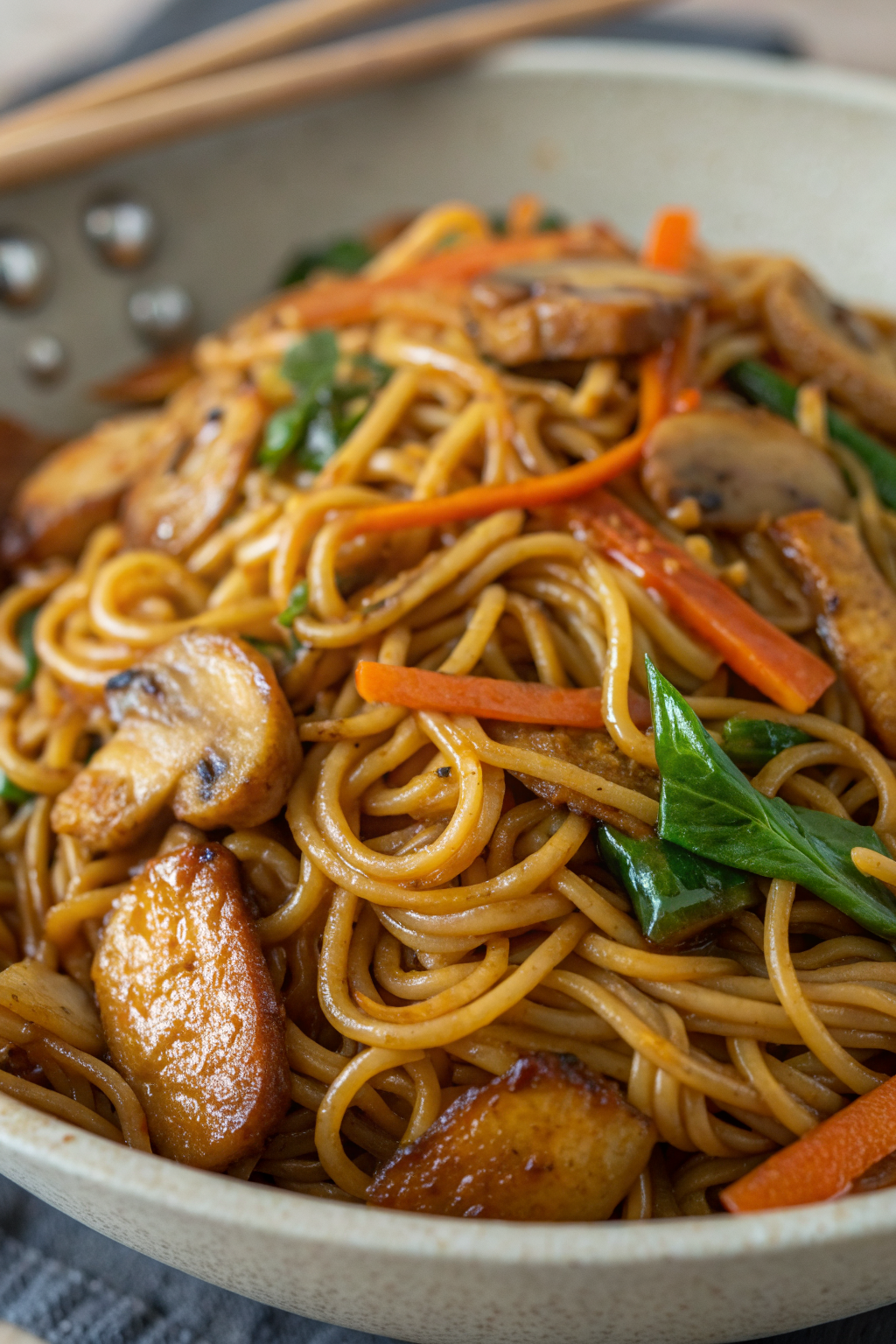
Serve Quick Yaki Udon Recipe straight from the pan while the noodles stay hot and glossy. I like to top each bowl with scallions, sesame seeds, and a little chili for those who enjoy heat. Pair it with miso soup, cucumber salad, or steamed edamame for a simple meal. Kids usually love the slightly sweet sauce, so you can keep the chili on the side.
How to store
- Fridge: Cool leftovers to room temperature, then store in an airtight container in the fridge for up to 3 days.
- Freezer: Freeze portions in freezer-safe containers or bags for up to 1 month; the noodles soften a bit but still taste good.
- Reheating on stovetop: Reheat in a skillet over medium heat with a splash of water or broth, tossing until hot and steamy.
- Reheating in microwave: Cover loosely, microwave in 45 to 60 second bursts, and stir between bursts so the noodles heat evenly and do not dry out.
Quick Yaki Udon Recipe
Ingredients
Instructions
- If using fresh or frozen udon, run the noodles under hot tap water or dip them in boiling water for 30 to 60 seconds until they loosen.
- Gently separate the strands with chopsticks or tongs and set aside to drain.
- In a small bowl, whisk together the soy sauce, oyster sauce, Worcestershire sauce, mirin, sugar, and sesame oil until the sugar dissolves.
- Taste the sauce and adjust sweetness or salt to your liking.
- Slice your chosen protein into thin bite-size strips or cubes, or beat the eggs if using.
- Pat the protein dry with paper towels so it browns nicely.
- Slice the onion, cabbage, carrot, mushrooms, bell pepper, and scallions, keeping the scallion greens separate for topping at the end.
- Heat a large skillet or wok over medium-high heat until hot.
- Add about 1 teaspoon neutral oil and swirl to coat the pan.
- Add the protein in a single layer and let it sit for 30 to 60 seconds to sear, then stir and cook until just cooked through.
- Transfer the cooked protein to a plate and keep nearby.
- In the same pan, add a little more oil if the pan looks dry.
- Add the onion and the white parts of the scallions and cook for 1 to 2 minutes until they begin to soften.
- Add the carrot, cabbage, mushrooms, and bell pepper and cook for 2 to 3 minutes until crisp-tender.
- Add the garlic and ginger and stir for about 30 seconds until fragrant.
- Add the loosened udon noodles to the pan with the vegetables.
- Toss gently with tongs to combine without breaking the noodles.
- Pour the sauce around the edges of the pan so it sizzles and coats the noodles.
- Toss for 1 to 2 minutes until the noodles soak up the sauce and look glossy.
- Return the cooked protein to the pan and toss with the noodles.
- Add the scallion greens and toss again for about 30 seconds.
- Taste and adjust with a splash of soy sauce or a pinch of sugar if desired.
- Serve hot, topped with sesame seeds, extra scallions, chili flakes, or katsuobushi if you like.
Notes
Approximate per serving (2 servings total, using 6 oz chicken thigh, 15 oz fresh udon, and listed vegetables and sauce, without optional toppings): 650–750 calories; fat 22–28 g; saturated fat 5–7 g; carbohydrates 85–95 g; fiber 6–8 g; sugars 14–18 g; protein 28–32 g; sodium 2100–2400 mg. Values will vary based on protein choice, exact noodle brand, vegetables used, sauces, and portion size.
Leave a Reply