

Easy Homemade Roasted Tomato Sauce tastes rich, sweet, and a little smoky, with that slow-cooked flavor you usually only get at a tiny Italian grandma-run restaurant. It works for busy home cooks who want a from-scratch sauce in about 1 hour total, most of it hands-off roasting time. I first tested this version on a weeknight when my kids demanded pasta in 20 minutes, and now they call it “the red gold.”
Why Easy Homemade Roasted Tomato Sauce Is Worth It
Roasting concentrates the tomato flavor, caramelizes the natural sugars, and gives the sauce a deep, almost jammy richness. You toss everything on a sheet pan, slide it into the oven, and the heat does the heavy lifting while you boil pasta or scroll recipes you may never cook.
This roasted tomato sauce also uses flexible ingredients, so you can work with whatever tomatoes you have. You can keep it rustic and chunky or blend it silky-smooth, and it freezes beautifully, so one pan of roasted tomatoes gives you multiple easy dinners.
“This Easy Homemade Roasted Tomato Sauce tastes like it simmered all day on the stove, but I pulled it off on a Tuesday night in under an hour. ★★★★★”
Ingredients You Need
Tomatoes (about 3 pounds / 1.3 kg)
- Use Roma, plum, or vine-ripened tomatoes for the best balance of juice and flesh.
- Cherry or grape tomatoes also work and roast beautifully; just reduce roasting time slightly.
- In winter, I often mix canned whole San Marzano tomatoes (drained) with fresh tomatoes to boost flavor.
Onion (1 medium, yellow or sweet)
- Yellow onion gives classic flavor, while sweet onion adds extra mild sweetness.
- Red onion works in a pinch and adds a slightly sharper edge.
Garlic (6–8 cloves)
- I go heavy on garlic because roasting mellows and sweetens it.
- Use pre-peeled cloves from the store if you want a shortcut; they roast just as well.
Olive oil (about 1/4 cup)
- Use a decent extra-virgin olive oil for the best flavor, not the super fancy stuff you hide from your family.
- If you run low on olive oil, mix in a neutral oil like avocado or canola, but keep at least half olive oil for flavor.
Salt and black pepper
- Kosher salt seasons more evenly; if you use table salt, start with a little less and taste as you go.
- Freshly ground black pepper adds a nice bite that balances the sweetness of roasted tomatoes.
Sugar or balsamic vinegar (optional, 1–2 teaspoons)
- A tiny bit of sugar or a splash of balsamic can balance very acidic tomatoes.
- Taste the sauce at the end before you add this; some batches need it, some do not.
Fresh herbs
- Fresh basil (a small handful) gives that classic tomato-basil flavor.
- Fresh thyme or oregano also work great; dried Italian seasoning works as a pantry backup.
Red pepper flakes (optional)
- Add a pinch for gentle heat or more if you like a spicy roasted tomato sauce.
- Chili flakes bloom in the hot sauce and add depth without overpowering.
Optional add-ins
- A small carrot, sliced, adds natural sweetness and body.
- A splash of vegetable or chicken broth thins the sauce if you prefer a looser texture.
Equipment List
- Large rimmed baking sheet (or two, so you avoid crowding the tomatoes).
- Parchment paper or a silicone baking mat for easier cleanup.
- Sharp knife and cutting board.
- Blender, immersion blender, or food processor (for smooth sauce).
- Large spoon or spatula.
- Storage containers or jars with lids for leftovers.
Quick Tips & substitutions
- Use any mix of tomatoes you have; just cut larger ones into wedges and leave cherry tomatoes whole.
- Roast in a single layer so the tomatoes caramelize instead of steam.
- Add a sliced carrot or a small piece of bell pepper to boost sweetness and depth.
- Swap fresh basil with 1–2 teaspoons dried Italian seasoning when fresh herbs hide in the fridge behind leftovers.
- Use pre-minced garlic only if you roast it; raw jarred garlic can taste harsh.
- Blend only half the roasted mixture if you want a chunky yet saucy texture.
- Stir in a spoonful of tomato paste at the end if your tomatoes taste weak or watery.
- Use gluten-free pasta, zucchini noodles, or spaghetti squash to keep the meal gluten-free or low carb.
- Skip cheese and use olive oil only to keep the roasted tomato sauce fully vegan.
- Freeze the sauce in 1–2 cup portions so you can thaw just what you need.
How to Make Easy Homemade Roasted Tomato Sauce
Step 1: Prep the tomatoes and veggies
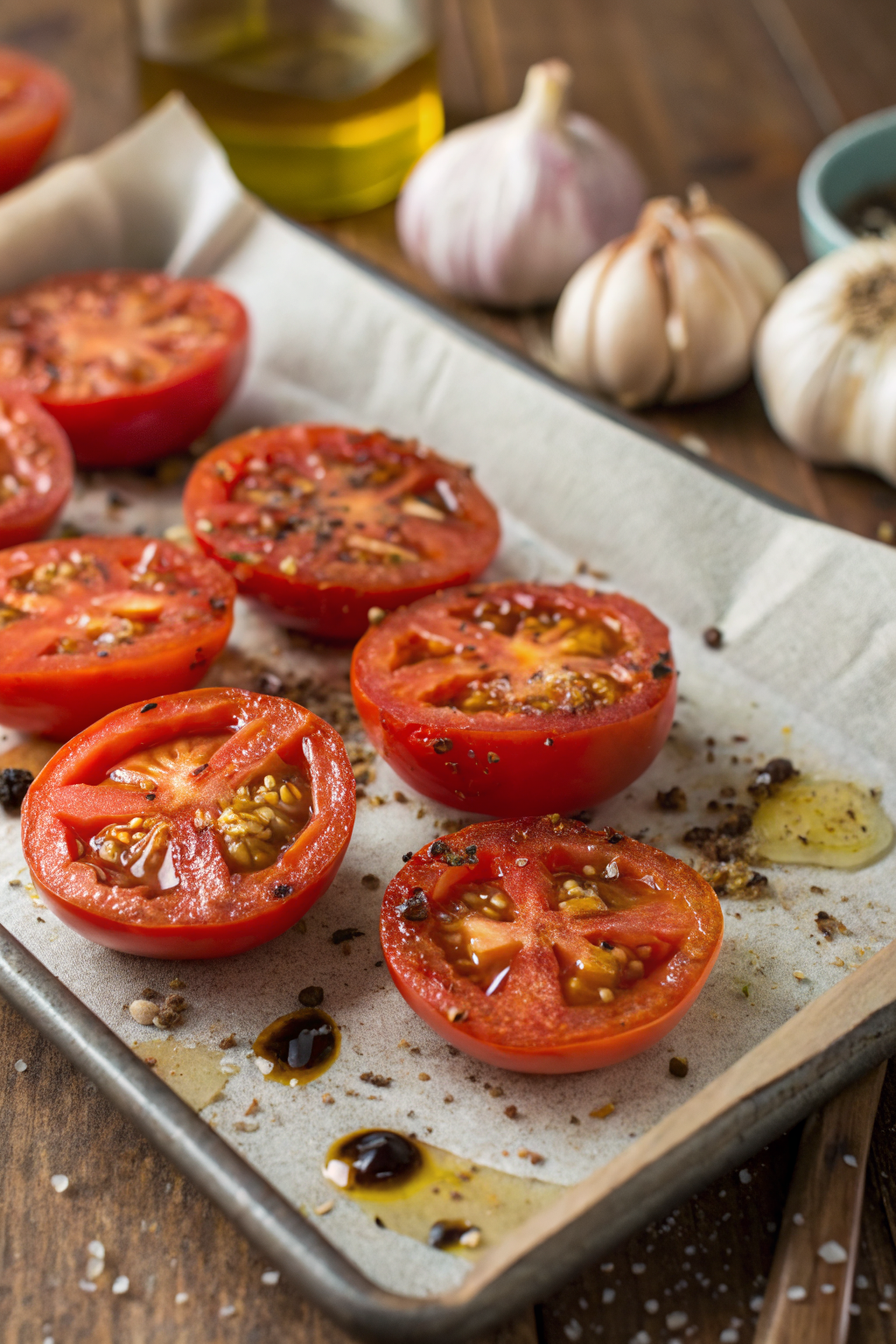
Preheat your oven to 400°F (200°C). Line a large rimmed baking sheet with parchment or a silicone mat so the tomatoes do not weld themselves to the pan. Cut larger tomatoes into halves or thick wedges, and leave cherry or grape tomatoes whole.
Peel and thickly slice the onion. Smash the garlic cloves with the flat side of your knife and peel them, but keep them mostly whole so they do not burn. Spread tomatoes, onion, and garlic across the baking sheet in a single layer.
Step 2: Season everything well
Drizzle the vegetables with olive oil, then toss with your hands or a spatula so every piece gets a light coat. Sprinkle generously with salt and black pepper, then add a pinch of red pepper flakes if you want heat. Tuck fresh herb sprigs (like thyme or oregano) around the tomatoes, or sprinkle dried herbs evenly over the top.
Taste a tomato slice for salt so you can adjust before roasting. The seasoning should taste slightly salty because the sauce will spread over pasta later.
Step 3: Roast until caramelized and jammy
Slide the pan into the hot oven and roast for about 35–45 minutes. Stir once halfway through to expose new surfaces and prevent any bits from scorching. The tomatoes should slump, release juices, and start to brown at the edges, and the onions should turn soft and golden.
If some edges darken faster, move them toward the center of the pan. If your tomatoes look pale and watery at 35 minutes, keep roasting until the juices thicken and concentrate.
Step 4: Blend to your favorite texture
Transfer the roasted tomatoes, onions, garlic, and all the pan juices into a blender or a large pot if you use an immersion blender. Add a few fresh basil leaves if you like that bright herbal note. Blend until smooth for a silky roasted tomato sauce, or pulse a few times for a rustic, chunky texture.
If the sauce looks too thick, add a splash of water or broth and blend again. Taste and adjust with more salt, pepper, or a tiny pinch of sugar or balsamic if the sauce tastes too sharp.
Step 5: Simmer briefly and finish
Pour the blended sauce into a saucepan and bring it to a gentle simmer over medium heat. Let it bubble for 5–10 minutes so the flavors marry and the texture thickens slightly. Stir often so the bottom does not stick.
Right at the end, stir in a drizzle of olive oil for extra richness and a few more torn basil leaves. Taste again and adjust seasoning; this last taste test makes the difference between “good” and “wow, we need more bread to swipe the pot.”
Step 6: Serve or cool for later
Toss the hot roasted tomato sauce with cooked pasta, spoon it over chicken or vegetables, or use it as a pizza base. If you plan to store it, let the sauce cool to room temperature first. Portion it into containers, label them, and move them to the fridge or freezer.
Recipe Variations
- Gluten-free: Pair the sauce with gluten-free pasta, polenta, rice, or roasted potatoes.
- Vegan: Use only olive oil, skip any cheese toppings, and serve with plant-based pasta or veggies.
- Low carb: Serve over zucchini noodles, spaghetti squash, grilled eggplant, or sautéed greens.
- Creamy version: Stir in a splash of heavy cream or coconut milk at the end for a blush-style sauce.
- Herb-heavy version: Add extra basil, parsley, and oregano and blend them in at the end for a bright green-flecked sauce.
- Spicy arrabbiata style: Add more red pepper flakes and a pinch of smoked paprika before roasting.
- Roasted veggie boost: Add bell peppers, carrots, or a small fennel bulb to the roasting pan for more complexity.
- Cheesy finish: Stir in grated Parmesan or Pecorino right before serving for extra savory depth.
Ways to Serve Easy Homemade Roasted Tomato Sauce
- Toss with spaghetti, penne, or any short pasta and top with grated Parmesan or vegan cheese.
- Spoon over grilled or baked chicken, turkey meatballs, or plant-based meatballs.
- Use as a pizza sauce on homemade or store-bought crust.
- Layer in lasagna, baked ziti, or stuffed shells.
- Serve warm over roasted vegetables like eggplant, zucchini, or cauliflower.
- Use as a dipping sauce for garlic bread, mozzarella sticks, or baked cheese sticks.
- Stir into cooked rice or quinoa for a quick tomato “risotto” style side.
- Pour over scrambled eggs or an omelet for a simple, cozy breakfast or brunch.
Storage Success
Cool the Easy Homemade Roasted Tomato Sauce completely before you pack it into airtight containers or jars. Store it in the fridge for up to 5 days, and reheat gently on the stove with a splash of water if it thickens too much. Freeze portions in freezer-safe containers or zip-top bags for up to 3 months, and thaw overnight in the fridge or in a saucepan over low heat. Label containers with the date so you actually use that liquid gold instead of letting it hide behind the pickles.
Easy Homemade Roasted Tomato Sauce
Ingredients
Instructions
- Preheat the oven to 400°F (200°C) and line a large rimmed baking sheet with parchment paper or a silicone baking mat.
- Arrange the tomato halves or wedges (or whole cherry tomatoes), sliced onion, and smashed garlic cloves in a single layer on the prepared baking sheet. Add the sliced carrot if using.
- Drizzle the vegetables with olive oil and toss so everything is lightly coated. Season generously with kosher salt and freshly ground black pepper, and add a pinch of red pepper flakes if you like. Tuck in fresh thyme or oregano sprigs, or sprinkle with dried Italian seasoning.
- Taste a tomato piece for seasoning and add a bit more salt if needed; it should taste slightly salty since the sauce will be spread over pasta or other dishes.
- Roast for 35–45 minutes, stirring once halfway through, until the tomatoes slump and brown at the edges, the juices thicken and concentrate, and the onions are soft and golden. If edges darken too quickly, move them toward the center of the pan and continue roasting until everything looks caramelized and jammy.
- Transfer the roasted tomatoes, onions, garlic, any carrot, herbs, and all pan juices to a blender or a pot if using an immersion blender. Add a few fresh basil leaves for a bright herbal note.
- Blend until smooth for a silky sauce, or pulse several times for a rustic, chunky texture. If the sauce is too thick, add a splash of water or broth and blend again.
- Taste and adjust with more salt and pepper. If the sauce tastes too sharp or acidic, add 1–2 teaspoons of sugar or a splash of balsamic vinegar and blend briefly to combine.
- Pour the blended sauce into a saucepan and bring to a gentle simmer over medium heat. Cook for 5–10 minutes, stirring often, until the flavors meld and the sauce thickens slightly.
- Right before serving, stir in a drizzle of olive oil and a few torn basil leaves. Taste one last time and adjust seasoning as needed. Serve hot over pasta, chicken, vegetables, or use as a pizza or lasagna sauce, or cool completely for storage.
Notes
Approximate per 1/2-cup serving (8 servings total): 80 calories; fat 5 g; saturated fat 1 g; carbohydrates 9 g; fiber 2 g; sugars 5 g; protein 2 g; sodium 220 mg. Values will vary based on tomato variety, oil amount, added sugar or balsamic, and any optional add-ins.
Leave a Reply