

Tomato Pasta Recipe tastes bright, garlicky, and cozy, with just enough richness to feel special on a weeknight. It works for busy home cooks who want a 30–35 minute dinner that still tastes like you put in real effort. I’ve cooked some version of this dish since my broke college days, and it still shows up in my kitchen almost every week.
Why Tomato Pasta Recipe Is Worth It
Tomato pasta delivers huge flavor from simple pantry ingredients, which saves money and time. You simmer tomatoes, garlic, and olive oil into a quick sauce that clings to every noodle, so every bite tastes balanced and satisfying.
You control the texture and flavor: silky and smooth or chunky and rustic, spicy or mild, cheesy or dairy-free. It works for date night, family dinner, or meal prep, and it reheats like a champ.
“This Tomato Pasta Recipe tastes like a cozy Italian restaurant meal, but I pulled it off in under 30 minutes on a Tuesday. ★★★★★”
Ingredients You Need
Pasta
- 12 oz dried pasta (spaghetti, penne, rigatoni, or fusilli all work well)
- 1–2 tablespoons kosher salt for the pasta water
Tomato sauce base
- 3 tablespoons extra-virgin olive oil (use a decent brand; you taste it here)
- 4 cloves garlic, thinly sliced or minced
- 1 small yellow onion, finely chopped (optional but adds sweetness)
- 1 can (28 oz) crushed tomatoes or whole peeled tomatoes
- Crushed tomatoes give a smoother sauce.
- Whole peeled tomatoes (like San Marzano style) give a chunkier, richer flavor; crush them by hand in the pot.
- 2 tablespoons tomato paste (tube paste works great and stores easily)
- 1 teaspoon sugar (balances acidity; skip if your tomatoes taste naturally sweet)
- 1 teaspoon kosher salt, plus more to taste
- ½ teaspoon freshly ground black pepper
- ½–1 teaspoon red pepper flakes (adjust for heat level)
Herbs & flavor boosters
- 1 teaspoon dried oregano or Italian seasoning
- ½ teaspoon dried basil (if you do not have fresh)
- Small handful fresh basil leaves, torn, for serving (optional but highly recommended)
- 1–2 teaspoons balsamic vinegar or red wine vinegar (brightens the sauce at the end)
Cheese & richness
- ¼–½ cup grated Parmesan or Pecorino Romano cheese, plus extra for topping
- 1–2 tablespoons butter (optional, for a silkier finish)
- Splash of pasta cooking water (starchy water helps the sauce cling)
Pantry shortcuts & substitutions
- Use jarred marinara as a base if you feel rushed; simmer it with garlic, onion, and extra herbs to boost flavor.
- Use canned diced tomatoes in place of crushed; just cook a bit longer to soften them.
- Swap fresh garlic with ½–1 teaspoon garlic powder if you ran out; add it with the dried herbs.
- Use vegan Parmesan-style cheese or nutritional yeast if you avoid dairy.
Equipment list
- Large pot for boiling pasta
- Large skillet or wide saucepan for the sauce
- Wooden spoon or silicone spatula
- Chef’s knife and cutting board
- Ladle or heatproof measuring cup to scoop pasta water
- Colander for draining pasta
Quick Tips & substitutions
- Salt the pasta water generously; it should taste pleasantly salty so the pasta carries flavor.
- Cook pasta just to al dente, then finish it in the sauce for 1–2 minutes so everything marries together.
- Scoop at least 1 cup of pasta water before draining; use it to thin and bind the sauce.
- Taste your canned tomatoes; if they taste sharp, add a pinch of sugar and a splash of vinegar at the end for balance.
- Use butter at the end if you want a richer, restaurant-style finish; skip it for a lighter Tomato Pasta Recipe.
- Swap regular pasta with gluten-free pasta and reduce stirring to keep it from breaking.
- Use crushed red pepper flakes for heat; if kids eat with you, add the flakes at the table instead.
- Stir in a handful of baby spinach or kale at the end for extra veggies without much effort.
How to Make Tomato Pasta Recipe
Step 1: Boil the pasta
Bring a large pot of water to a rolling boil. Add a generous handful of kosher salt so the water tastes pleasantly salty. Add the pasta and cook it 1 minute less than the package directions for al dente. Scoop out 1 cup of pasta water, then drain the pasta.
Step 2: Build the flavor base
While the pasta cooks, heat the olive oil in a large skillet over medium heat. Add the chopped onion and cook 4–5 minutes until it softens and turns lightly golden around the edges. Add the garlic and red pepper flakes, then stir and cook 30–60 seconds until the garlic smells fragrant. Keep the heat moderate so the garlic does not burn.
Step 3: Add tomatoes and seasonings
Stir in the tomato paste and cook it for 1–2 minutes to deepen the flavor; it should darken slightly. Pour in the crushed tomatoes (or hand-crushed whole tomatoes) and stir to combine. Add salt, pepper, dried oregano, and dried basil. Bring the sauce to a gentle simmer.
Step 4: Simmer the sauce
Lower the heat so the sauce bubbles gently. Let it simmer 10–15 minutes, stirring occasionally, until it thickens slightly and the flavors taste more rounded. If the sauce thickens too much, add a splash of pasta water to loosen it. Taste and adjust seasoning with more salt or a pinch of sugar if needed.
Step 5: Finish the sauce
Stir in the vinegar to brighten the flavor. Add the butter, if you use it, and stir until it melts into the sauce. Add a small handful of grated Parmesan and stir again. The sauce should look glossy and clingy, not watery.
Step 6: Combine pasta and sauce
Add the drained pasta directly into the skillet with the sauce. Toss vigorously over medium heat for 1–2 minutes, adding splashes of pasta water as needed until the sauce coats every piece. Add another sprinkle of Parmesan and toss again. The pasta should look saucy but not soupy.
Step 7: Finish and serve
Turn off the heat and tear fresh basil leaves over the pasta. Give everything a final toss. Taste one more time and adjust salt, pepper, or chili flakes. Serve hot with extra cheese on top.
Recipe Variations
- Gluten-free: Use your favorite gluten-free pasta; cook it slightly under al dente and handle it gently when tossing.
- Vegan: Use olive oil only, skip the butter, and swap Parmesan with nutritional yeast or a vegan hard cheese.
- Protein boost: Add cooked chicken, turkey meatballs, Italian-style chicken sausage, or canned chickpeas.
- Extra veggies: Stir in sautéed mushrooms, zucchini, bell peppers, or spinach during the simmer stage.
- Creamy version: Add a splash of heavy cream or half-and-half at the end for a blush-style tomato cream sauce.
- Spicy version: Increase red pepper flakes or add a spoonful of Calabrian chili paste.
Ways to Serve Tomato Pasta Recipe
- Top with extra grated Parmesan and a drizzle of good olive oil.
- Serve with a simple green salad and garlic bread or toasted baguette.
- Pair with roasted vegetables like broccoli, cauliflower, or green beans.
- Pack leftovers in a thermos for a warm lunch at work or school.
- Spoon the tomato pasta into a baking dish, top with mozzarella, and bake until bubbly for a quick pasta bake.
Storage Success
Cool the Tomato Pasta Recipe to room temperature, then store it in an airtight container in the fridge for up to 4 days. Reheat on the stove over low heat with a splash of water or broth to loosen the sauce. You can freeze portions in freezer-safe containers for up to 2 months, though the pasta softens slightly after thawing. I like to freeze just the sauce and cook fresh pasta, then combine them for the best texture.
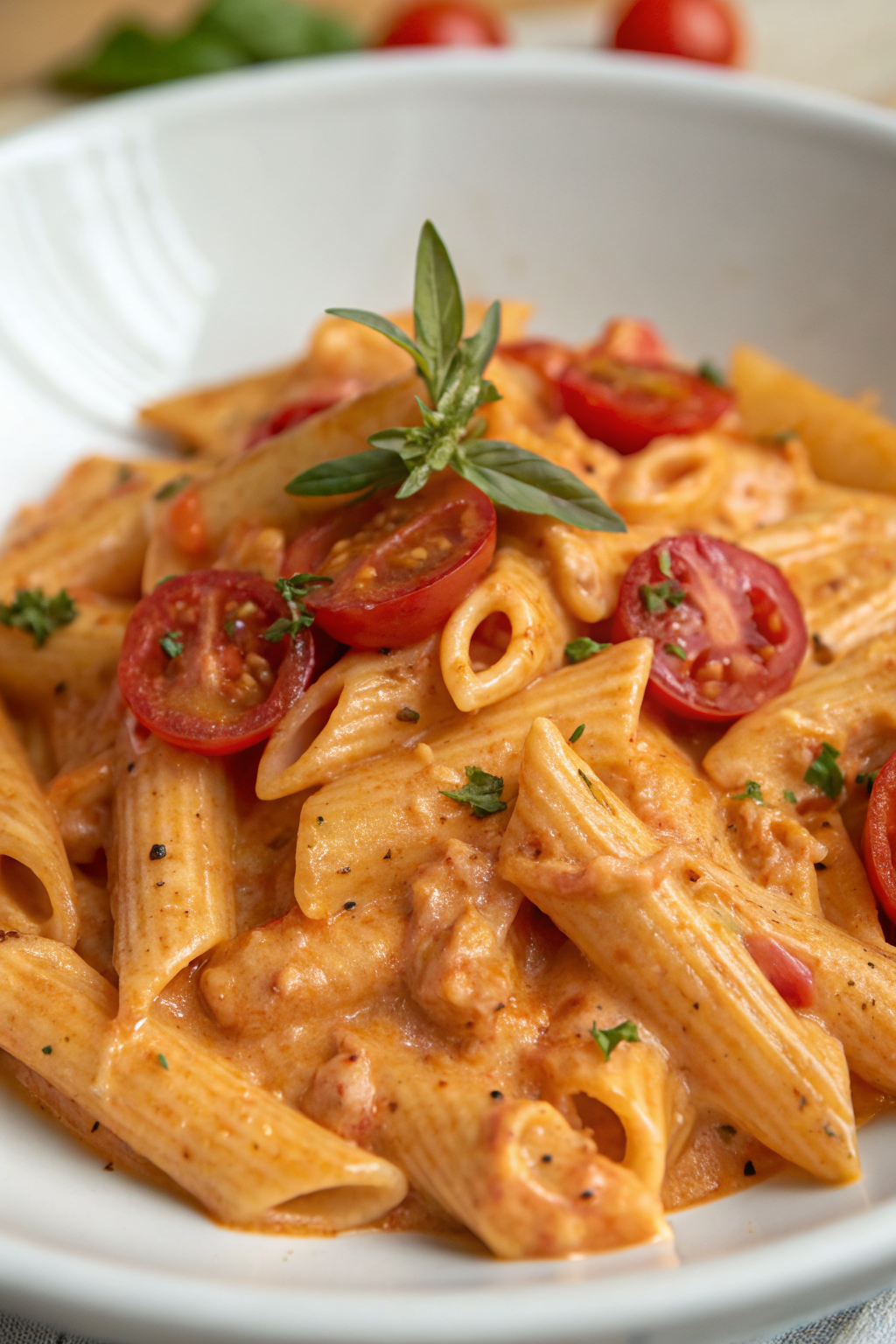
Tomato Pasta Recipe
Ingredients
Instructions
- Bring a large pot of water to a rolling boil. Add a generous handful of kosher salt so the water tastes pleasantly salty. Add the pasta and cook it 1 minute less than the package directions for al dente. Scoop out about 1 cup of pasta cooking water, then drain the pasta.
- While the pasta cooks, heat the olive oil in a large skillet over medium heat. Add the chopped onion, if using, and cook for 4–5 minutes until it softens and turns lightly golden around the edges. Add the garlic and red pepper flakes and cook for 30–60 seconds, stirring, just until the garlic smells fragrant without browning.
- Stir in the tomato paste and cook for 1–2 minutes until it darkens slightly and the flavor deepens. Pour in the crushed tomatoes or hand-crushed whole peeled tomatoes and stir to combine. Season with salt, black pepper, dried oregano or Italian seasoning, and dried basil, if using. Bring the sauce to a gentle simmer.
- Lower the heat so the sauce bubbles gently and simmer for 10–15 minutes, stirring occasionally, until it thickens slightly and the flavors round out. If the sauce becomes too thick, add a splash of pasta water to loosen it. Taste and adjust the seasoning with more salt or a pinch of sugar if the tomatoes taste very acidic.
- Stir in the balsamic vinegar or red wine vinegar to brighten the flavor. Add the butter, if using, and stir until melted and the sauce looks glossy. Stir in a small handful of grated Parmesan or Pecorino Romano until it melts into the sauce.
- Add the drained pasta directly to the skillet with the sauce. Toss vigorously over medium heat for 1–2 minutes, adding small splashes of reserved pasta water as needed until the sauce coats every piece of pasta and looks saucy but not watery. Sprinkle in a little more grated cheese and toss again.
- Turn off the heat and tear fresh basil leaves over the pasta. Give everything a final toss, then taste and adjust with more salt, pepper, or red pepper flakes if desired. Serve hot with extra grated cheese on top.
Notes
Approximate per serving (1/4 of recipe): 520 calories; fat 19 g; saturated fat 6 g; carbohydrates 72 g; fiber 5 g; sugars 10 g; protein 18 g; sodium 950 mg. Values will vary based on exact pasta shape, cheese amount, and added butter or optional ingredients.
Leave a Reply