
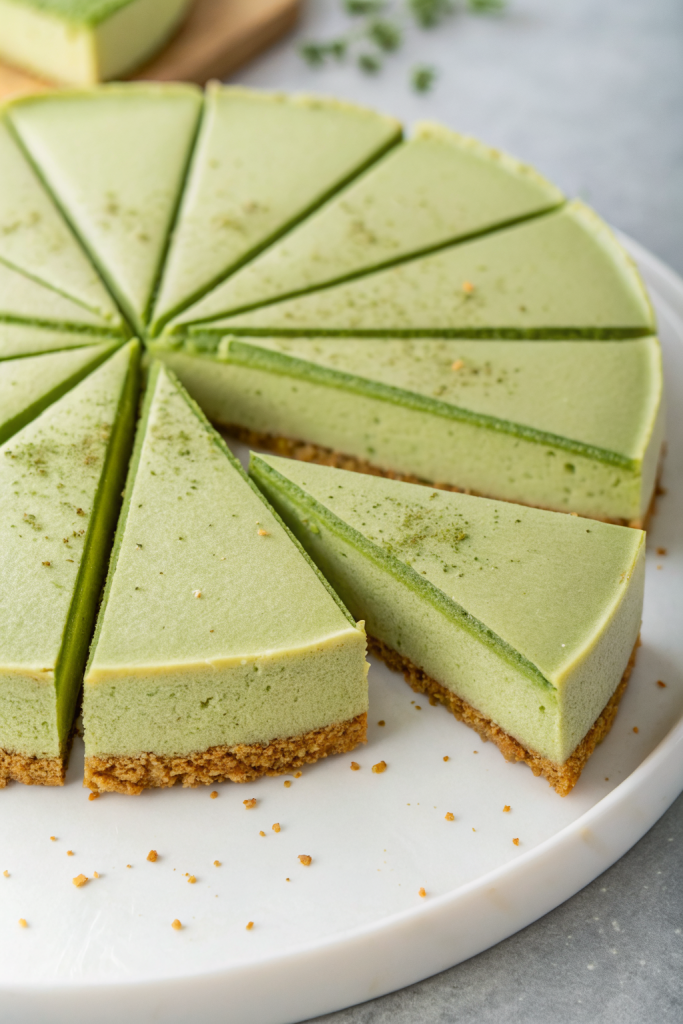
Original Matcha Japanese Cheesecake Recipe tastes like a cloud of creamy green tea custard with the gentle tang of classic cheesecake and the wobble of a soufflé. It suits matcha lovers who want a not-too-sweet dessert that feels special yet fits in about 2 hours total, including baking and cooling time before chilling. I first tested this version after a jet-lagged trip back from Tokyo, and my family demolished the entire cake before I unpacked my suitcase.
Why You Should Try This Original Matcha Japanese Cheesecake Recipe
This Original Matcha Japanese Cheesecake Recipe gives you a soft, jiggly, melt-in-your-mouth texture that feels lighter than New York style cheesecake but still tastes rich and satisfying. The matcha adds a gentle earthy flavor that balances the sweetness and looks stunning in that pale green color.
You bake this cheesecake in a water bath, so it rises tall, stays moist, and keeps a silky crumb. The recipe uses simple ingredients you likely already keep around, plus matcha powder, so you can pull off a bakery-level dessert in a home kitchen.
“This Original Matcha Japanese Cheesecake Recipe tastes like a fluffy matcha cloud with cheesecake flavor in every bite, and my guests begged for seconds. ★★★★★”
Ingredients You’ll Need
Main ingredients
-
7 ounces (200 g) cream cheese, full fat, at room temperature
- I like Philadelphia for consistent texture, but any block-style cream cheese works. Avoid whipped tubs because they add too much air and extra stabilizers.
-
3 tablespoons (45 g) unsalted butter, at room temperature
- European-style butter with higher fat gives a richer flavor, but standard American butter works fine.
-
1/2 cup (120 ml) whole milk, at room temperature
- Whole milk keeps the cheesecake tender. Use 2% in a pinch, but skip skim milk.
-
4 large eggs, separated, at room temperature
- Room temperature eggs whip better and hold more volume.
-
1/2 cup (100 g) granulated sugar, divided
- Use standard white sugar. Extra-fine sugar dissolves faster in the meringue if you have it.
-
1/2 cup (60 g) cake flour, sifted
- Cake flour keeps the crumb soft and delicate. Substitute all-purpose flour by using 55 g and sifting twice, but the texture turns slightly denser.
-
2 tablespoons (15 g) cornstarch, sifted
- Cornstarch helps stabilize the batter and keeps the crumb tender.
-
1 1/2 tablespoons (8–10 g) matcha powder, culinary or latte grade, sifted
- Use a good-quality Japanese matcha with a bright green color. Avoid dull brownish matcha because it tastes bitter and looks muddy.
-
1 teaspoon vanilla extract
- Vanilla rounds out the flavor and softens the grassy notes of matcha.
-
1/4 teaspoon fine sea salt
- Salt sharpens the flavors and keeps the sweetness balanced.
Optional toppings
- Powdered sugar, for light dusting
- Extra matcha powder, for light dusting or swirl pattern
- Lightly sweetened whipped cream
- Fresh berries such as strawberries, raspberries, or blueberries
Equipment list
-
8 inch (20 cm) round cake pan or springform pan, at least 3 inches tall
- If you use a springform pan, wrap the outside tightly with heavy-duty foil to keep water out.
-
Larger roasting pan or deep baking dish for water bath
-
Parchment paper
-
Hand mixer or stand mixer with whisk attachment
-
Fine mesh sieve for sifting flour and matcha
-
Mixing bowls, heatproof
-
Small saucepan
-
Rubber spatula
-
Kitchen scale if possible, for accuracy
Tips & Tricks
- Line the bottom and sides of your pan with parchment so the cheesecake releases cleanly and rises evenly.
- Wrap a springform pan with several layers of foil to keep the water bath from leaking in and turning the crust soggy.
- Sift matcha, flour, and cornstarch together to avoid green clumps in the batter.
- Warm cream cheese, butter, milk, and eggs to room temperature so they blend smoothly without lumps.
- Whip the egg whites to soft, glossy peaks, not stiff and dry, so the cake rises tall without cracking.
- Fold the meringue gently with a spatula, lifting from the bottom, so you keep as much air as possible in the batter.
- Tap the filled pan lightly on the counter to pop large air bubbles that can cause tunnels or big holes.
- Bake low and slow in a water bath so the cheesecake cooks evenly and keeps that signature jiggle.
- Cool the cheesecake in the oven with the door slightly open to prevent sudden temperature shock and big cracks.
- Chill the cake for at least 4 hours, or overnight, so the matcha flavor develops and the texture sets to that perfect cotton-soft bite.
How to Make Original Matcha Japanese Cheesecake Recipe
Step 1: Prepare the pan and oven
- Preheat your oven to 320°F (160°C).
- Line the bottom of an 8 inch round pan with parchment and line the sides with a tall strip of parchment that rises about 1 inch above the rim.
- If you use a springform pan, wrap the outside with 2 to 3 layers of heavy-duty foil, pressing tightly around the base and sides.
- Place a large roasting pan on the middle rack of the oven so it heats while you mix the batter.
Step 2: Warm the dairy mixture
- In a small saucepan, combine milk and butter.
- Heat over low heat until the butter melts and the mixture feels warm but not hot.
- Turn off the heat and add the cream cheese in chunks.
- Stir until the cream cheese softens and blends into a smooth mixture with no lumps, then transfer to a mixing bowl and let it cool slightly.
Step 3: Mix the yolk base
- Add vanilla and salt to the warm cream cheese mixture and whisk until smooth.
- Add egg yolks one at a time, whisking well after each addition until the mixture looks silky.
- In a separate bowl, sift together cake flour, cornstarch, and matcha powder.
- Sift this dry mixture directly over the yolk mixture and whisk gently until no dry spots remain and the batter looks smooth and green.
Step 4: Whip the meringue
- Place egg whites in a clean, grease-free bowl.
- Beat on medium speed until the whites turn foamy.
- Gradually add the sugar in 3 additions while you continue to beat.
- Increase to medium-high speed and whip until the meringue forms soft, glossy peaks that curl at the tip when you lift the whisk.
Step 5: Combine batter and meringue
- Add about one third of the meringue to the matcha yolk batter and whisk gently to lighten the mixture.
- Switch to a rubber spatula and add another third of the meringue.
- Fold gently by scraping along the bottom of the bowl and lifting up through the center, turning the bowl as you go.
- Add the final third of the meringue and fold until the batter looks uniform in color with no visible streaks, but still feels airy.
Step 6: Fill the pan and set up the water bath
- Pour the batter into the prepared pan.
- Tap the pan lightly on the counter 2 or 3 times to release large air bubbles.
- Place the pan into the preheated roasting pan in the oven.
- Carefully pour hot water into the roasting pan until it reaches about halfway up the sides of the cake pan.
Step 7: Bake the cheesecake
- Bake at 320°F (160°C) for 20 minutes.
- Lower the oven temperature to 300°F (150°C) and continue baking for another 30 to 35 minutes.
- Check the cheesecake: the top should look set, lightly browned, and the center should jiggle like soft jelly when you nudge the pan.
- If the center still looks very liquid, bake 5 to 10 minutes more, checking often so you do not overbake.
Step 8: Cool gradually
- Turn off the oven and open the door slightly, using a wooden spoon to keep a small gap.
- Leave the cheesecake inside for 15 to 20 minutes so it cools slowly.
- Remove the pan from the water bath and place it on a wire rack.
- Run a thin knife around the edge to loosen the sides, then let the cake cool completely to room temperature.
Step 9: Chill and serve
- Once cool, cover the pan and chill the cheesecake in the refrigerator for at least 4 hours, or overnight for best flavor and texture.
- When you feel ready to serve, release the cake from the pan and peel off the parchment.
- Dust the top lightly with powdered sugar or matcha, or both, if you want a two-tone effect.
- Slice with a warm, clean knife, wiping the blade between cuts for neat slices, and serve chilled.
What to Serve with Original Matcha Japanese Cheesecake Recipe
This Original Matcha Japanese Cheesecake Recipe pairs beautifully with fresh berries, especially strawberries or raspberries, because their tartness cuts through the creamy sweetness. A side of lightly sweetened whipped cream or a dollop of vanilla yogurt adds a soft, cool contrast. Serve it with hot matcha, green tea, roasted barley tea, or a simple glass of cold milk for a cozy, balanced dessert moment. If you serve it after a Japanese-style meal, add some sliced citrus or fruit salad to keep the finish light and refreshing.
Storage Options
- Store leftover matcha Japanese cheesecake covered in the refrigerator for up to 4 days; the flavor deepens slightly by day two.
- Keep slices in an airtight container so they do not absorb fridge odors and the texture stays moist.
- Freeze individual slices by wrapping them tightly in plastic, then placing them in a freezer bag; they keep well for up to 1 month.
- Thaw frozen slices in the refrigerator overnight, then let them sit at room temperature for 10 to 15 minutes before serving so the texture softens again.
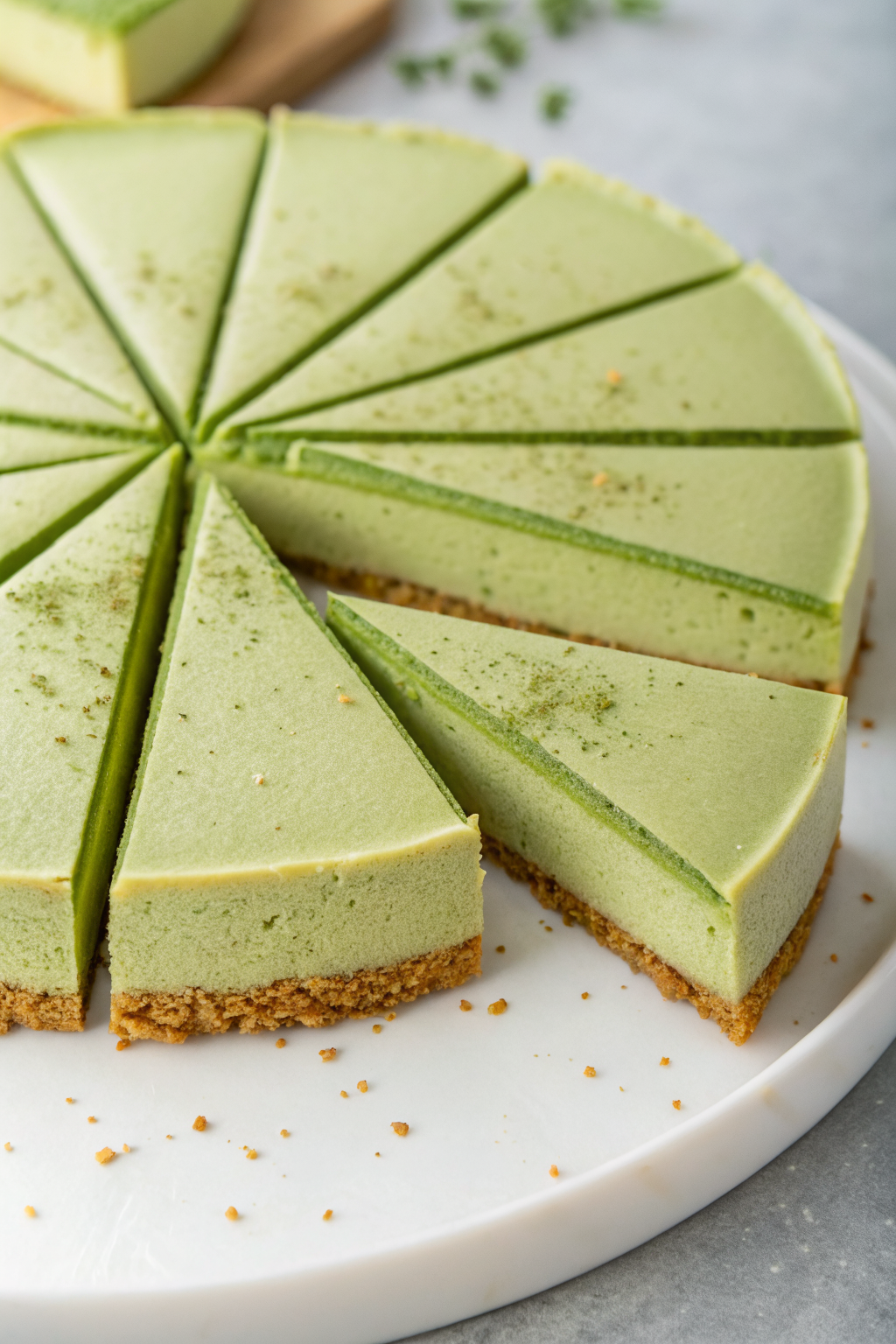
Original Matcha Japanese Cheesecake
Ingredients
Instructions
- Preheat the oven to 320°F (160°C). Line the bottom of an 8-inch round cake pan with parchment paper and wrap the outside of the pan with foil to prevent water from seeping in. Lightly grease the sides.
- In a heatproof bowl set over a pot of gently simmering water, combine cream cheese, butter, and milk. Stir until smooth and just warm, then remove from heat and let cool slightly.
- Whisk in half of the sugar (1/4 cup) until dissolved. Add the egg yolks one at a time, whisking well after each addition, then whisk in vanilla extract if using.
- Sift cake flour, cornstarch, matcha powder, and salt over the cream cheese mixture. Whisk gently until the batter is smooth and no lumps remain. Set aside.
- In a clean mixing bowl, beat the egg whites with cream of tartar until foamy. Gradually add the remaining sugar (1/4 cup), beating until glossy medium-soft peaks form; the meringue should hold its shape but still slightly droop at the tip.
- Fold one-third of the meringue gently into the matcha batter to lighten it, then carefully fold in the remaining meringue in two additions, using a spatula to avoid deflating the mixture.
- Pour the batter into the prepared pan and tap lightly on the counter to release large air bubbles. Optionally, sprinkle 2 tablespoons of sugar evenly over the surface for a light crust.
- Place the cake pan into a larger roasting pan. Pour hot water into the roasting pan to reach about halfway up the sides of the cake pan, creating a water bath.
- Bake at 320°F (160°C) for 20 minutes, then reduce the temperature to 285°F (140°C) and bake for another 35 to 40 minutes, or until the top is set and a skewer inserted into the center comes out clean or with a few moist crumbs.
- Turn off the oven, crack the oven door slightly, and let the cheesecake cool inside for 15 to 20 minutes to minimize shrinking. Remove from the water bath, cool completely on a rack, then chill for at least 4 hours or overnight before slicing.
- Run a thin knife around the edge to release, then unmold, slice with a warm knife, and serve plain or with a light dusting of matcha or powdered sugar if desired.
Notes
Approximate per 1 of 12 servings: 190–220 calories; fat 14 g; saturated fat 8 g; carbohydrates 15 g; fiber 0 g; sugars 11 g; protein 5 g; sodium 170 mg. Values are estimates and will vary based on specific brands, measurements, and portion size.
Leave a Reply