

Seafood Pasta with Linguine Shrimp Mussels tastes rich, briny, garlicky, and just a little bit fancy while still feeling like weeknight comfort food. It suits seafood lovers who want a restaurant-style pasta in about 35–40 minutes, start to finish. I first cooked a version of this in my tiny college apartment, and my smoke alarm still forgives me for it.
Why You Should Try This Seafood Pasta with Linguine Shrimp Mussels
This seafood pasta hits that perfect balance of silky, garlicky tomato sauce with tender shrimp and mussels tucked into every twirl of linguine. The starch from the pasta water hugs the sauce to the noodles, so every bite tastes saucy and full of seafood flavor.
You cook everything in one large pan plus a pasta pot, so cleanup stays pretty manageable. It works for date night, family dinner, or a solo treat when you want something special without complicated techniques.
“Tastes like a coastal restaurant special but comes together in one pan at home, and everyone licked their plates clean. ★★★★★”
Ingredients You’ll Need
Seafood
-
Large shrimp, peeled and deveined
- Choose 16/20 or 21/25 size so they stay juicy and do not overcook.
- Frozen shrimp work great; thaw them in a colander under cool water.
-
Fresh mussels, scrubbed and debearded
- Look for tightly closed shells; discard cracked ones or any that stay open after a tap.
- If fresh mussels feel hard to find, use all shrimp or add some scallops as a swap.
Pasta
-
Linguine
- Dry linguine holds the sauce nicely and cooks evenly.
- Use any good-quality brand; bronze-cut pasta grabs more sauce.
-
Salt for pasta water
- Season the water so it tastes like the sea; this step builds flavor in the noodles.
Aromatics & Flavor Base
-
Olive oil
- Extra-virgin adds nice flavor, but any good olive oil works.
-
Unsalted butter
- Butter rounds out the sauce and gives it a silky finish.
-
Yellow or sweet onion, finely chopped
-
Garlic, minced
- Fresh garlic tastes best; jarred garlic works in a pinch but use a bit less.
-
Crushed red pepper flakes
- Adjust to your heat preference; I like a gentle warmth, not a five-alarm fire.
-
Fresh parsley, chopped
- Flat-leaf parsley tastes brighter and less bitter than curly.
-
Fresh basil (optional)
- Tear it by hand at the end so it keeps its aroma.
Sauce Components
-
Canned crushed tomatoes
- Choose a good brand like Mutti or Cento; cheap tomatoes can taste tinny.
-
Tomato paste
- This adds depth and sweetness; squeeze tubes keep well in the fridge and save waste.
-
Seafood or chicken broth
- Seafood stock gives the most flavor, but low-sodium chicken broth works fine.
- In a pinch, use water with a small spoon of Better Than Bouillon.
-
Lemon juice and zest
- Fresh lemon brightens the sauce and balances the richness.
Seasoning
- Kosher salt
- Freshly ground black pepper
- Sugar (optional, a pinch)
- Use only if the tomatoes taste very acidic.
Optional Add-ins
- Cherry tomatoes, halved, for extra sweetness and texture
- A handful of baby spinach, stirred in at the end
- A small pinch of smoked paprika for a subtle smoky note
Equipment List
- Large pot for boiling linguine
- Large wide skillet or sauté pan with lid
- Tongs for tossing pasta
- Colander
- Cutting board and sharp knife
- Microplane or fine grater for lemon zest
- Measuring cups and spoons
Tips & Tricks
- Salt the pasta water generously so the linguine carries flavor into the dish.
- Cook the pasta just shy of al dente, then finish it in the sauce so it absorbs flavor.
- Dry the shrimp with paper towels so they sear instead of steam.
- Keep the heat at medium when you cook garlic so it turns golden, not bitter.
- Scrub mussels under cold water and pull off any beards right before cooking.
- Toss any mussels that stay closed after cooking; they likely started out dead.
- Save at least 1 cup of pasta water; adjust the sauce thickness with small splashes.
- Taste the sauce before adding seafood and adjust salt, pepper, and chili flakes.
- Add shrimp near the end so they stay tender and slightly springy, not rubbery.
- Swirl in butter and lemon at the end to give the sauce a glossy finish.
- Toss the pasta with tongs instead of stirring hard so the seafood stays intact.
- Plate the pasta first, then tuck mussels and shrimp on top for a restaurant look.
How to Make Seafood Pasta with Linguine Shrimp Mussels
Step 1: Prep the Seafood and Ingredients
Peel and devein the shrimp if needed, then pat them dry and season them lightly with salt and pepper. Scrub the mussels under cold water and pull off any beards. Discard any mussels with cracked shells or ones that stay open after a firm tap.
Chop the onion and parsley, mince the garlic, and zest the lemon before you start cooking. Open the can of crushed tomatoes and have the broth measured and ready. This quick prep keeps the cooking process smooth and stress free.
Step 2: Cook the Linguine
Bring a large pot of water to a strong boil and salt it generously. Add the linguine and stir so it does not stick. Cook it until it reaches just shy of al dente, usually 1 to 2 minutes less than the package suggests.
Scoop out at least 1 cup of the starchy pasta water and set it aside. Drain the linguine but do not rinse it, since the surface starch helps the sauce cling. Keep the pasta nearby while you finish the sauce and seafood.
Step 3: Build the Flavor Base
Heat olive oil in a large wide skillet over medium heat and add the chopped onion. Cook the onion until it turns soft and translucent, then stir in the garlic and red pepper flakes. Stir often so the garlic turns fragrant and lightly golden.
Add tomato paste and cook it for a minute or two to deepen its flavor. Pour in the crushed tomatoes and broth, then stir until everything looks smooth. Season with salt, pepper, and a tiny pinch of sugar if the tomatoes taste sharp.
Step 4: Simmer the Sauce
Let the sauce bubble gently over medium to medium-low heat for about 8 to 10 minutes. Stir occasionally so it does not stick, and adjust the heat so it simmers, not splatters. Taste and tweak the seasoning with more salt, pepper, or chili flakes.
Add a small splash of pasta water if the sauce thickens too much. The sauce should coat the back of a spoon but still look loose enough to toss with pasta. Keep it warm while you cook the seafood.
Step 5: Cook the Mussels
Raise the heat under the sauce to medium-high and slide the cleaned mussels into the pan. Stir them into the sauce so they nestle in a single layer as much as possible. Cover the pan with a lid.
Cook the mussels for about 4 to 5 minutes until the shells open. Shake the pan once or twice during cooking so the heat reaches all the shells. Remove the lid and pull out any mussels that opened early so they do not overcook.
Step 6: Add the Shrimp
Add the seasoned shrimp to the same pan with the sauce and mussels. Stir gently so the shrimp spread out in the sauce. Cook them over medium heat for about 3 to 4 minutes, turning once, until they turn pink and opaque.
Do not walk away during this step; shrimp go from perfect to rubbery fast. When the shrimp look just cooked through, lower the heat. Toss any mussels that stayed closed.
Step 7: Toss the Linguine with the Sauce
Add the drained linguine straight into the skillet with the sauce, shrimp, and mussels. Use tongs to toss everything together so the pasta picks up the sauce and seafood juices. Add small splashes of reserved pasta water until the sauce looks silky and coats the noodles.
Stir in a knob of butter, the lemon zest, and a squeeze of lemon juice. Toss again, then add chopped parsley and basil if you use it. Taste one last time and adjust salt, pepper, or lemon to your liking.
Step 8: Plate and Garnish
Twirl portions of linguine into warm bowls and arrange shrimp and mussels on top. Spoon extra sauce over each serving so nobody fights over the pan. Finish with a sprinkle of fresh parsley and a little more lemon zest.
Serve the Seafood Pasta with Linguine Shrimp Mussels hot while the mussels still taste juicy and the pasta stays glossy. Keep extra crushed red pepper on the table for spice fans. Take a second to admire your work before everyone devours it.
What to Serve with Seafood Pasta with Linguine Shrimp Mussels
This seafood pasta already brings big flavor, so pair it with simple sides that stay light. A crisp green salad with a lemony vinaigrette cuts through the richness and keeps the meal balanced. Warm crusty bread or garlic bread works perfectly to soak up any extra sauce.
Serve it with sparkling water, citrus-infused water, or a cold herbal iced tea for a fresh, clean pairing. Add a small bowl of steamed or roasted vegetables like asparagus, green beans, or broccoli if you want more color on the table. Keep dessert simple with fresh berries or a light sorbet so nobody needs a nap afterward.
Storage Options
- Cool leftovers to room temperature within 30 minutes, then store them in an airtight container in the fridge for up to 2 days.
- Reheat gently in a skillet over low heat with a splash of water or broth; stir often so the shrimp and mussels do not overcook.
- Avoid freezing this dish, since mussels and shrimp can turn tough and the pasta can turn mushy after thawing.
- If you expect leftovers, cook the pasta slightly firmer than usual so it holds texture when you reheat it.
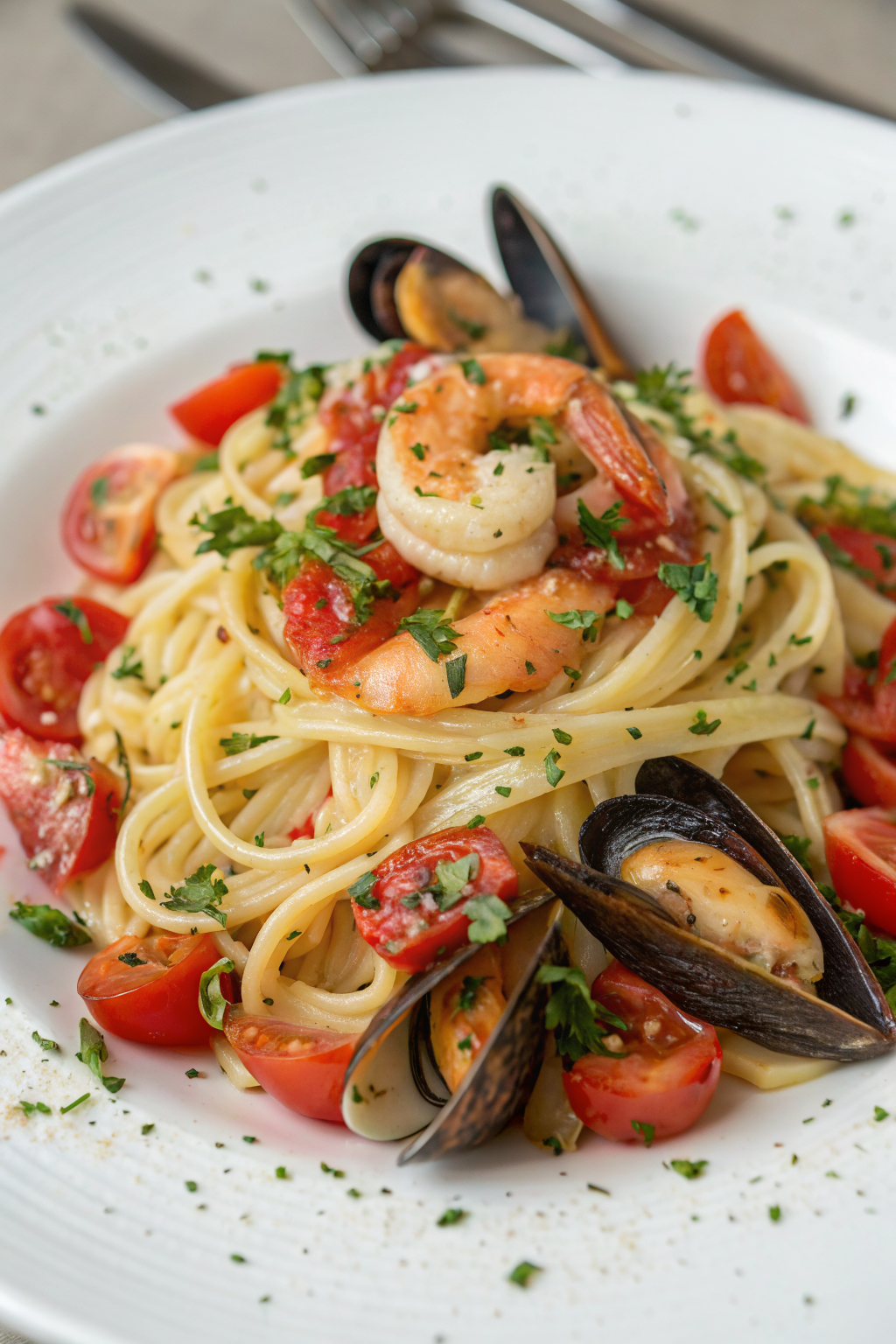
Seafood Linguine with Shrimp and Mussels
Ingredients
Instructions
- Bring a large pot of salted water to a boil. Cook the linguine according to package directions until al dente. Reserve about 1/2 cup of pasta water, then drain and set aside.
- While the pasta cooks, heat the olive oil and 2 tablespoons of the butter in a large deep skillet or sauté pan over medium heat.
- Add the minced garlic and crushed red pepper flakes to the pan. Sauté for 1 to 2 minutes, stirring frequently, until fragrant but not browned.
- Pour in the white wine and simmer for 2 to 3 minutes, scraping up any browned bits from the bottom of the pan.
- Stir in the seafood or chicken broth and crushed tomatoes. Season with salt and black pepper. Bring to a gentle simmer.
- Add the cleaned mussels to the pan, cover with a lid, and cook for 4 to 6 minutes, shaking the pan occasionally, until most of the mussels have opened. Discard any mussels that do not open.
- Add the shrimp to the pan, cover again, and cook for 3 to 4 minutes, or until the shrimp are pink and opaque.
- Add the cooked linguine to the skillet along with the remaining 1 tablespoon of butter, lemon juice, and chopped parsley. Toss gently to coat, adding a splash of reserved pasta water if needed to loosen the sauce.
- Taste and adjust seasoning with additional salt, pepper, or lemon juice as desired.
- Serve the seafood linguine immediately, topped with extra parsley and grated Parmesan cheese if using.
Notes
Approximate per serving (1/4 of recipe): 620 calories; fat 20 g; saturated fat 8 g; carbohydrates 70 g; fiber 4 g; sugars 6 g; protein 38 g; sodium 780 mg. Values are estimates and will vary based on exact ingredients, brands, and portion sizes.
Leave a Reply