
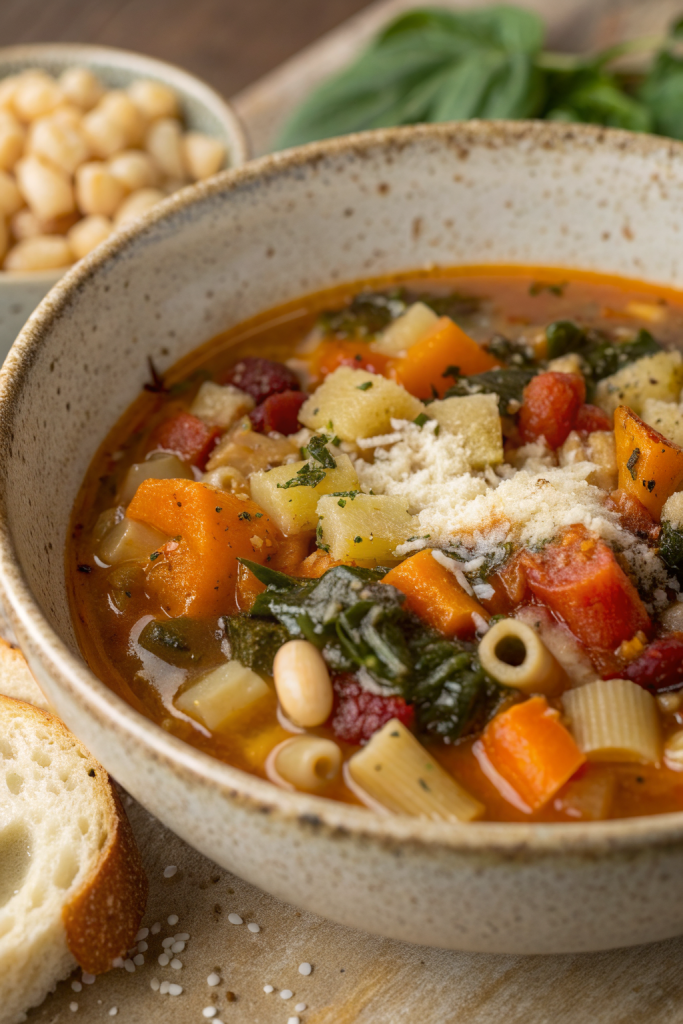
Winter Minestrone Soup Recipe tastes rich, cozy, and veggie-packed, with a tomato broth that hugs you from the inside out. It works perfectly for busy weeknights or lazy Sundays, and you can get it on the table in about 55 minutes. I test this kind of soup on my own family of picky eaters, so you know it passes the “no one complains at the table” test.
Why You Should Try This Winter Minestrone Soup Recipe
This winter minestrone soup recipe gives you a hearty, filling bowl that still feels light enough for a weeknight dinner. Beans, pasta, and vegetables team up in a tomato broth that tastes even better the next day.
You can clean out your fridge and pantry while you cook, which always feels like a tiny life win. The recipe also scales easily, so you can feed a crowd or stock up on lunches without extra effort.
“This Winter Minestrone Soup Recipe tastes like an Italian grandma cooked it in your kitchen, but you only spent an hour making it. ★★★★★”
Ingredients You’ll Need
Olive oil & fat
- 3 tbsp extra-virgin olive oil (use what you like; I often grab California Olive Ranch or Kirkland)
- 2 tbsp unsalted butter (optional, but it adds a nice richness)
Aromatics
- 1 large yellow onion, diced
- 2 medium carrots, diced
- 2 ribs celery, diced
- 4 cloves garlic, minced (jarred minced garlic works if you feel tired)
Veggies
- 2 cups chopped green cabbage or savoy cabbage
- 1 cup chopped kale or Swiss chard, ribs removed
- 1 medium russet or Yukon gold potato, peeled and diced
- 1 small zucchini, diced (optional but tasty)
- 1 cup frozen green beans or 1 cup fresh trimmed green beans, chopped
- 1 cup frozen peas (add sweetness and color)
Tomato & broth base
- 1 can (14.5 oz) diced tomatoes, with juices
- 2 tbsp tomato paste (tube tomato paste keeps well in the fridge)
- 6 cups vegetable broth or chicken broth (use low sodium so you control the salt)
- 1 cup water, as needed to thin the soup
Beans & pasta
- 1 can (15 oz) cannellini beans, drained and rinsed
- 1 can (15 oz) red kidney beans or chickpeas, drained and rinsed
- 1 cup small pasta, such as ditalini, small shells, or elbow macaroni
- 1 bay leaf
Herbs & seasoning
- 1 tsp dried oregano
- 1 tsp dried basil
- 1 tsp dried thyme or Italian seasoning
- 1 tsp smoked paprika (optional, but adds depth)
- 1 small Parmesan rind (optional but highly recommended if you eat dairy)
- 1 to 1½ tsp kosher salt, plus more to taste
- ½ tsp black pepper
- Pinch of red pepper flakes, to taste
Finishing touches
- ¼ cup grated Parmesan cheese, plus more for serving
- 2 tbsp chopped fresh parsley
- Juice of ½ lemon (brightens the flavor at the end)
- Extra olive oil for drizzling on top
Substitutions & pantry shortcuts
- Use canned mixed vegetables if your crisper looks empty.
- Swap kale for spinach, or cabbage for extra carrots and celery.
- Use gluten-free pasta or small rice if you avoid gluten.
- Skip the Parmesan rind and cheese for a dairy-free version, and add a splash of extra olive oil for richness.
Equipment list
- Large heavy-bottomed pot or Dutch oven (at least 5 to 6 quarts)
- Cutting board and sharp knife
- Wooden spoon or heat-safe spatula
- Ladle
- Measuring cups and spoons
Tips & Tricks
- Chop vegetables into similar sizes so they cook evenly and feel nice in each spoonful.
- Sauté the aromatics until they turn soft and slightly golden to build deeper flavor.
- Add the pasta near the end so it stays al dente and does not turn mushy.
- Keep extra broth or water nearby so you can thin the soup if it thickens too much.
- Taste and season at the end, since the broth, tomatoes, and Parmesan rind all add salt.
- Store the pasta separately if you plan leftovers, so it does not soak up all the broth.
- Use frozen vegetables when you feel short on time; toss them in straight from the freezer.
- Add the lemon juice off the heat so the soup keeps a bright, fresh flavor.
How to Make Winter Minestrone Soup Recipe
Step 1: Sauté the aromatics
Heat the olive oil and butter in your large pot over medium heat. Add the onion, carrots, and celery, then stir and cook until they soften and start to turn lightly golden, about 7 to 8 minutes. Add the garlic and cook 1 more minute, so it smells fragrant but does not burn.
Step 2: Add hearty vegetables and seasonings
Stir in the cabbage, potato, and zucchini. Sprinkle in the oregano, basil, thyme, smoked paprika, red pepper flakes, salt, and black pepper. Mix well so the vegetables pick up the oil and spices, and cook 3 to 4 minutes to wake up the dried herbs.
Step 3: Build the broth
Add the tomato paste and cook it for 1 to 2 minutes, stirring, so it darkens slightly and tastes sweeter. Pour in the diced tomatoes with their juices and the broth, then add the bay leaf and Parmesan rind if you use it. Stir everything, bring the pot to a gentle boil, then lower the heat and let it simmer.
Step 4: Simmer until vegetables turn tender
Let the soup simmer on low to medium-low heat for about 20 minutes. Stir occasionally so nothing sticks to the bottom. Taste a piece of potato and cabbage; when they feel tender, move to the next step.
Step 5: Add beans, pasta, and quick-cooking veggies
Stir in the cannellini beans, kidney beans, green beans, and pasta. Simmer until the pasta cooks to al dente, usually 8 to 10 minutes, depending on the shape. Add the frozen peas during the last 3 minutes so they heat through but stay bright.
Step 6: Adjust thickness and seasoning
Check the consistency and add up to 1 cup of water if the soup feels too thick. Taste and add more salt or pepper if needed. Remove the bay leaf and Parmesan rind with a spoon and discard them.
Step 7: Finish with fresh flavor
Turn off the heat. Stir in the grated Parmesan, chopped parsley, and lemon juice. Drizzle a little olive oil over the top, then give the soup a final stir so everything blends nicely.
Step 8: Serve
Ladle the winter minestrone soup recipe into warm bowls. Top with extra Parmesan and a bit more parsley if you like. Serve hot and enjoy that cozy, veggie-packed goodness.
What to Serve with Winter Minestrone Soup Recipe
This winter minestrone soup recipe pairs nicely with warm crusty bread, garlic bread, or simple toast brushed with olive oil and a pinch of salt. Add a green salad with crunchy lettuce, cucumbers, and a light vinaigrette to balance the hearty soup. You can also serve it with grilled cheese, focaccia, or a simple panini stuffed with mozzarella and tomato. If you want something lighter, offer a side of roasted vegetables or a small fruit salad.
Storage Options
- Store leftover winter minestrone soup recipe in an airtight container in the fridge for up to 4 days.
- Keep the pasta in a separate container if possible, so it does not soak up all the broth.
- Freeze the soup without pasta in freezer-safe containers for up to 3 months, then add freshly cooked pasta when you reheat.
- Reheat gently on the stove over medium-low heat, adding a splash of water or broth as needed, or warm individual bowls in the microwave in short bursts, stirring between each.

Winter Minestrone Soup Recipe
Ingredients
Instructions
- Heat the olive oil in a large pot over medium heat. Add the onion, carrots, and celery and cook, stirring occasionally, until softened, about 5 to 7 minutes.
- Stir in the garlic and fennel (if using) and cook for 1 to 2 minutes, until fragrant.
- Add the potato, butternut squash, diced tomatoes with their juices, vegetable broth, oregano, thyme, basil, bay leaf, salt, and pepper. Stir to combine and bring to a boil.
- Reduce the heat to a gentle simmer, cover, and cook for 20 minutes, or until the vegetables are just tender.
- Stir in the cannellini beans and pasta. Continue simmering, uncovered, for 8 to 10 minutes, or until the pasta is al dente and the vegetables are fully tender. Stir occasionally to prevent the pasta from sticking to the bottom.
- Stir in the chopped kale or Swiss chard and cook for 3 to 5 minutes more, until the greens are wilted and tender.
- Remove the bay leaf. Stir in the grated Parmesan cheese and fresh parsley, if using. Adjust seasoning with additional salt and pepper to taste.
- Ladle the soup into bowls and serve hot, with extra Parmesan cheese and a drizzle of olive oil if desired.
Notes
Approximate per serving (1/6 of recipe): 260 calories; fat 7 g; saturated fat 2 g; carbohydrates 40 g; fiber 8 g; sugars 8 g; protein 10 g; sodium 520 mg. Values will vary based on exact ingredients, brands, and portion size.
Leave a Reply