
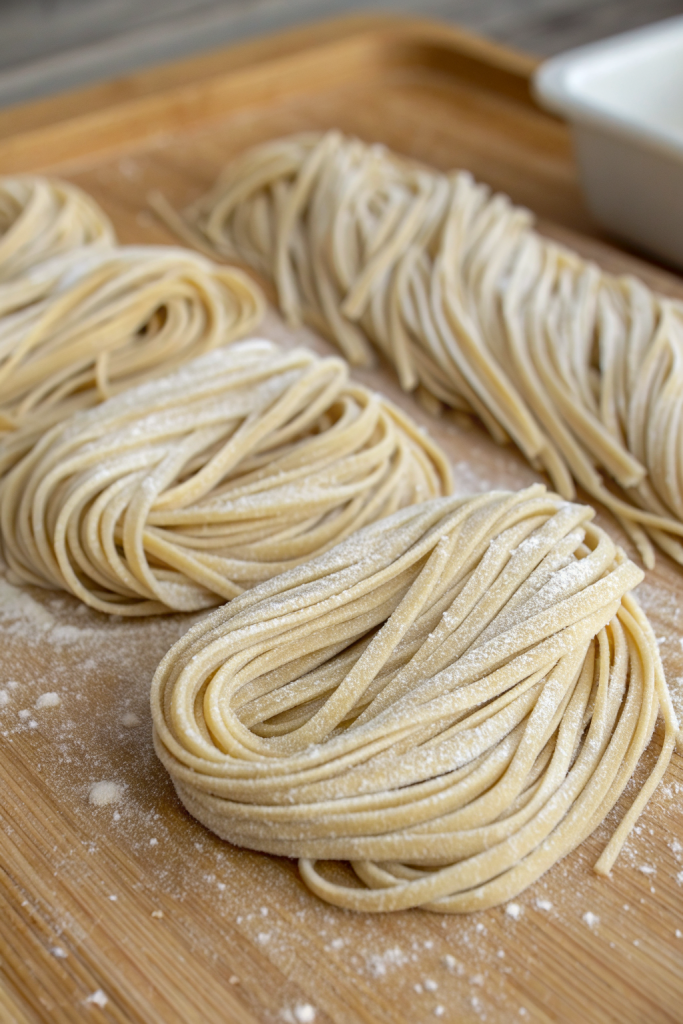
Homemade Ramen Noodles Recipe tastes bouncy, chewy, and silky in that way instant noodles never quite hit, and it works perfectly for weeknight slurping or weekend projects in about 1 hour of hands-on time. It suits beginners who want a fun kitchen project and noodle nerds who obsess over texture and broth pairing. I started making these in a tiny apartment kitchen with a rolling pin and a wine bottle, so you and your countertop can absolutely handle this.
Why Homemade Ramen Noodles Recipe Is Worth It
Homemade ramen noodles give you that springy, chewy bite you chase at good ramen shops. You control the thickness, curl, and salt level, so your bowl matches your favorite broth style.
You also skip weird additives and tailor the noodles to dietary needs. The dough uses simple pantry ingredients, and you can roll it by hand if you do not own a pasta machine.
“These homemade ramen noodles taste like a legit noodle bar bowl at home, and the chewy texture totally surprised me in the best way. ★★★★★”
Ingredients You Need
Core noodle ingredients
- All-purpose flour – Use unbleached if possible; King Arthur or Gold Medal both work well. Bread flour also works and gives extra chew.
- Vital wheat gluten (optional but awesome) – Add 1–2 tablespoons per batch for extra springy texture; Bob’s Red Mill makes a reliable one.
- Kansui (alkaline solution) – Use store-bought kansui, or mix baked baking soda with water (details below). This gives ramen noodles their yellow color and signature bite.
- Water – Use cool or room-temperature water so the dough stays firm.
- Fine sea salt – Dissolves quickly and seasons the dough evenly.
Pantry shortcut: baked baking soda
If you do not have kansui:
- Spread baking soda on a foil-lined tray.
- Bake at 250°F (120°C) for 1 hour.
- Store in a jar and use as your alkaline powder.
- Mix 1 teaspoon baked baking soda into ½ cup water for this recipe.
Optional flavor or color tweaks
- Egg yolk – Add 1 yolk for richer color and slightly softer chew.
- Turmeric pinch – Adds a golden hue if your kansui runs mild.
- Garlic powder or onion powder – Add ¼ teaspoon for subtle aroma; do not overdo it or the dough turns sticky.
Equipment list
You can keep this simple:
- Large mixing bowl
- Digital scale (strongly recommended for consistency)
- Measuring spoons
- Chopsticks or fork for mixing
- Plastic wrap or zip-top bag
- Rolling pin or pasta machine
- Sharp knife or pizza cutter
- Cutting board or clean counter
- Large pot for boiling
- Colander or spider strainer
Quick Tips & substitutions
- Use a scale for flour and water so the dough stays consistent and easy to work.
- If the dough feels too dry, mist with water a teaspoon at a time; it should feel firm but not crumbly.
- If the dough feels too soft, dust with flour and knead briefly until it tightens.
- No kansui on hand? Use baked baking soda mixed with water as your alkaline solution.
- Want extra chew? Swap 25–30% of the flour with bread flour or add 1–2 tablespoons vital wheat gluten.
- No pasta machine? Roll the dough very thin with a rolling pin and cut with a sharp knife.
- To keep noodles from sticking, toss cut strands with cornstarch or potato starch, not just flour.
- Salt your boiling water lightly; the dough already contains salt and alkaline.
- Cook noodles right before serving so they stay bouncy and do not turn mushy.
- If you freeze noodles, dust them well with starch and freeze in loose nests so they separate easily.
How to Make Homemade Ramen Noodles Recipe
H3: Mix the alkaline solution
- In a small bowl, combine ½ cup water with 1 teaspoon kansui or 1 teaspoon baked baking soda and ½ teaspoon fine sea salt.
- Stir until the salt and alkaline powder dissolve completely.
- Set the mixture aside; it should look clear to slightly cloudy and smell a bit mineral-like.
H3: Combine flour and dry ingredients
- In a large mixing bowl, add 2 cups (about 250 g) all-purpose flour.
- If you use vital wheat gluten, whisk in 1–2 tablespoons now.
- Make a small well in the center of the flour to help catch the liquid.
H3: Bring the dough together
- Pour the alkaline water into the flour well.
- Use chopsticks or a fork to stir in quick circles, pulling flour from the sides into the liquid.
- Keep mixing until the dough looks shaggy and clumpy with no big wet pockets.
H3: Knead into a firm dough
- Turn the shaggy dough onto a clean counter.
- Press and fold the dough with the heel of your hand, then rotate and repeat.
- The dough should feel firm and slightly stiff, almost like modeling clay, not soft like bread dough.
- If it crumbles, wet your hands lightly and keep kneading; if it sticks, dust with a pinch of flour.
- Knead for 8–10 minutes until the dough feels smooth and tight.
H3: Rest the dough
- Shape the dough into a ball and wrap it tightly in plastic wrap or place it in a zip-top bag.
- Let it rest at room temperature for 30–40 minutes.
- This rest time relaxes the gluten so you can roll the dough without a wrestling match.
H3: Divide and pre-flatten
- Unwrap the dough and cut it into 2–4 equal pieces, depending on your workspace.
- Cover the pieces you do not roll yet so they do not dry out.
- Flatten one piece into a rough rectangle with your palm so it feeds into the pasta machine or rolls easier by hand.
H3: Roll the dough (pasta machine method)
- Set the pasta machine to the widest setting.
- Feed the dough through once, then fold it in thirds like a letter.
- Run it through again on the same setting to smooth it out.
- Dust lightly with flour if the sheet sticks.
- Gradually move to thinner settings, rolling the sheet once per setting until it reaches about 1–1.5 mm thickness (roughly between tagliatelle and wonton wrapper thinness).
H3: Roll the dough (rolling pin method)
- Place the dough on a lightly floured surface.
- Roll from the center outward, turning the dough often to keep a rectangle shape.
- Apply firm, even pressure; the dough fights a bit because of the gluten, so take your time.
- Aim for a thin sheet where you can almost see light through it, about 1–1.5 mm thick.
H3: Cut into noodles
- Dust the dough sheet generously with cornstarch or flour.
- Fold the sheet loosely into thirds or roll it up like a jelly roll.
- Use a sharp knife or pizza cutter to slice into thin strands, about 1–2 mm wide for classic ramen.
- Unravel the strands and toss them with more starch to keep them separate.
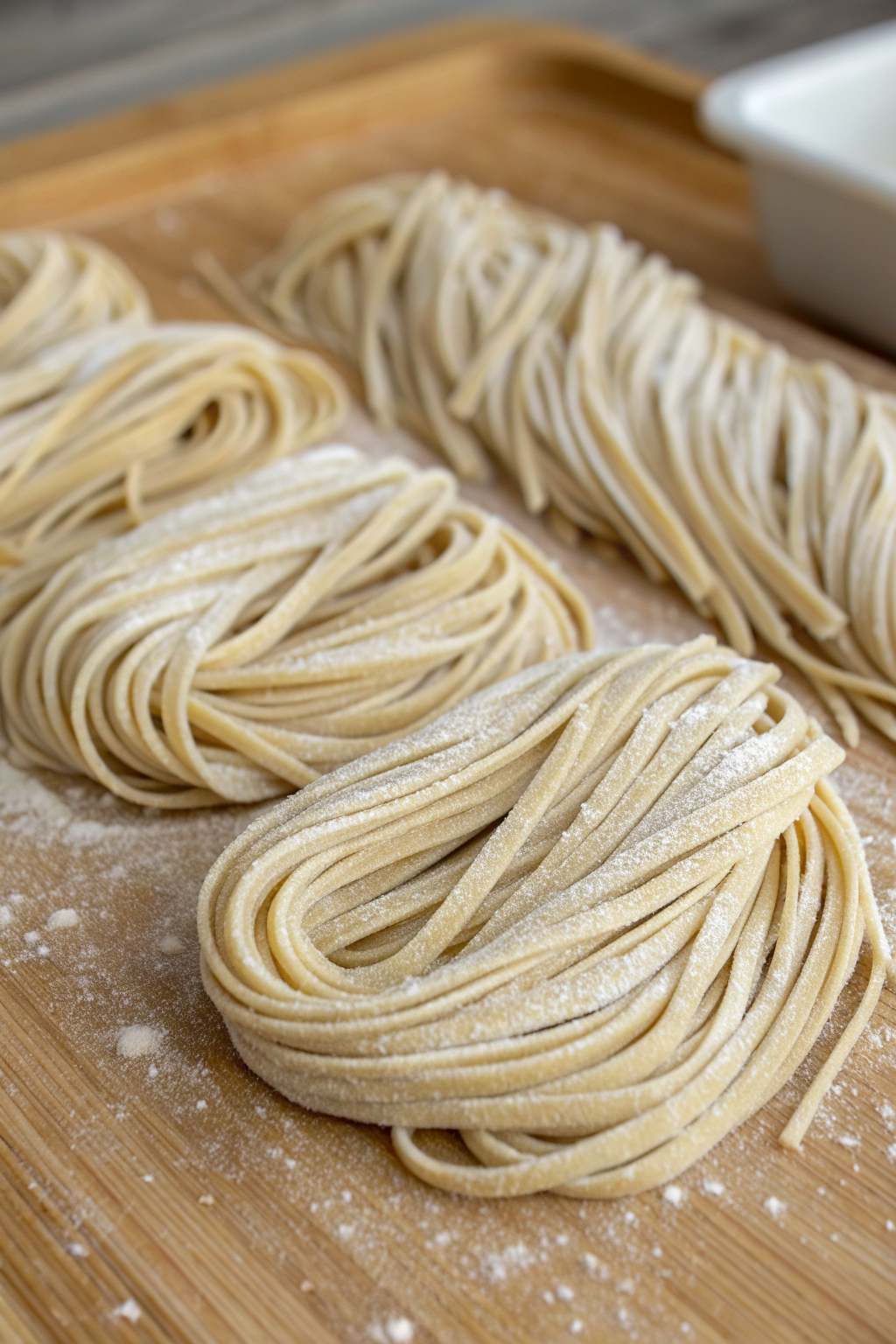
- Form loose nests and set them on a floured tray.
H3: Cook the noodles
- Bring a large pot of water to a rolling boil.
- Add a pinch of salt, then drop in a portion of noodles, shaking off extra starch.
- Stir gently with chopsticks to prevent clumping.
- Cook 1–2 minutes until the noodles float and taste chewy but cooked through.
- Scoop them out with a spider strainer and rinse briefly under hot water if they feel too starchy, then drop them straight into hot ramen broth.
H3: Timing and texture notes
- Thin noodles cook in about 60–90 seconds; thicker ones may need 2–3 minutes.
- Taste a strand early and often; you want a firm, springy bite, not soft spaghetti.
- If you plan to simmer noodles in broth longer, undercook them slightly in the boiling water.
Recipe Variations
- Gluten-free – Use a gluten-free flour blend that works for pasta and add xanthan gum if the blend lacks it; texture changes but still tastes great.
- Vegan – Skip egg yolk and use only flour, water, salt, and alkaline solution; the base recipe already works as vegan.
- Low carb-ish – Swap part of the flour with soy flour or almond flour and add extra vital wheat gluten; expect a denser, more rustic noodle.
- Extra chewy – Use 100% bread flour and a bit more kansui or baked baking soda solution.
- Curly noodles – After cutting, dust noodles with starch, bunch them in your hands, squeeze gently, then release so they hold a wavy shape.
- Spicy noodles – Add chili powder or gochugaru to the dough for subtle heat and color.
- Herb noodles – Mix in finely chopped chives, green onion, or shiso for aroma that pairs nicely with lighter broths.
Ways to Serve Homemade Ramen Noodles Recipe
- In a bowl of shoyu ramen with soy-based broth, sliced pork, soft-boiled egg, and green onions.
- With miso ramen broth, corn, butter, bean sprouts, and sesame seeds.
- In a lighter shio ramen with chicken broth, bamboo shoots, and nori strips.
- As tantanmen-style noodles with a spicy sesame broth and ground meat or tofu.
- In a simple noodle soup with chicken, bok choy, and scallions for a quick weeknight dinner.
- Chilled with sesame dressing, cucumber, and shredded carrot for a refreshing summer bowl.
- Stir-fried as yaki ramen with vegetables and soy-garlic sauce.
Storage Success
Store uncooked homemade ramen noodles in the fridge in a covered container or zip-top bag for up to 2 days; dust them well with starch so they do not clump. If you want longer storage, freeze the noodle nests on a tray, then move them to a freezer bag and keep them for up to 1 month. Drop frozen noodles straight into boiling water and cook an extra 30–60 seconds. Avoid storing cooked noodles in broth for long periods, because they soak up liquid and lose that amazing chewy bite.
Homemade Ramen Noodles Recipe
Ingredients
Instructions
- In a large bowl, whisk together the flour, salt, and baked baking soda (or kansui).
- In a measuring cup, whisk the warm water with the egg (if using).
- Pour the liquid into the dry ingredients a little at a time, mixing with chopsticks or a fork until shaggy clumps form.
- Knead the dough in the bowl, then on a clean surface, until it comes together into a stiff but smooth ball, about 8 to 10 minutes. Cover and let rest for 20 minutes.
- Divide the dough into 2 to 4 pieces. Working with one piece at a time, roll it through a pasta machine or roll out by hand until very thin, dusting with cornstarch or flour as needed.
- Cut the sheets into thin ramen-style strands, tossing with more cornstarch or flour to prevent sticking.
- Bring a large pot of water to a rolling boil. Add the noodles and cook for 1 to 2 minutes, just until they float and are tender but chewy.
- Drain well and rinse briefly under warm water. Serve immediately in hot broth or use in your favorite ramen dish.
Notes
Approximate per serving (1/4 of recipe, noodles only): 260 calories; fat 3 g; saturated fat 1 g; carbohydrates 49 g; fiber 2 g; sugars 1 g; protein 9 g; sodium 330 mg. Values will vary based on exact ingredients, brands, and portion size.
Leave a Reply